
The 2026 Guide: How to Transform Your Shave into a Soothing Ritual
Taking a quiet moment for yourself in the morning should feel grounding, not painful. Yet, so many of us rush through our daily shave and end up with a stinging, red neck. When a razor pulls against your skin instead of gliding smoothly, it disturbs your natural moisture barrier and leaves behind microscopic cuts. That is exactly what triggers the redness, warmth, and those frustrating bumps on sensitive areas like the neck and jawline. More often than not, it is simply the result of rushing with a dull blade, applying too much pressure, or skipping the hydration your face craves.
In this mindful, easy-to-follow guide, we are going to slow things down and learn how to shave without the irritation. Whether your skin turns red at the slightest touch or you quietly struggle with ingrown hairs, these gentle techniques will help you achieve a clean, smooth finish every time. By shifting your approach and pairing these moments with the best shaving creams for men, you can give your skin the protective care it truly deserves.
⚡ The Quick Guide: A Calmer, Soothing Routine
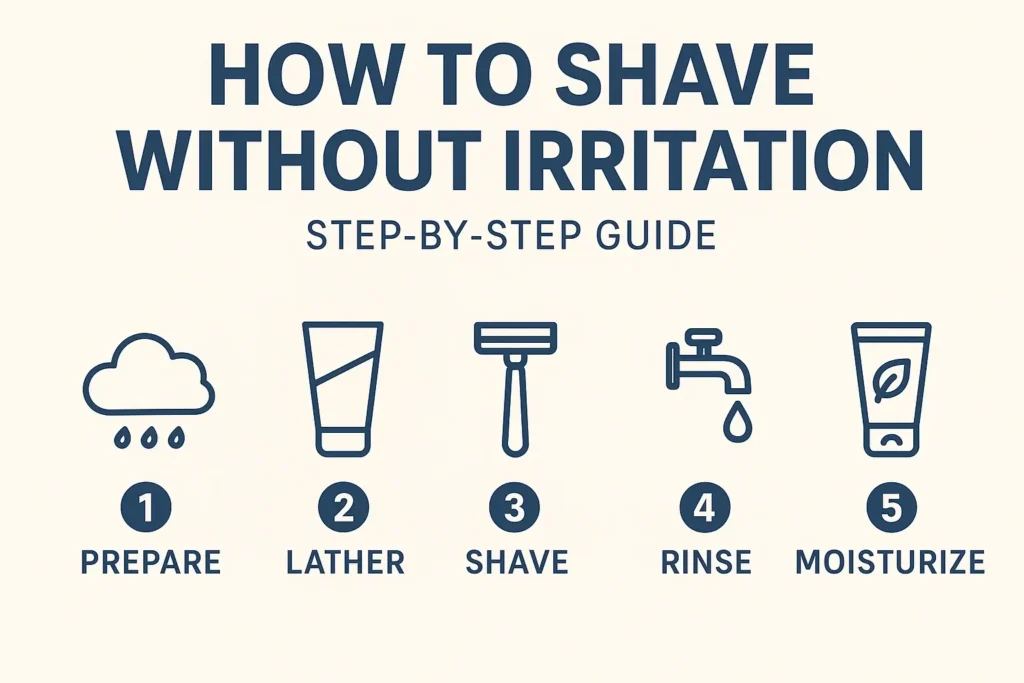
If you are short on time and just need a gentle way to soothe your face for tomorrow’s shave, here is a simple, 60-second breakdown of a calmer routine:
- Breathe and Prep: Never shave dry skin. Allow your facial hair to soften gracefully with warm water for at least 3 minutes before you begin.
- Nourish the Skin: Set aside drying, airy foams. Embrace a nourishing shaving cream or gel to create a soft, protective cushion for your razor.
- Find Your Rhythm: Always shave gently with the grain (the direction your hair naturally rests). Do not press down; let the weight of the razor glide freely.
- Cool and Restore: Splash your face with cool water to calm the pores, and gently massage in a soothing, alcohol-free balm to help your skin find its balance.
1. Listening to Your Skin’s Needs
Shaving irritation is simply your skin communicating that it needs a softer approach. To successfully shave without redness, discomfort, or burning, it is helpful to understand what your skin is experiencing and how it reacts to being rushed.
1. What Exactly is Razor Burn?
Razor burn is essentially a mild friction response on your face. It appears as redness, stinging, or a warm sensation shortly after shaving. It happens when a razor blade glides too harshly across your skin, sweeping away your natural oils and disrupting the delicate surface layer. Your skin just needs a bit more protection.
2. Understanding Razor Bumps
Razor bumps, or ingrown hairs, happen when a freshly cut hair curls softly backward and rests beneath the skin instead of growing outward. Your body responds to this with a touch of inflammation, creating those sensitive little bumps. For those of us with thick or curly facial hair, this is completely natural, but easily managed with care.
Small Habits That Cause Big Discomfort
- 3. Shaving with Tired Blades: It is easy to forget to change a cartridge, but a tired, dull blade pulls at your hair instead of cutting it cleanly. This creates unnecessary friction. Treat yourself to a fresh, sharp blade when you feel it dragging.
- 4. Rushing for Perfection: Shaving against the natural direction of your hair growth too quickly, or repeatedly swiping the exact same spot to get it perfectly smooth, strips your skin’s natural defenses.
- 5. Skipping the Water: When your facial hair is dry, it remains tough and rigid. Asking your razor to work through that creates drag and makes the blade skip uncomfortably across your skin.
- 6. Harsh Morning Products: Aerosol cans often contain drying agents and synthetic scents that draw moisture out of your face before the shave even begins, leaving your skin feeling exposed and vulnerable.
2. The Prep: A Moment of Morning Mindfulness
A truly comfortable shave is almost entirely decided before the blade even touches your face. Taking just a few mindful minutes to properly prepare softens the hair and wraps your skin in protection. Let this be a calm, quiet start to your morning.
1. Embrace the Warmth
Comfort starts with warmth. Enjoy a warm shower before you shave, or simply hold a warm, damp towel over your face for a few minutes. This gentle heat opens up your pores and allows the hair follicles to absorb water, making them beautifully soft and easy to trim.
2. Cleanse Gently
Washing your face with a mild, nourishing cleanser softly sweeps away any resting dead skin cells that might tangle your razor. Treat your skin kindly—avoid harsh, abrasive scrubs that leave your face feeling sensitive before the shave even starts.
3. A Layer of Care
If your neck tends to be highly sensitive, a natural pre-shave oil is a wonderful addition to your ritual. Gently massaging a few drops into your beard creates a silky, protective barrier that lets the razor glide smoothly and effortlessly.
3. Finding Your Rhythm: A Calmer Shave
Now that your face is warm and prepped, the shave itself becomes a mindful, flowing process rather than a rushed chore. Follow these gentle steps to achieve a perfectly clean finish while honoring your skin’s boundaries.
1. Choose a Gentle Razor
More blades do not always equal a happier face. For sensitive skin, a simple 2 or 3-blade razor (like a classic Gillette Mach3) is often ideal because it minimizes how much steel passes over your skin. If you enjoy taking your time, a single-blade Safety Razor transforms the shave into an art form and beautifully prevents irritation.
2. Build a Nourishing Lather
Treat your face to a deeply hydrating shaving cream or gel, rich in soothing elements like Aloe Vera or Shea Butter. Apply it smoothly across your face and simply let it rest for 30 seconds. Enjoy a deep breath while the cream works its magic, softening your hair and conditioning your skin before you even begin.
3. Follow the Grain
This is the kindest thing you can do for your skin. On your first pass, glide the razor gently in the direction your hair naturally rests (with the grain). This prevents hair from being pulled upward, which is what causes razor bumps. If you desire a closer finish, re-lather and glide lightly across the grain. Avoid shaving completely against the grain if your skin asks for a gentler touch.
4. A Light Touch
There is no need to press down. Pressing harder does not give a closer shave; it only causes redness. Allow the natural weight of the razor handle to guide the blade. And remember to rinse the razor softly under warm water after every stroke. A clean blade is a happy blade.
4. Post-Shave: Soothing and Restoring
Your skin has just experienced exfoliation, and it is beautifully fresh but slightly vulnerable. How you treat your skin in the next minute sets the tone for the rest of your day. This is the moment to soothe, cool, and restore.
1. A Cool Refresh
Once you set your razor down, gently splash your face with cool water. This refreshing step feels incredibly calming, helps naturally close your pores, and instantly reduces any mild warmth left behind by the blade.
2. Gentle Balance
Let go of traditional, stinging alcohol aftershaves that disrupt your skin’s peace. If you enjoy a toning step, softly pat on an alcohol-free toner with Witch Hazel or Rose Water to gently balance your skin and leave it feeling refreshed.
3. Restore Hydration (The Balm)
The most caring step is to replenish your skin’s moisture. Gently massage in a soothing, alcohol-free aftershave balm. Ingredients like Vitamin E, Chamomile, or Aloe will comfort your face, helping it recover quickly and keeping it soft all day long.
5. Honoring Your Unique Skin
Every face tells a different story. What feels wonderful for someone else might not feel quite right for you. Take a moment to listen to what your skin needs and adjust your routine accordingly.
For Skin That Asks for Hydration
If your face often feels tight or dry, lean heavily into moisture. Choose the richest shaving creams, indulge in a pre-shave oil, and use a very deeply hydrating balm when you are finished. Your skin will thank you.
For Naturally Oily Skin
Your skin has a wonderful natural defense, but excess oils can ask more of your razor. Choose a light, clear shaving gel. Afterward, a gentle, lightweight moisturizer will keep you feeling fresh without feeling heavy.
For the Most Sensitive Skin
Keep everything as pure and simple as possible. Use fragrance-free products, stick to a gentle razor, and never force a shave against the grain. End with a thick, calming layer of balm to protect your peaceful skin.
For Those Prone to Bumps
A gentle face wash with a touch of salicylic acid can help keep your pores beautifully clear. Consider exploring the art of a single-blade safety razor. Take your time, breathe deeply, and never pull your skin tight while the blade is moving.
6. A Better Way to Start Your Day
Shaving shouldn’t be a rushed chore that leaves you feeling uncomfortable. The redness, the burn, and those frustrating bumps are not just something you have to endure. They are simply gentle reminders from your skin that it desires a bit more care and attention.
Try to shift the way you look at your morning routine. Let go of the rush. Take an extra few minutes to just be present. Enjoy the feeling of a warm, comforting towel, use a shaving cream that smells wonderful and protects your skin, and let the razor glide softly without force.
Be patient with yourself as you discover what brings your face comfort. Stick to a mindful post-shave routine to keep your skin hydrated and peaceful. Once you embrace these gentle habits, you’ll find that stepping out of the bathroom feeling smooth, calm, and grounded is a truly wonderful way to start your day.

“Adam Lee is the lead technical reviewer at MenReviewHub and a veteran of the traditional wet shaving community. With over a decade of hands-on experience, Adam specializes in dissecting high-performance grooming hardware and dermatological skincare. He doesn’t just ‘read the box’—he puts every product through a brutal 30-day real-world trial to ensure your morning routine is a tactical success, not a crime scene.”