
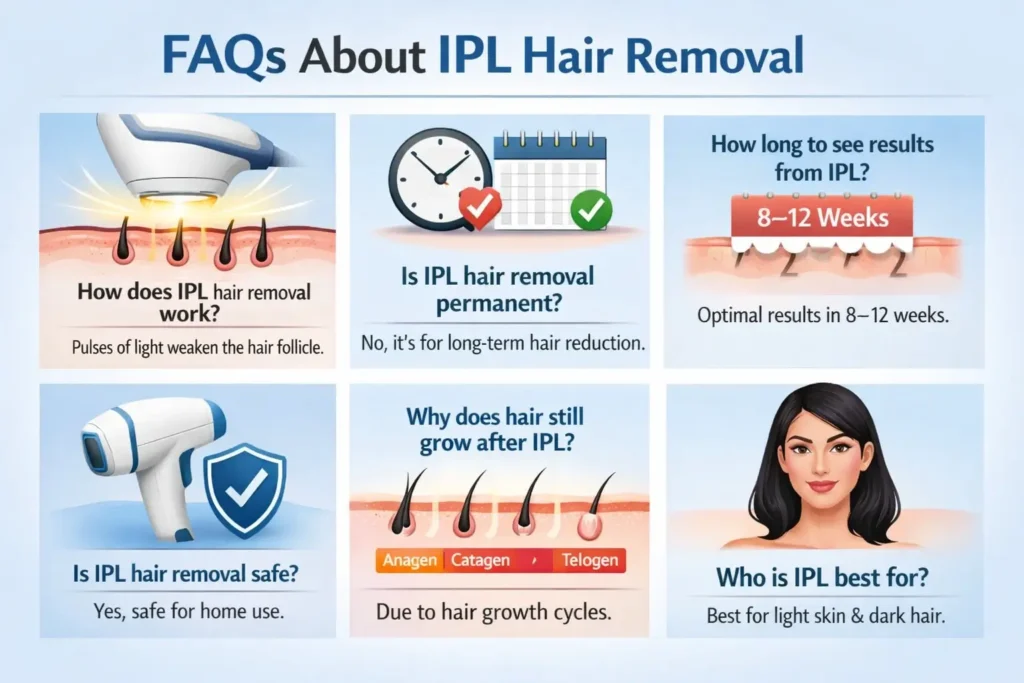
⚡ Quick Expert Summary: How IPL Actually Works
- The Core Science: IPL (Intense Pulsed Light) uses gentle, broad-spectrum light to find the melanin (dark pigment) in your hair. This light turns into comforting warmth that tells the hair follicle it’s time to rest.
- Why Patience is Key: IPL only catches hair during its active growth phase (Anagen). Since only about 20% of our hair is actively growing at any given moment, consistent weekly sessions are the secret to seeing real change.
- Setting Realistic Expectations: It’s officially known as long-term hair reduction. Because our bodies naturally change over time, a few sleeping follicles might wake up eventually, making occasional touch-ups perfectly normal.
- IPL vs. Laser: Think of a laser as a highly focused precision pointer (great for clinics) and IPL as a strong, wide-reaching camera flash (perfectly safe, painless, and effective for at-home use).
- The Best Candidates: Since the technology relies on finding dark pigment against a lighter background, it works beautifully and most safely for those with light to medium skin tones and dark body hair.
1. The Step-by-Step Process: Guiding the Follicle to Rest
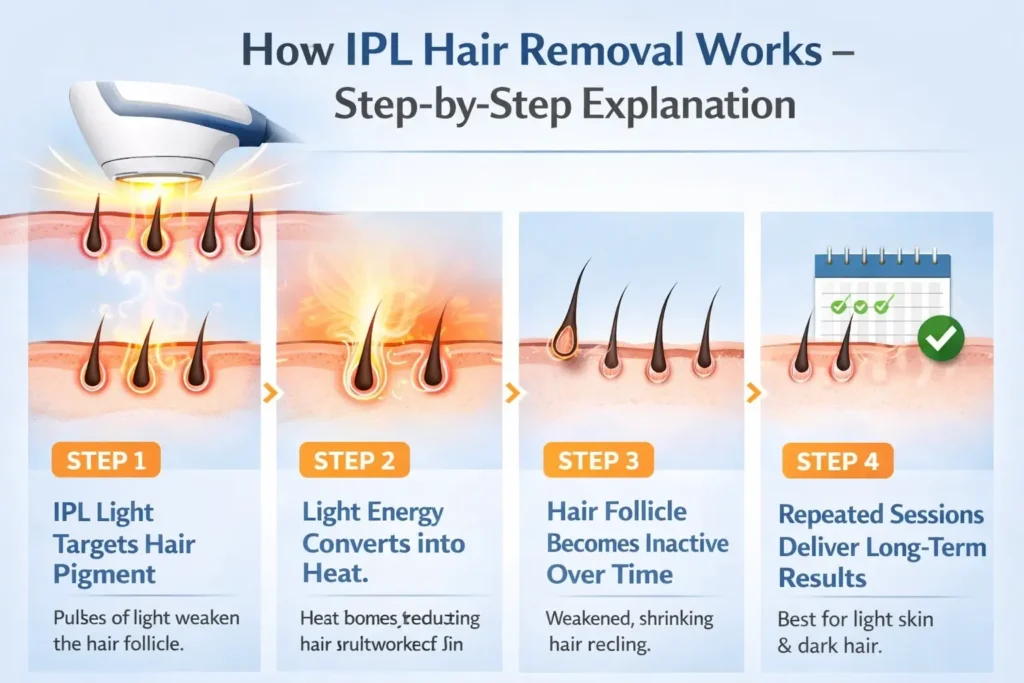
The way IPL works is wonderfully simple once you break it down. It relies on a scientific concept called Selective Photothermolysis, which is just a clinical way of saying “using light to create targeted, soothing warmth.” Here is exactly what happens during a session:
- Step 1: Finding the Pigment. When you press the device to your skin, it releases a flash of broad-spectrum light. This light is naturally drawn to melanin (the dark pigment inside your hair). This is why IPL is incredibly effective when there’s a clear contrast between dark hair and lighter skin.
- Step 2: A Gentle Warmth. As the dark hair absorbs that bright light, it instantly transforms it into heat. Think of how wearing a black t-shirt on a sunny day makes you feel warm. That heat travels right down the hair shaft directly into the root.
- Step 3: Time to Sleep. That concentrated warmth gently signals the hair-producing cells to slow down and enter a resting phase. The current hair detaches and will naturally shed over the next week or two.
- Step 4: Building the Habit. Because our hairs are always taking turns growing and resting, one session will only catch a handful of them. By sticking to a weekly routine for about 8 to 12 weeks, you ensure every single follicle eventually gets the message to stay smooth.
2. Respecting Your Body’s Natural Rhythm
If you’ve ever wondered why IPL takes a little time, the answer is beautifully natural. Our hair doesn’t grow all at once; it cycles through three distinct phases. By understanding these, you’ll see why a little patience pays off tremendously.
1. The Active Phase (Anagen)
Right now, the hair is actively growing and deeply connected to the root. This is the sweet spot for IPL. The hair acts as a perfect bridge, carrying the light’s warmth directly into the follicle to calm it down.
2. The Transition Phase (Catagen)
The hair has stopped growing and has detached from its base. Because that physical connection is broken, the warmth from the IPL flash can’t quite reach deep enough to put the root to sleep.
3. The Resting Phase (Telogen)
The hair is just hanging out, waiting to naturally shed. Since there’s no active connection to the follicle anymore, treating it with IPL during this phase won’t have an effect.
The Secret to Success: Because only about 20% of your hair is in that perfect Active Phase at any one time, showing up for your scheduled sessions every 1-2 weeks ensures you beautifully catch every single hair as it wakes up.
3. IPL vs. Clinical Laser: Finding Your Best Fit
We often hear IPL and laser grouped together, but they are uniquely different tools. Knowing the difference empowers you to choose the exact right method for your lifestyle and skin type.
| Feature | At-Home IPL | Clinical Laser |
|---|---|---|
| The Light Used | Gentle, scattered light (like a comforting camera flash) | A highly focused beam (like a precision pointer) |
| The Experience | Glides easily over large areas (like legs) quickly | Meticulous, targeted precision by a clinic technician |
| Accessibility | Very budget-friendly, done privately in your own bathroom | Higher investment, requires scheduled clinic visits |
| Who It’s For | Incredibly safe for light-to-medium skin tones | Specific clinic lasers are wonderfully safe for deep/dark skin |
4. Having Honest Expectations: Safety & Longevity
Will the Hair Be Gone Forever?
It’s always best to approach this with clarity. The FDA wonderfully classifies IPL as a method for long-term hair reduction. What this means for you is that treated hair grows back significantly finer, lighter, and remarkably slower. Many follicles will just stop producing altogether.
However, our bodies are wonderfully dynamic. Life events like pregnancy, stress, or natural aging can sometimes nudge a sleepy follicle awake. That’s totally normal! It just means you might want to do a cozy 10-minute maintenance session every few months to keep things perfectly smooth.
Is it Really Safe to Use at Home?
Yes, deeply so. When you choose a reputable, FDA-cleared device and follow the simple instructions, IPL is incredibly safe. Unlike razors that scrape the skin or wax that aggressively pulls at it, IPL leaves your skin barrier completely intact—which means waving goodbye to razor burn and angry ingrown hairs.
The best modern devices are like having a smart assistant. They feature built-in Skin Tone Sensors that automatically adjust the power to suit your unique complexion (and won’t flash if it isn’t safe), integrated UV filters, and safety locks so they only flash when fully pressed against your skin.
5. The Journey: What Your Results Will Look Like
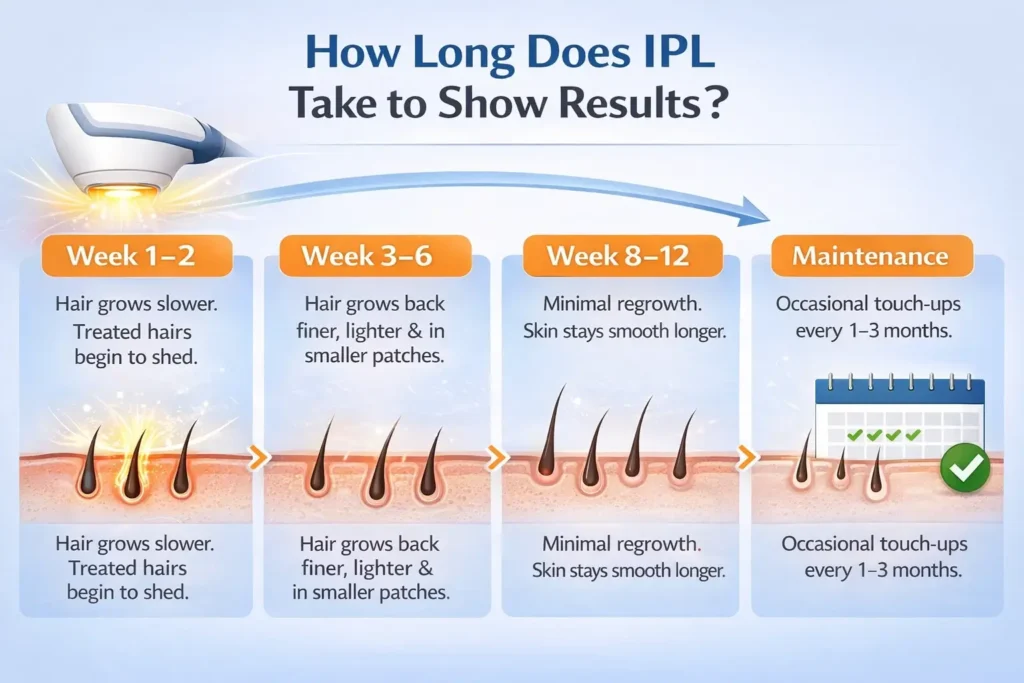
- Weeks 1–2 (Trusting the Process): It might look like your hair is still growing normally, but it’s actually pushing itself out to shed. Be patient and kind to yourself here; the magic is happening beneath the surface.
- Weeks 3–6 (The Turning Point): This is when you’ll start smiling. You’ll notice you don’t need to reach for the razor nearly as often. The hair comes back softer, patchier, and that frustrating “5 o’clock shadow” begins to fade away.
- Weeks 8–12 (The Sweet Spot): By sticking to your routine, you can see up to an amazing 90% reduction. Your skin will feel incredibly smooth, and those annoying ingrown hairs become a thing of the past.
- Beyond 12 Weeks (Easy Maintenance): You’ve done the work! Now you just shift to casual touch-ups every 1 to 3 months, only addressing any little stragglers that decide to wake up.
6. Honest Answers to Your Biggest Questions (FAQ)
Q1: Will IPL work on my blonde, grey, or red hair?
I wish it did, but no. Because IPL’s gentle light specifically hunts for melanin (dark pigment) to carry the warmth, lighter hair colors simply don’t have enough pigment to catch the light. If you have light hair, please don’t spend your money on IPL; look into Electrolysis, which is a fantastic, permanent alternative for you!
Q2: Why do I have to shave right before my session?
Think of the hair sitting on your skin as a tiny roadblock. If you don’t shave, the IPL light will heat up that surface hair instead of traveling down to the root. Not only does this waste the light’s energy, but it can also sting a bit and smell like singed hair. A clean shave ensures a smooth, comforting path directly to the follicle.
Q3: Can I glide the IPL device over my tattoos or dark freckles?
Please don’t do this. IPL is designed to aggressively seek out dark pigment. If you flash it over a beautiful tattoo or a dark mole, the skin there will absorb way too much heat instantly. This can cause very painful burns, blisters, and sadly ruin your tattoo ink. Always carefully glide around these areas or cover them securely.

“Adam Lee is the lead technical reviewer at MenReviewHub and a veteran of the traditional wet shaving community. With over a decade of hands-on experience, Adam specializes in dissecting high-performance grooming hardware and dermatological skincare. He doesn’t just ‘read the box’—he puts every product through a brutal 30-day real-world trial to ensure your morning routine is a tactical success, not a crime scene.”