
The Honest Truth About Plucking Nose Hair (And Why It’s Time to Stop)
Let’s have a real, man-to-man conversation about a grooming habit most of us are guilty of. We look in the mirror, spot that one rogue hair sticking out, grab the tweezers, and brace for that eye-watering pinch. It feels like the quickest, easiest way to keep ourselves looking sharp.
But if you are currently standing in front of your bathroom mirror, gripping those tweezers and getting ready to pull a hair by its root—please take a brief pause. I’ve been exactly where you are, and I’ve learned the hard way that this quick fix just isn’t worth it. You aren’t just enduring a few seconds of pain; you’re actually creating a tiny open wound in one of the most sensitive, bacteria-prone areas of your face. I’ve seen too many guys deal with painful ingrowns and nasty infections simply because they wanted a clean look. You absolutely deserve to look your best, but let’s do it the smart, completely painless way.
⚡ The Quick Takeaway: Safer Grooming in Seconds
If you’re rushing to get out the door and just need the straightforward facts, here is the no-nonsense breakdown of why we need to change our approach:
- Retire the Tweezers: Yanking a hair out from the root leaves a microscopic, bleeding wound in a dark, warm place. It’s practically an open invitation for bacteria like Staph to cause trouble.
- Your Built-In Filter: Nose hairs are actually doing us a massive favor by catching dust and allergens. You really don’t want to clear out the whole forest.
- Keep It on the Edge: Only worry about trimming the stray hairs that visibly peek past the outer edge of your nostril.
- Upgrade Your Tools: Put the tweezers and harsh wax sticks away. A reliable shielded electric trimmer or rounded safety scissors will give you a perfectly clean look with zero tears.
1. The “Danger Triangle” (It Sounds Scary, But It’s Real)
Let’s talk briefly about how our faces are wired. If you use your fingers to draw a triangle—starting at the bridge of your nose and going down to the outer corners of your upper lip—you’ve mapped out what doctors call the Danger Triangle of the Face.
🩸 The Brain Connection
Why do medical pros take this zone so seriously? Because the veins in this specific area run straight back to the cavernous sinus, a space located right near the base of your brain. Because of this direct link, a bad infection here is nothing to mess around with. It’s a rare complication, but it’s so incredibly easy to avoid just by treating this area a little more gently.
Every time we pluck a nose hair, we pull out the root and leave behind a tiny, invisible wound in a naturally damp, bacteria-heavy environment. Here is what you might end up dealing with a few days later if things get irritated:
🦠 That Unbearable Ache
An infected follicle can turn into a swollen, tender bump inside the nose. You know the kind—the one that makes your eyes water every time you accidentally brush your face or sneeze.
⚠️ Stubborn Ingrown Hairs
When the hair attempts to grow back from a damaged root, it often gets trapped beneath the skin, creating a painful spot that can linger for weeks.
🛑 Constant Irritation
The trauma to the skin causes scabbing and dryness. It leaves you feeling like there’s always something in your nose that you just can’t clear out.
Brother-to-Brother Advice: Pushing through the pain of plucking doesn’t make you tough; it just sets you up for a miserable week. Let’s work smarter. Trimming is faster, entirely painless, and keeps you looking just as well-groomed.
2. Making Peace with Your Natural Filter
Before you decide to wage war and clear out your nostrils entirely, remember that this hair is actually on your team. We really don’t want a completely smooth, bare runway up there.
Consider your nose hair your body’s personal air purifier. We breathe in thousands of times a day, and those hairs are our first line of defense against whatever garbage is floating in the air around us.
Why You Need Some Fuzz
- Blocking the Junk: They naturally catch dust, dirt, and pollution before it can settle deep into your lungs.
- Fighting Allergies: This physical net snags pollen and irritants, potentially saving you from a brutal, day-ruining sneezing fit.
- Comfortable Breathing: A decent amount of hair helps regulate the airflow, keeping the inside of your nose moisturized rather than painfully dry.
When guys go overboard with waxing or aggressive plucking, they often end up dealing with worse seasonal allergies and dry, irritated nasal passages. Keep it simple: just trim the hairs that are trying to escape. That’s all it takes to look good.
3. A Painless, 5-Minute Grooming Routine
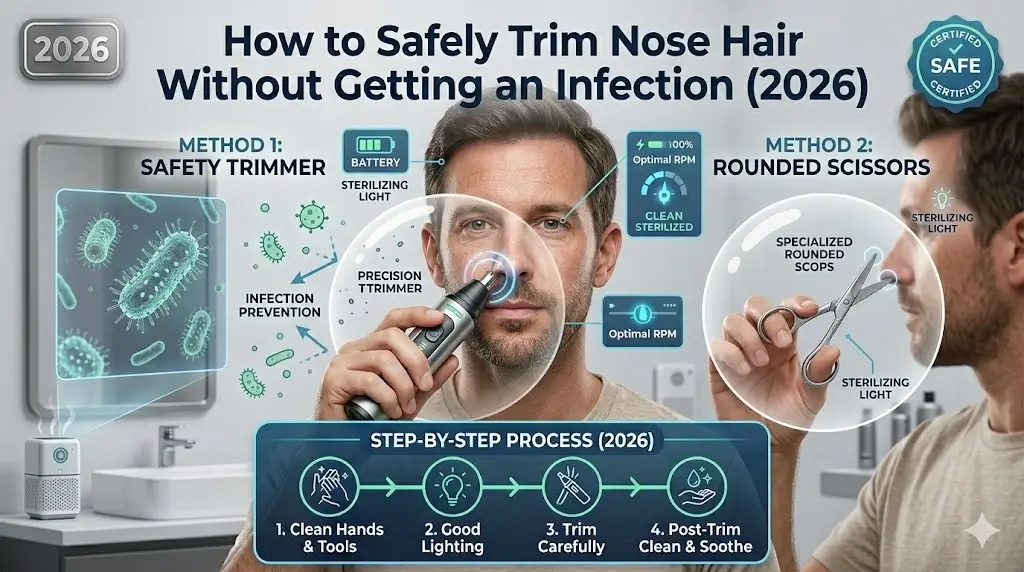
Alright, so the tweezers are officially out. What’s the plan? Grab a decent trimmer and try this easy, comfortable routine next time you’re getting ready.
Step 1: Keep It Clean
It only takes two seconds. Give your trimmer head a quick wipe with rubbing alcohol to ensure you aren’t introducing any outside bacteria. Let it air dry while you prep.
Step 2: Prep the Area
Gently blow your nose into a tissue to clear out any debris. Pro tip: doing this right after a warm shower is fantastic. The steam softens the hair, making the trim effortlessly smooth.
Step 3: Find Good Lighting
Don’t do this in a dim hallway. Stand at the mirror where the light is bright so you can clearly see what needs to go and what can stay.
Step 4: The Outer Edge Trim
Use your finger to gently push the tip of your nose up slightly (the classic “pig nose” maneuver). This shows you exactly which hairs are the culprits. Lightly circle the outer rim with your electric trimmer. There’s no need to push it deep inside.
Step 5: Rinse and Go
Resist the urge to poke around with unwashed fingers. A quick splash of water or some saline spray will clear out the tiny loose hairs so they don’t tickle you all day. Give your trimmer a quick rinse, and you’re good to go.
4. Upgrading Your Grooming Tools
If you’ve been using your partner’s eyebrow tweezers or the scissors from your home office desk, it’s time to treat yourself to the right tools. Investing in proper gear just makes life easier.
Rounded Safety Scissors
These are a reliable, old-school classic. The tips are blunted specifically so you won’t accidentally nick the sensitive skin inside your nose.
✅ The Good Stuff:
- Never run out of battery.
- You have total control over exactly what gets snipped.
❌ Keep in Mind:
- Takes a bit more time and focus.
- You still need a relatively steady hand.
Shielded Electric Trimmer
Honestly, this is the best move for most of us. The spinning blades are tucked safely behind a smooth metal guard, so they literally can’t cut your skin.
✅ The Good Stuff:
- Zero stress—the blades only touch the hair, not your skin.
- You’re done in about ten seconds flat.
❌ Keep in Mind:
- You have to remember to keep it charged.
- Don’t buy the cheapest one on the shelf; a weak motor can tug the hair.
5. When It Might Be Time to See a Doctor
If you’re currently dealing with the painful aftermath of a plucking session, try not to stress too much—most of the time, it heals up on its own. But it’s always good to be smart about our health. Keep an eye out for these signs that mean you should probably let a professional take a look:
🔥 Throbbing, Constant Pain
A tiny pinch is normal, but if the pain is pulsing and distracting you throughout the day, a small infection might be brewing.
🔴 Serious Redness or Swelling
If the outside of your nose gets hot to the touch, noticeably red, or swollen, your body is telling you it’s fighting something off.
☣️ Any Weird Discharge
This is a hard “go see a doctor” rule. Any pus or unexpected discharge means you probably need a quick round of antibiotics to clear it up safely.
🌡️ Feeling Feverish
If you start running a fever or getting chills a few days after pulling a stubborn hair, don’t brush it off. Check in with a doctor just to be safe.
There’s no shame in getting things checked out. A quick clinic visit can offer real peace of mind and keep a minor irritation from turning into a big problem.
🔗 Your Next-Level Grooming Setup
Taking care of yourself shouldn’t involve wincing in pain. If you’re ready to ditch the tweezers and genuinely upgrade your routine, check out the reliable gear we’ve personally tested:
- For the Fine Details: Find a comfortable, shielded tool that won’t bite in our Best Nose, Ear & Eyebrow Trimmers of 2026 Guide.
- For a Clean Dome: Keeping a bald head perfectly smooth without irritation takes the right tech. See our top picks in the Best Electric Shavers for Bald Heads 2026 Guide.
- For the Beard: Keep your facial hair looking heavy but neat by browsing the Best Cordless Beard Trimmers Database.

“Adam Lee is the lead technical reviewer at MenReviewHub and a veteran of the traditional wet shaving community. With over a decade of hands-on experience, Adam specializes in dissecting high-performance grooming hardware and dermatological skincare. He doesn’t just ‘read the box’—he puts every product through a brutal 30-day real-world trial to ensure your morning routine is a tactical success, not a crime scene.”