
Learn how IPL hair removal works, from light technology to hair growth cycles. Expert explanation, safety tips & real results timeline.
IPL hair removal has evolved from a niche beauty treatment into a trusted, science-based solution for long-term hair reduction. Instead of relying on temporary methods like shaving or waxing, more users are turning to IPL technology because it works directly at the root of unwanted hair. To get the best results, however, it’s essential to understand how IPL hair removal works from a professional and technical perspective.
IPL, or Intense Pulsed Light, uses gentle pulses of broad-spectrum light that penetrate the skin and target melanin within the hair follicle. Once absorbed, this light energy converts into heat, gradually weakening the follicle and slowing down future hair growth. Over multiple sessions, hair grows back finer, lighter, and less frequently—making IPL hair removal an effective long-term solution rather than a quick fix.
What sets IPL hair removal apart is its ability to work with the natural hair growth cycle. Because not all hair grows at the same time, consistent treatments are required to achieve optimal results. When used correctly with a high-quality device, IPL hair removal technology can deliver smoother skin, reduced regrowth, and improved comfort over time. Understanding how IPL hair removal works helps users set realistic expectations and maximize the effectiveness of every treatment session.
What Is IPL Hair Removal?
IPL hair removal is a long-term hair reduction method that uses Intense Pulsed Light (IPL) technology to slow and minimize hair growth at the follicle level. Instead of physically removing hair from the surface like shaving or waxing, IPL works by delivering controlled pulses of light into the skin, where the energy is absorbed by melanin in the hair shaft.
At its core, IPL hair removal technology targets the pigment in the hair and converts light energy into heat. This heat gently disrupts the hair follicle’s ability to produce new hair, causing regrowth to become finer, lighter, and less frequent over time. Because IPL uses a broad spectrum of light rather than a single wavelength, it can treat larger skin areas efficiently, making it popular for both home-use devices and professional treatments.
Unlike permanent hair removal methods often implied in marketing, IPL is best described as a long-term hair reduction solution. It works progressively and requires multiple sessions to align with the natural hair growth cycle. When used consistently and correctly, IPL hair removal offers a balance of effectiveness, convenience, and skin comfort—making it one of the most widely adopted light-based hair removal technologies today.
How IPL Hair Removal Works – Step-by-Step Explanation
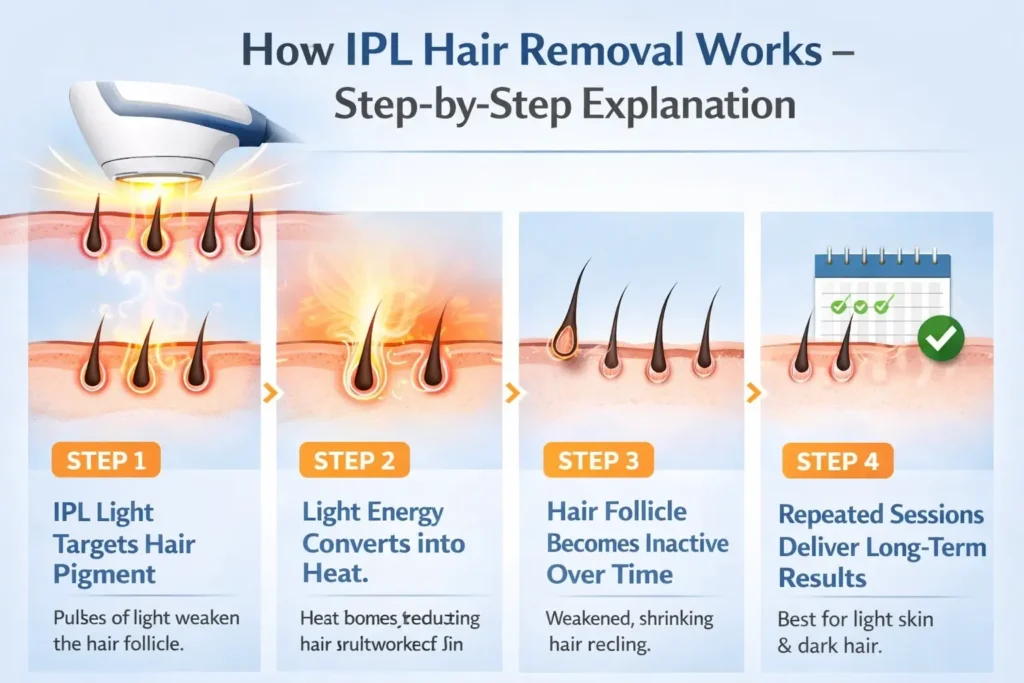
Understanding how IPL hair removal works requires looking at the process step by step, from light emission to long-term hair reduction. IPL technology is designed to target hair beneath the skin’s surface while keeping surrounding tissue safe and intact.
Step 1: IPL Light Targets Hair Pigment (Melanin)
An IPL device emits controlled pulses of broad-spectrum light onto the skin. This light is selectively absorbed by melanin—the natural pigment found in the hair shaft. Darker hair absorbs light more effectively, which is why IPL hair removal works best on dark hair against lighter skin tones.
Step 2: Light Energy Converts into Heat
Once the melanin absorbs the light, the energy is converted into heat. This heat travels down the hair shaft to the follicle, gently weakening the structure responsible for hair growth. Unlike surface-level hair removal methods, IPL focuses on reducing hair growth at its source.
Step 3: Hair Follicle Becomes Inactive Over Time
The heat disrupts the follicle’s ability to produce new hair, slowing regrowth after each session. Hair does not disappear instantly—instead, it sheds naturally over the following days or weeks.
Step 4: Repeated Sessions Deliver Long-Term Results
Because not all hairs grow at the same time, IPL treatments must be repeated according to a set schedule. With consistent use, hair grows back finer, lighter, and less frequently, delivering visible long-term hair reduction and smoother skin over time.
The Hair Growth Cycle Explained (Why IPL Takes Time)
One of the most common questions users ask is why IPL hair removal doesn’t work instantly. The answer lies in the hair growth cycle, which plays a crucial role in how effective IPL treatments can be. To understand how IPL hair removal works over time, it’s essential to know how hair naturally grows.
Anagen Phase – The Active Growth Stage
The anagen phase is when hair is actively growing and firmly connected to the follicle. This is the only stage where IPL hair removal is most effective. During this phase, melanin concentration is highest, allowing IPL light to travel down the hair shaft and weaken the follicle at its root. However, only a percentage of hairs are in the anagen phase at any given time.
Catagen Phase – The Transition Stage
In the catagen phase, hair stops growing and begins to detach from the follicle. Because the connection between the hair and follicle weakens, IPL light has a limited impact during this stage.
Telogen Phase – The Resting Stage
During the telogen phase, hair rests before naturally shedding. Since there is little to no active melanin connection, IPL hair removal is largely ineffective at this point.
Why Consistency Matters
Because hairs are in different growth stages simultaneously, multiple IPL sessions are required. Regular treatments ensure that more hairs are targeted during the anagen phase, leading to gradual, visible, and long-term hair reduction rather than instant results.
IPL vs Laser Hair Removal – How They Work Differently
Although IPL and laser hair removal are often compared, they work in distinctly different ways. Understanding the technology behind each method helps users choose the option that best fits their skin type, hair color, budget, and long-term goals.
Light Technology: Broad Spectrum vs Single Wavelength
IPL hair removal uses broad-spectrum light, meaning it emits multiple wavelengths in each pulse. This allows IPL to treat larger areas of skin at once, making it ideal for at-home devices and full-body treatments. In contrast, laser hair removal uses a single, focused wavelength of light that targets hair follicles with high precision.
Targeting Method and Depth
Because laser energy is more concentrated, it penetrates deeper into the skin and targets hair follicles more precisely. IPL light spreads over a wider area, which can be slightly less intense but more versatile for general use. This is why laser treatments are typically performed in clinics, while IPL hair removal is safe and practical for home use.
Treatment Experience and Results
Laser hair removal often delivers faster results with fewer sessions, especially on thick, dark hair. However, it is more expensive and less accessible. IPL hair removal works gradually, requiring consistent sessions to align with the hair growth cycle, but offers excellent long-term hair reduction at a lower cost.
Safety and Accessibility
Modern IPL devices include built-in skin tone sensors and safety controls, making them user-friendly for non-professionals. Laser systems, while powerful, require trained specialists. Ultimately, the difference comes down to precision versus convenience—and how each technology delivers light to the hair follicle.
Is IPL Hair Removal Permanent?
One of the biggest misconceptions about IPL is the idea that it offers permanent hair removal after just a few sessions. In reality, IPL hair removal is best described as long-term hair reduction, not permanent hair removal in the medical sense. Understanding this distinction helps set realistic expectations and avoid disappointment.
IPL works by repeatedly weakening the hair follicle through controlled light energy. Over time, treated follicles produce hair that grows back slower, finer, and lighter, and in many cases, some follicles stop producing hair altogether. However, the body can activate dormant follicles due to factors such as hormonal changes, age, or genetics. This is why occasional maintenance sessions are usually needed to preserve results.
For most users, consistent IPL treatments over 8–12 weeks lead to a significant and visible reduction in hair growth. After the initial treatment phase, maintenance sessions every few months are often enough to keep skin smooth. Compared to shaving or waxing, IPL offers far longer-lasting results and improved skin comfort, but it does not guarantee permanent hair removal for every individual.
Is IPL Hair Removal Safe?
Yes, IPL hair removal is considered safe when used correctly and with FDA-cleared or clinically tested devices. Dermatologists widely recognize IPL technology as a non-invasive method that targets hair follicles while protecting the surrounding skin. Unlike harsh hair removal techniques, IPL does not break the skin barrier, which significantly reduces the risk of infection or long-term damage.
Modern IPL hair removal devices are designed with multiple safety features to ensure controlled and comfortable treatments. These include skin tone sensors that adjust light intensity based on your complexion, built-in UV filters to block harmful rays, and contact sensors that prevent accidental flashes. When these safeguards are combined with proper usage, the risk of side effects is minimal.
Most users experience little to no discomfort during treatment—often described as a mild warming sensation or a light snap against the skin. Temporary redness or warmth may occur, but these effects usually fade within a few hours. Serious side effects are rare and typically linked to improper use, such as treating skin that is too dark, recently tanned, or using an incorrect energy level.
From a dermatologist-backed perspective, IPL hair removal is a safe and effective option for long-term hair reduction, especially when users follow manufacturer guidelines and maintain a consistent treatment routine.
How Long Does IPL Take to Show Results?
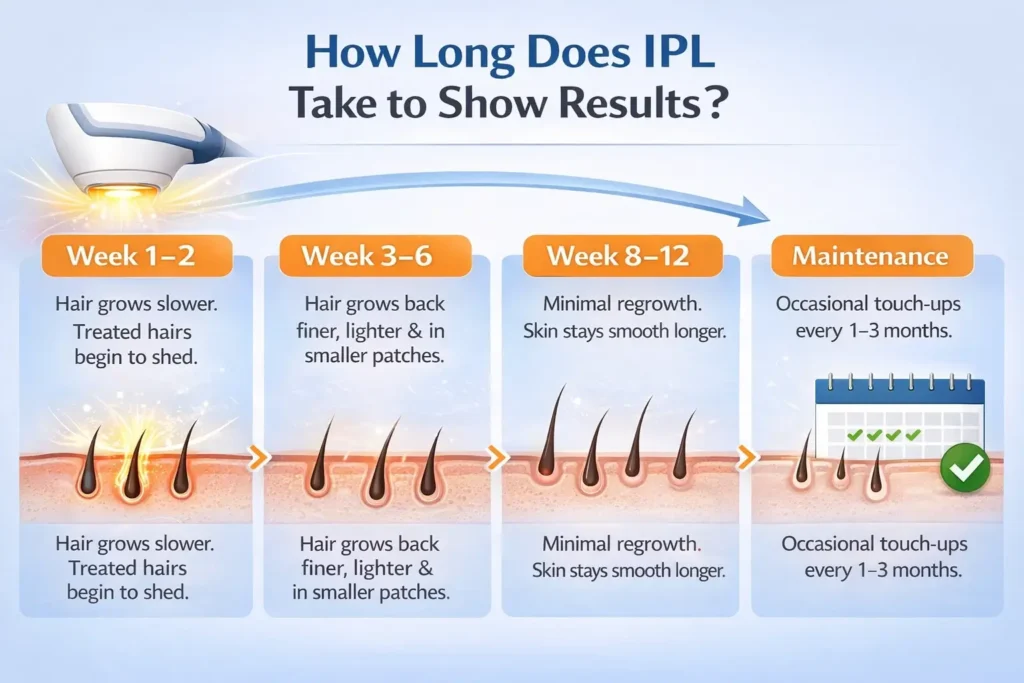
The results of IPL hair removal do not appear overnight, but with consistent use, they become clearly visible over time. Because IPL works in sync with the natural hair growth cycle, patience and regular treatments are key to achieving optimal outcomes. Understanding this timeline helps set realistic expectations and improves long-term satisfaction.
Week 1–2: Early Signs of Slower Regrowth
After the first few IPL sessions, hair may still grow, but it often appears slightly slower and less dense. Some treated hairs begin to shed naturally, which is a positive sign that the follicles are responding to the light energy.
Week 3–6: Noticeable Hair Reduction
By this stage, many users see visible changes. Hair grows back finer, lighter, and in smaller patches. Shaving becomes less frequent, and skin typically feels smoother for longer periods.
Week 8–12: Optimal Results Phase
With continued, consistent treatments, most users achieve significant long-term hair reduction. Regrowth is minimal, and remaining hairs are usually soft and sparse. This is when IPL hair removal delivers its most noticeable results.
After 12 Weeks: Maintenance Mode
Once the initial treatment phase is complete, occasional maintenance sessions every 1–3 months help sustain results. While IPL does not guarantee permanent hair removal, following this timeline ensures long-lasting smoothness and maximum effectiveness.
Common Myths About How IPL Hair Removal Works
Despite its growing popularity, there are still many misconceptions about IPL technology. These myths often lead to unrealistic expectations or improper use. Below are the most common misunderstandings about how IPL hair removal works, explained from an expert perspective.
Myth 1: IPL Hair Removal Works Instantly
IPL does not remove hair immediately after one session. Instead, it gradually weakens hair follicles over multiple treatments. Visible hair reduction appears over weeks, not hours, because IPL works in alignment with the hair growth cycle.
Myth 2: IPL and Laser Hair Removal Are the Same
While both use light energy, IPL hair removal uses broad-spectrum light, whereas laser hair removal relies on a single, focused wavelength. This difference affects precision, treatment depth, cost, and suitability for home use.
Myth 3: IPL Destroys Hair Follicles Permanently
IPL reduces hair growth long-term, but it does not permanently eliminate all hair follicles. Hormonal changes and genetics can reactivate growth, which is why maintenance sessions are recommended.
Myth 4: IPL Is Unsafe for the Skin
When used correctly with modern devices, IPL is safe and dermatologist-approved. Most side effects are mild and temporary, such as slight redness or warmth.
Myth 5: IPL Works Equally Well for Everyone
IPL hair removal is most effective on darker hair and lighter skin tones. Results can vary depending on hair color, skin type, and treatment consistency.
By understanding these myths, users can set realistic expectations and use IPL technology more effectively for long-term hair reduction.
FAQs
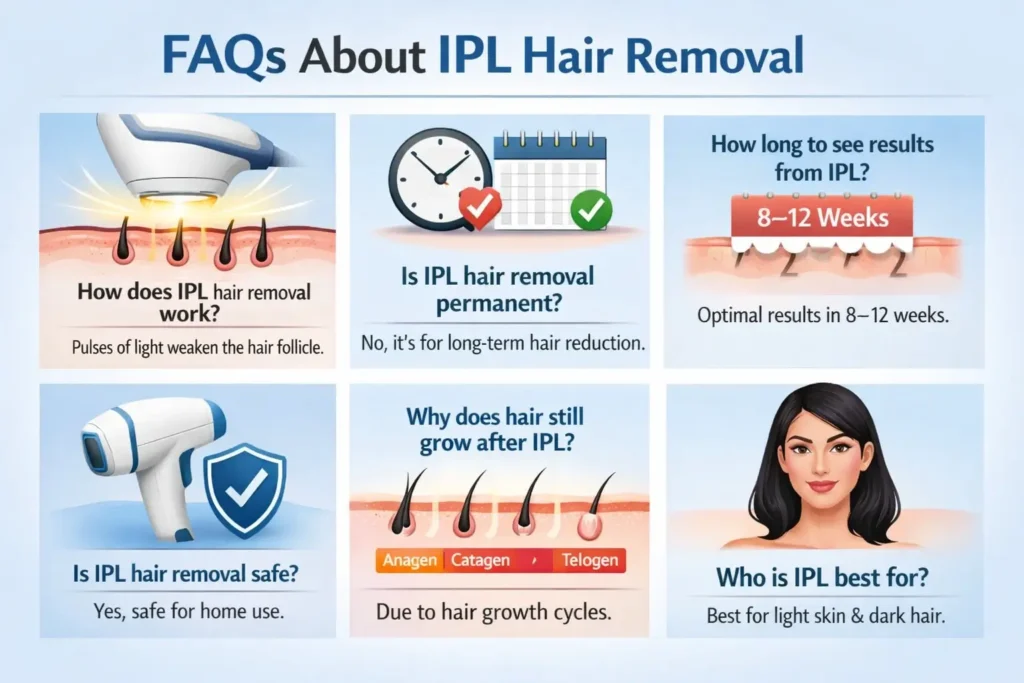
How does IPL hair removal work?
IPL hair removal works by emitting pulses of broad-spectrum light that are absorbed by melanin in the hair. This light energy converts into heat, weakening the hair follicle and slowing future hair growth over multiple sessions.
Does IPL destroy hair follicles?
IPL does not completely destroy hair follicles in all cases. Instead, it gradually reduces their ability to produce hair, resulting in slower, finer, and lighter regrowth. Some follicles may stop producing hair entirely with consistent use.
Is IPL hair removal permanent?
IPL is not considered permanent hair removal. It provides long-term hair reduction, and most users need occasional maintenance sessions to maintain results over time.
How long does it take to see results from IPL?
Most users notice slower hair regrowth within 2–3 weeks. Visible hair reduction typically appears after 4–6 weeks, with optimal results achieved after 8–12 weeks of consistent treatments.
Is IPL hair removal safe for home use?
Yes, modern IPL devices are designed for safe home use and often feature skin tone sensors, UV filters, and built-in safety controls. When used according to instructions, IPL is considered safe and dermatologist-approved.
Why does hair still grow after IPL treatments?
Hair can still grow after IPL because not all hairs are in the active growth phase during treatment. Hormonal changes and dormant follicles can also cause regrowth, which is why maintenance sessions are recommended.
Who is IPL hair removal best for?
IPL works best for people with lighter skin tones and darker hair, as the light targets hair pigment. Results may vary depending on skin type, hair color, and treatment consistency

Adam Lee is a personal care enthusiast and a veteran of the traditional wet shaving community, with over 10 years of experience testing artisanal and heritage soaps, aftershaves, and razors. At Men Review Hub, he personally puts every product through a minimum 30-day real-world trial to ensure you get an honest, practical look at what truly deserves a spot in your bathroom cabinet.