
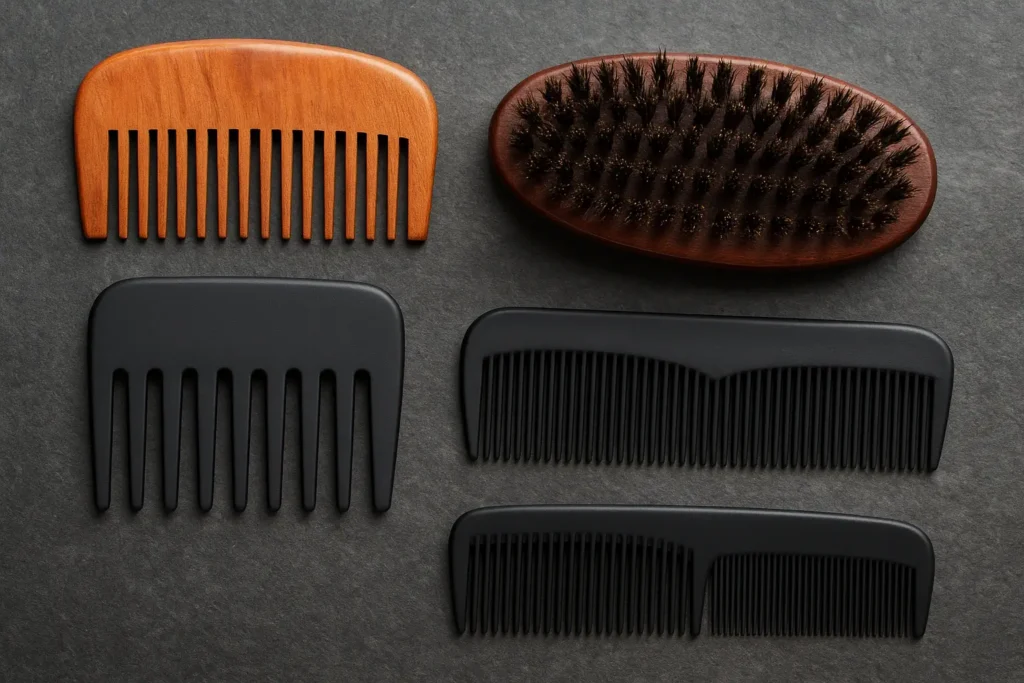
Taming the Beast: Best Beard Combs & Brushes for Thick Beards
This is exactly where high-quality tools like the best beard combs and stiff-bristle brushes come in to save the day. Not all grooming gear is created equal. Dragging a cheap, plastic drugstore comb through a dense beard is a guaranteed way to rip out hairs, cause split ends, and leave your face feeling raw. In this guide, we are cutting the BS to show you the absolute best tools built specifically for thick beards, making sure your morning routine is completely pain-free and your beard looks sharp.
Why Trust MenReviewHub?
We independently evaluate grooming products with strict performance metrics. For thick facial hair, we focused heavily on tooth seamlessness, tensile strength, and bristle rigidity. Our recommendations are compiled through a mix of hands-on evaluation, materials science analysis, and deep-dive verification of long-term real-world feedback.
⚡ The Shortlist: Top Tools for Thick Beards
If your beard is a tangled mess right now and you just need to know what to buy, here is our no-fluff breakdown of the absolute best tools for thick beards:
- The Detangling Comb: The Kent Handmade Wide Tooth Comb is the king. Its hand-polished, seamless teeth glide through dense hair without snagging or pulling.
- The Tactical Carbon Fiber: The Chicago Comb Model No. 7 is a carbon fiber beast. It’s anti-static, virtually indestructible, and perfect for throwing in your gym bag or travel kit.
- The Deep-Penetration Brush: The ZilberHaar Medium-Firm Brush uses stiff boar bristles that actually reach through your thick hair to exfoliate the skin underneath and distribute oils evenly.
| Product | Material | Best For | Key Property |
|---|---|---|---|
| Kent Handmade | Cellulose Acetate | Wet Detangling | Saw-cut seamless teeth |
| Chicago Comb No. 7 | Carbon Fiber | Travel & Durability | 100% Anti-static |
| ZilberHaar Brush | Pearwood & Boar Bristle | Skin Exfoliation & Shape | Stiff first-cut bristles |
| Sandalwood Classic | Natural Sandalwood | Oil Distribution | Absorbs & retains oils |
1. The Basics: Comb vs. Brush
A huge mistake a lot of guys make is thinking combs and brushes do the same thing. They don’t. For a thick beard, you can’t live off just one; you actually need both, and you need to use them in the right sequence to avoid mechanical damage to the hair shafts.
📐 The Wide-Tooth Comb: For Detangling
Combs are your primary heavy-lifting structural tool right out of the shower or immediately after applying heavy conditioning treatments.
- Tooth Spacing: Dense beards require wide-tooth spacing to prevent premature traction alopecia (ripping your beard out by the root).
- The Prep Work: It gently separates matted hair arrays after washing, prepping your beard for a secondary styling brush or a heated straightener.
- Material Matters: Cheap injection-molded plastic combs have tiny jagged microscopic seams that slice up your hair cuticles like little razors. Stick to hand-polished acetate, wood, or carbon composites.
🛡️ The Boar Bristle Brush: For Health and Shape
Brushes are your finishing, conditioning, and training tools, engineered explicitly for styling and preserving epidermal health.
- Spreading sebum: Natural boar bristles feature microstructures that soak up your skin’s natural sebum (and external beard oil) and evenly coat the length of each strand.
- Exfoliation: Firm, first-cut bristles penetrate through dense bulk to sweep away dead stratum corneum cells, which is the singular key to stopping “beardruff”.
- Training the Hair: Brushing daily stretches the hair fibers slightly and trains wild, stubborn patches to lie uniformly downward.
2. The Lineup: The Best Gear for the Job
1. The Ultimate Detangler: Kent Handmade Wide Tooth Comb
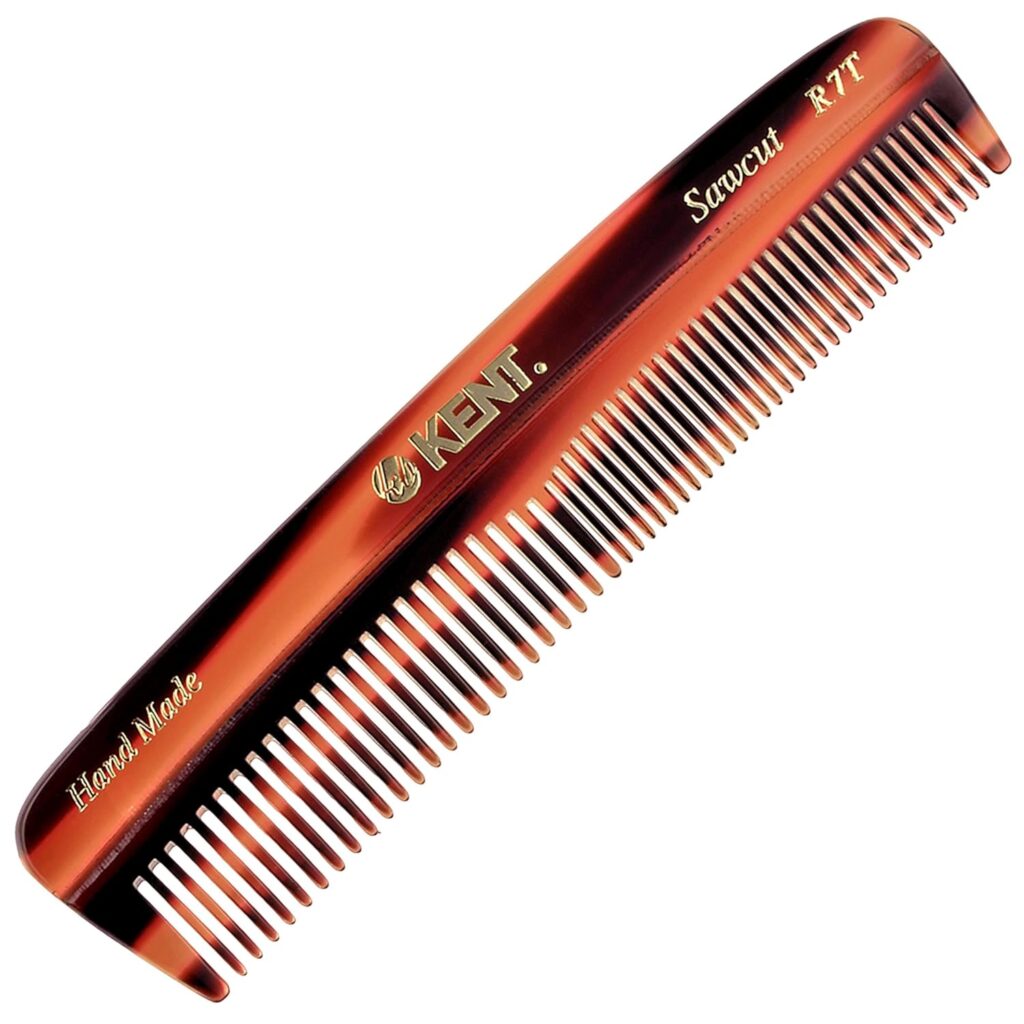
Kent has held the gold standard in hair care since 1777, and their handmade cellulose acetate combs demonstrate exactly why. Unlike injection-molded plastics that are popped out of a factory die with leftover sharp edges, Kent combs are individual blocks blanked out, saw-cut, and then tumbled in polishing barrels for hours to achieve completely seamless rounded tips.
When dealing with massive, dense bulk, this comb drops smoothly past tough external knots directly into the core matrix of your beard. It has excellent flex memory—yielding slightly under high tension rather than simply snapping off or ripping your hair follicle from its root base.
💡 Performance Verdict: Ideal for daily postwar detangling on damp hair. It won’t strip or shear your cuticles, making it an absolute necessity for guys attempting to cross the 3-month growth mark without accumulating massive split ends. Avoid if you want a tiny, super-compact pocket comb.
✅ Pros: Hand-polished rounded teeth eliminate micro-tears; completely tactile and dynamic flexibility; incredibly gentle on highly sensitive skin layers under the beard.
❌ Cons: Higher up-front cost than basic injection combs; cellulose acetate can deform if subjected to concentrated high temperatures (e.g., direct high-wattage blow dryers).
2. The Indestructible Option: Chicago Comb Model No. 7
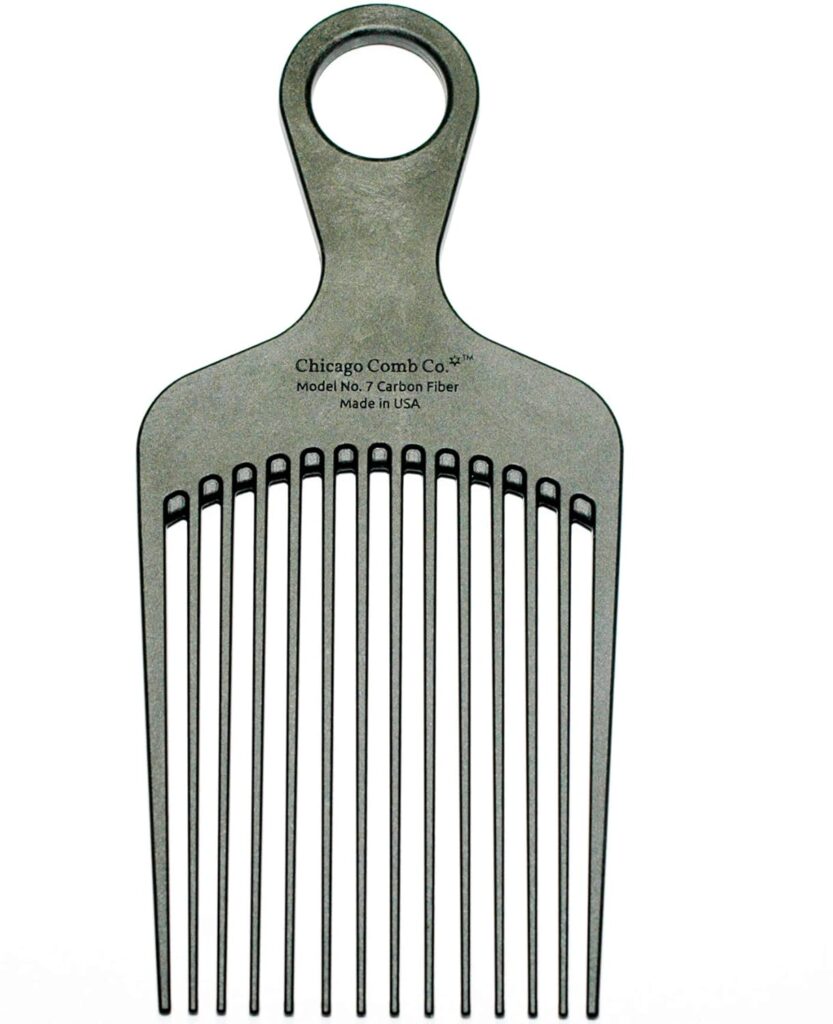
If you’re looking for an ultra-tough comb that survived a drop onto concrete, the Chicago Comb Model No. 7 is milled entirely from a highly advanced carbon fiber composite. Measuring 6 inches long with long, broad teeth, it was systematically engineered explicitly for large, curly, or coarse beards that instantly bind up traditional fine combs.
The key performance characteristic here is its complete immunity to static electricity. When thick beard hair is rubbed with standard plastics, it generates a localized charge that forces hair shafts outwards, yielding massive unwanted frizz. The Model No. 7 absorbs and discharges static completely, pulling hairs down into clean, tightly locked columns.
💡 Performance Verdict: The ultimate travel, gym bag, or professional environment companion. It can withstand direct heat up to 460°F and is totally impervious to water, chemicals, and physical impacts. Avoid if you prefer the soft, warming skin-feel of traditional organic wood.
✅ Pros: Absolutely anti-static; high heat and chemical resistance (great for hot blow-drying styling work); structurally rigid body allows superb leverage over coarse, thick snags.
❌ Cons: Offers zero structural flex; the industrial aesthetic does not fit classic, old-school wooden grooming displays.
3. The Deep Reacher: ZilberHaar Brush
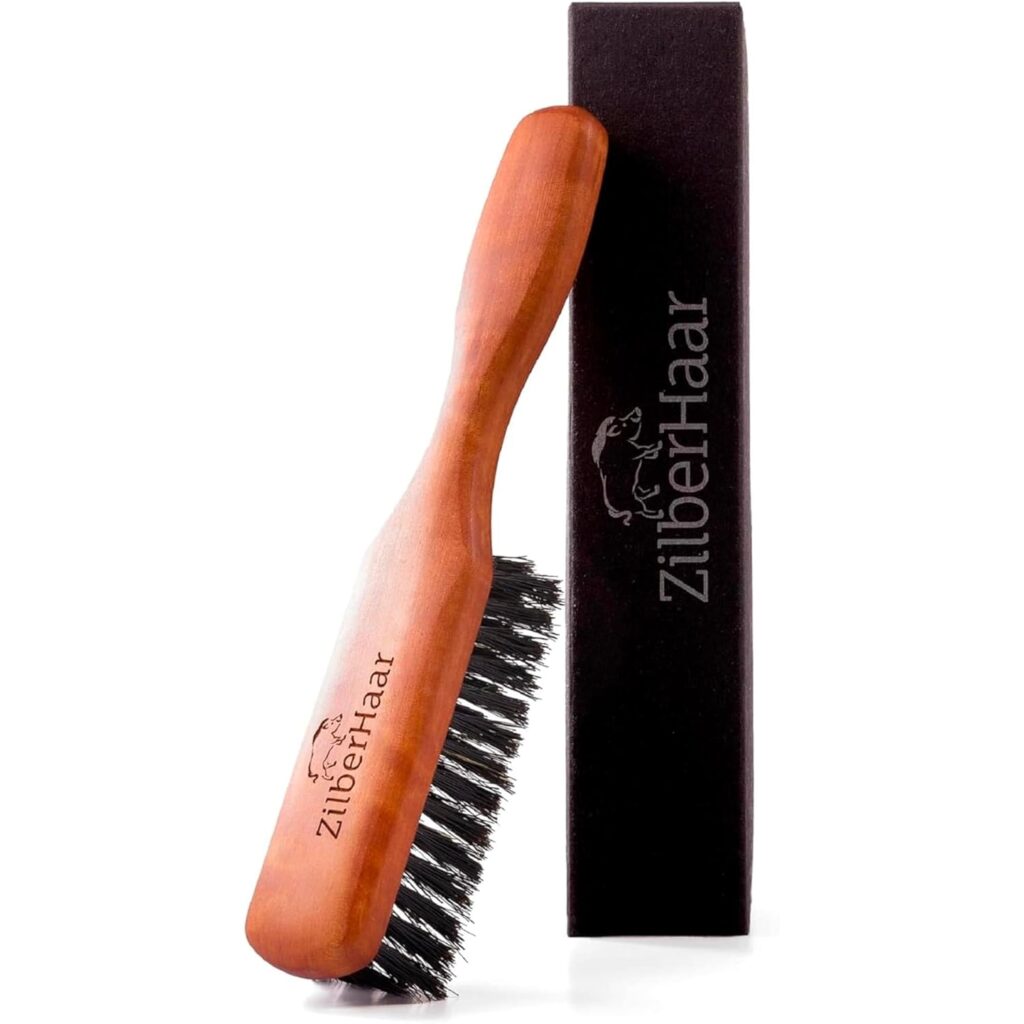
Crafted in Germany out of sustainably harvested pearwood, ZilberHaar utilizes stiff, uncut first-cut natural boar bristles. While budget brushes utilize soft nylon inserts that bend and skim loosely across the outermost surface layer of dense beards, this brush has the precise mechanical tensile force necessary to slice through up to 6 inches of deep hair bulk to accurately map and exfoliate the underlying dermis.
🎯 Best For: Deep skin conditioning, scraping out beard flakes, and shaping unruly, wavy, dry hair beds.
✅ Pros: Excellent skin stimulation; flawlessly routes oils from root to tip.
❌ Cons: Bristles feel intensely stiff initially and can cause redness if used on raw skin.
4. The Classic Choice: Sandalwood Combs
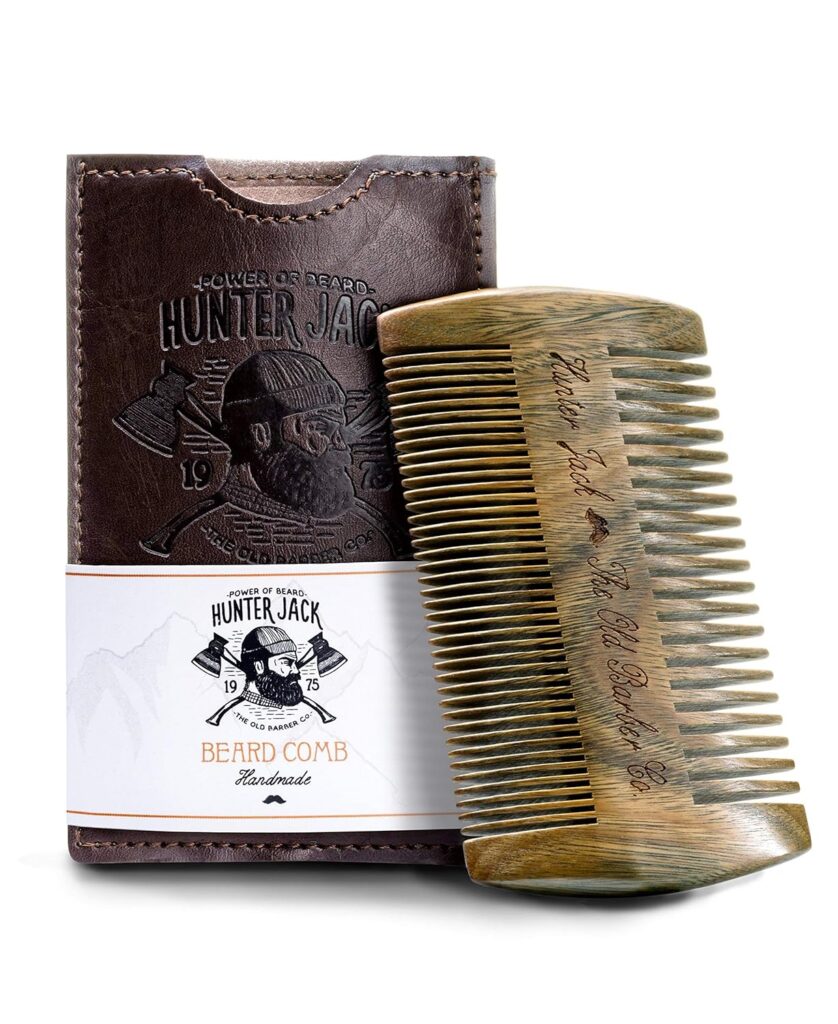
For a highly authentic grooming experience, natural wooden combs made from premium Green Sandalwood deliver a massive organic advantage. Wooden fiber construction is uniquely porous. Instead of pushing styling products down and scraping them off, a quality wood comb gradually drinks up your specialized beard oils over several weeks of continuous service.
🎯 Best For: Distributing balms evenly through semi-dry hair while emitting an ultra-clean, earthy timber aroma.
✅ Pros: Naturally zero static charge; pre-lubricates over time; budget-friendly.
❌ Cons: Cannot be exposed to waterlogging in bathrooms, or it will warp and splinter.
3. How to Use Them Like a Pro
Having the best tools doesn’t mean much if you don’t know how to use them. Ripping a comb through a dry, tangled beard is a recipe for disaster. Follow this simple routine:
Step 1: The Warm Up
Always start your grooming routine right after a warm shower. The steam softens the hair and opens up the cuticles, making your coarse beard much easier to manage and less likely to break.
Step 2: Oil It Up
Massage a few drops of high-quality beard oil deeply into your beard, making sure to hit the skin underneath. This gives the hair the “slip” it needs for your tools to glide through.
Step 3: Detangle (The Comb)
Grab your wide-tooth comb. Start at the very bottom of your beard (the tips) and gently work your way up toward the roots. Never rip through a knot; tease it apart gently.
Step 4: Shape and Style (The Brush & Trimmers)
Once your beard is detangled and mostly dry, grab your boar bristle brush. Use firm, downward strokes to train the hair to lie flat and look sharp. Finish up with some beard balm if you need extra hold for the day. If you need to clean up stray hairs or maintain crisp cheek lines, check out our guide on the best beard trimmers to complete your setup.
🛑 Critical Mistakes to Avoid
1. Brushing a soaking-wet beard: Water temporarily weakens the hydrogen bonds inside hair strands, rendering them highly elastic and prone to snapping under heavy brush drag.
2. Forgetting to clean your tools: Boar bristles collect dead epidermal flakes and rancid oils. Wash your brushes with mild beard shampoo once every month to maintain absolute skin hygiene.
3. Forcing through deep snags from the root down: Always clean the ends of the hair matrix first, then migrate up toward your jawline.
💬 Frequently Asked Questions (FAQs)
How often should I brush my thick beard?
You should brush your beard 1–2 times daily with a boar bristle brush. Over-brushing can cause mechanical wear on the hair cuticles, leading to frizz and split ends.
Can I use a regular plastic hair comb for my beard?
No. Standard cheap hair combs have micro-seams left over from production molds. These microscopic sharp edges scrape down your beard hairs, tearing off the protective cuticles and triggering widespread split ends.
Are wooden beard combs actually better?
Yes, wooden combs are excellent because they produce zero static electricity and absorb topically applied grooming oils over time, returning minor conditioning factors back to the beard with every single stroke.
Should I comb my beard wet or dry?
You can gently detangle a damp beard with a wide-tooth seamless comb immediately after a shower. However, heavy boar bristle brushing should be performed strictly when the beard is dry or semi-dry to avoid pulling out weakened hair shafts.