
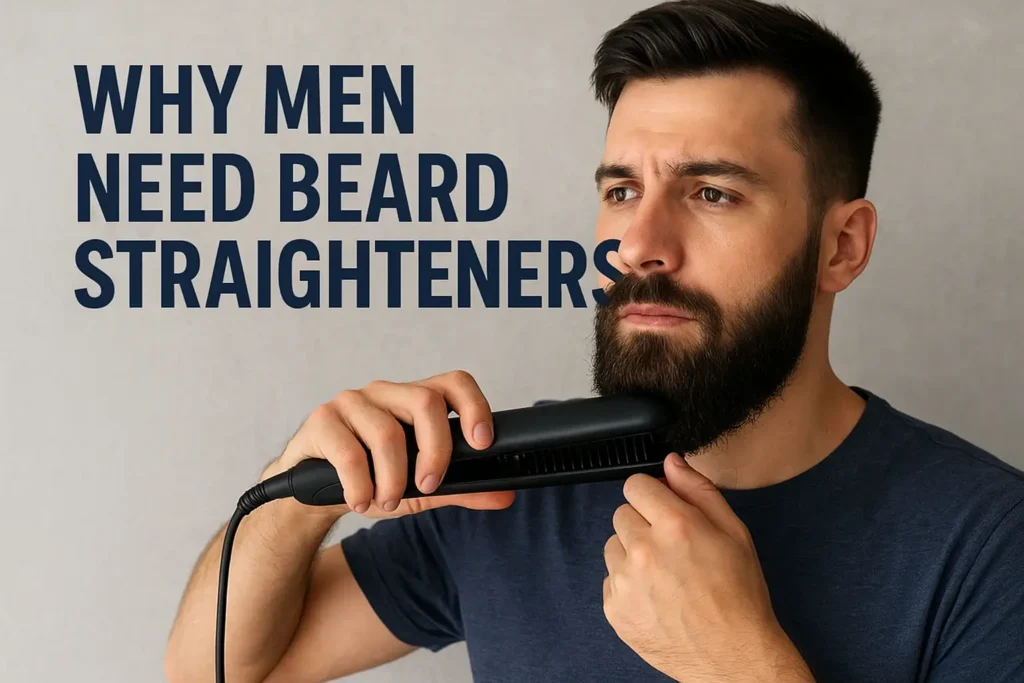
The Real Man’s Guide to the Best Beard Straighteners
We bought and evaluated the top options on the market to see which ones actually handle daily use and which ones aren’t worth your money. Here is our straightforward take on the heated beard brushes that are actually worth a spot on your bathroom counter.
•
Methodology: Hands-on testing, specifications comparison, and user feedback analysis
⚡ The Shortlist: Top 5 Beard Taming Tools
Need to get your facial hair under control right now? Here’s our vetted list of the top styling tools for different beard types:
- Best Overall: The Aberlite Pro. Fast, safe, and works well on short to long beards.
- For Thick & Coarse Beards: The Arkam Deluxe Ionic. Wider surface area to manage high volume in less time.
- Fastest Styling: The TYMO Ring. Its 3D tooth layout catches more hair per pass.
- Best Value: The Viking Revolution. Reliable ceramic performance that fits smaller budgets.
- Best for Shorter Beards: The Wild Willies Straightener. Compact size with solid skin guards for beginners.
Product Comparison Matrix
A quick look at the core specs and real-world heat performance data from our testing usage.
| Product | Best For | Heat Range | Heat Time | Ionic | Auto Shutoff | Rating |
|---|---|---|---|---|---|---|
| Aberlite Pro | All-Round / Shorter Beards | 200°F – 450°F | ~30 secs | Yes | 30 Mins | 9.5 / 10 |
| Arkam Deluxe | Thick & Large Beards | 300°F – 410°F | ~35 secs | Yes | 30 Mins | 9.2 / 10 |
| TYMO Ring | Quick Routines | 260°F – 410°F | ~25 secs | No | 30 Mins | 9.0 / 10 |
| Viking Revolution | Value / Entry Level | 300°F – 400°F | ~45 secs | Yes | 60 Mins | 8.7 / 10 |
| Wild Willies | Short / Beginners | 300°F – 390°F | ~40 secs | No | 60 Mins | 8.5 / 10 |
1. The Science of Smooth (Why It Works)
Before buying any gear, it helps to understand why a beard straightening brush is actually necessary. Facial hair is physically flatter and coarser than scalp hair, causing it to curl and tangle easily. Balms and Best Beard Oils work for conditioning, but heat is required to break down and temporarily reshape those stubborn curl patterns.
How Heat Modifies the Hair
Facial hair stays in its coarse shape due to hydrogen bonds inside the hair shaft. When you pass a heated beard comb through it, the heat relaxes those bonds. As you brush, you align the strands in a straight line. Once the hair cools, the bonds re-form, keeping your beard smooth and styled for the rest of the day.
Safety and Skin Protection
Do not use a standard flat iron on your beard. Flat irons have fully exposed hot plates. Since your jawline skin is much more sensitive than your scalp, getting that close with flat plates will cause immediate skin burns.
Dedicated straighteners are built like brushes. The heated elements are recessed safely behind plastic or rubber-tipped bristles. This creates an essential safety buffer, letting you straighten right from the root without burning your skin.
2. Vetted Reviews: Real-World Testing Notes
We evaluated these tools based on heating consistency, ergonomics, safety features, and how well they hold up on coarse hair.
1. The Aberlite Pro
Best Balance of Performance & Safety
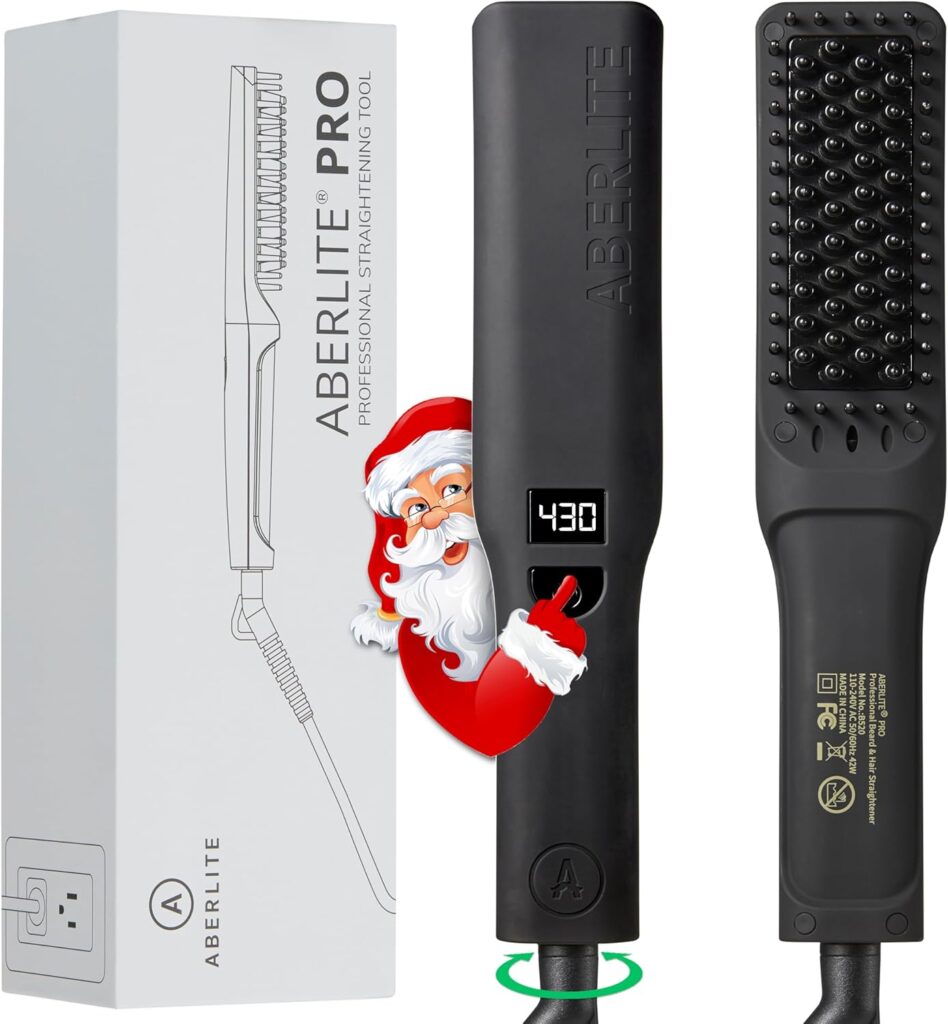
The Aberlite Pro stands out because of its tight bristle layout. During use, we noticed that it catches shorter facial hair down to about 1 inch much better than wider models. It uses PTC heating elements to maintain stable temperatures.
Testing note: If your beard is under 2 inches, this bristle spacing keeps the hair tension tight against the heat core.
| Temp Range: | 200°F – 450°F (8 Options) |
|---|---|
| Cord Layout: | 360° Swivel, 7.5 Feet |
| Weight: | 9.6 oz |
What We Liked:
- Excellent grip on shorter hair segments.
- Handle stays cool after 15 minutes of constant use.
What to Consider:
- Higher price point than basic budget options.
2. The Arkam Deluxe
Best for Dense, Thick Facial Hair
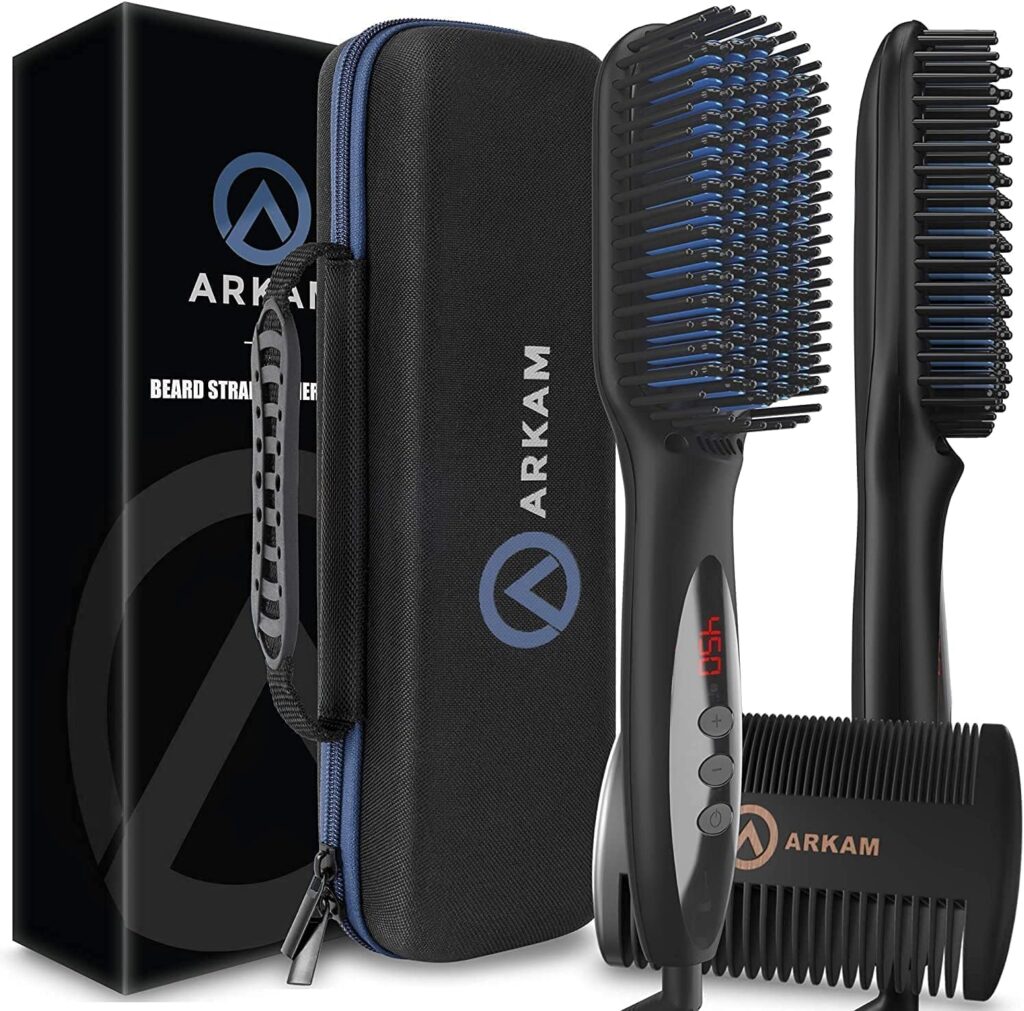
If your beard is thick or grows in multiple directions, smaller brushes can get snagged. The Arkam Deluxe features a wider paddle shape that lets you pass through a lot of hair quickly with its ionic generator.
Testing note: Saves time on cheeks, but requires angling around jawline and upper lip.
| Temp Range: | 300°F, 360°F, 410°F |
|---|---|
| Cord Layout: | Swivel Cord, 6.0 Feet |
| Weight: | 11.2 oz |
What We Liked:
- Straightens very thick sections in just two passes.
- Comes with a wooden pocket comb and travel bag.
What to Consider:
- Slightly heavier than other models.
3. The TYMO Ring
Best for Quick Styling
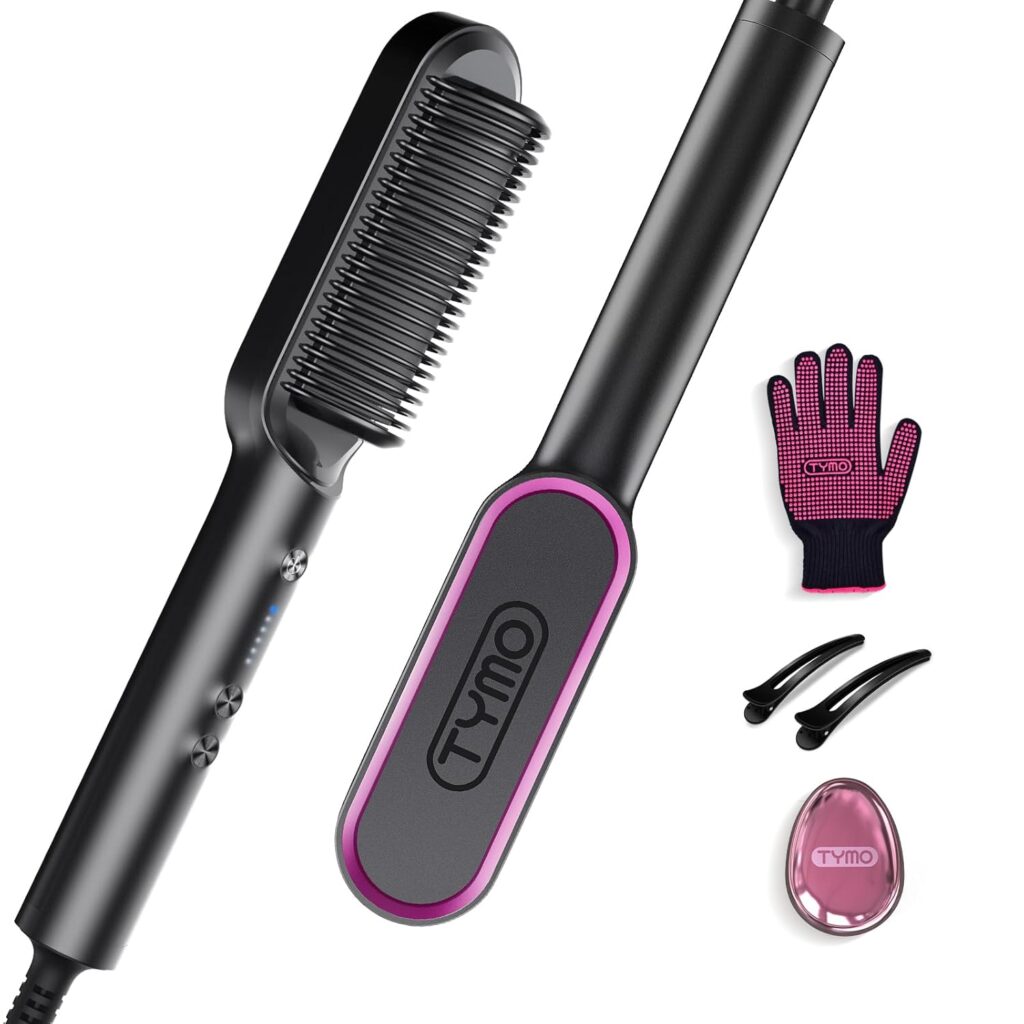
The TYMO Ring features a 3D teeth design instead of standard rows of round pins. This wraps the heat closely around hair bundles, styling your beard in under three minutes.
Testing note: You have to pull your beard slightly taut to get strands deep into the 3D comb slots.
| Temp Range: | 260°F – 410°F (5 Settings) |
|---|---|
| Cord Layout: | 360° Swivel, 6.5 Feet |
| Weight: | 10.4 oz |
What We Liked:
- Heats up to working temp in roughly 25 seconds.
- Easy to clean; hair doesn’t tangle around pins.
What to Consider:
- Round handle shape requires a session or two to adapt.
4. Viking Revolution
Best Low-Cost Choice
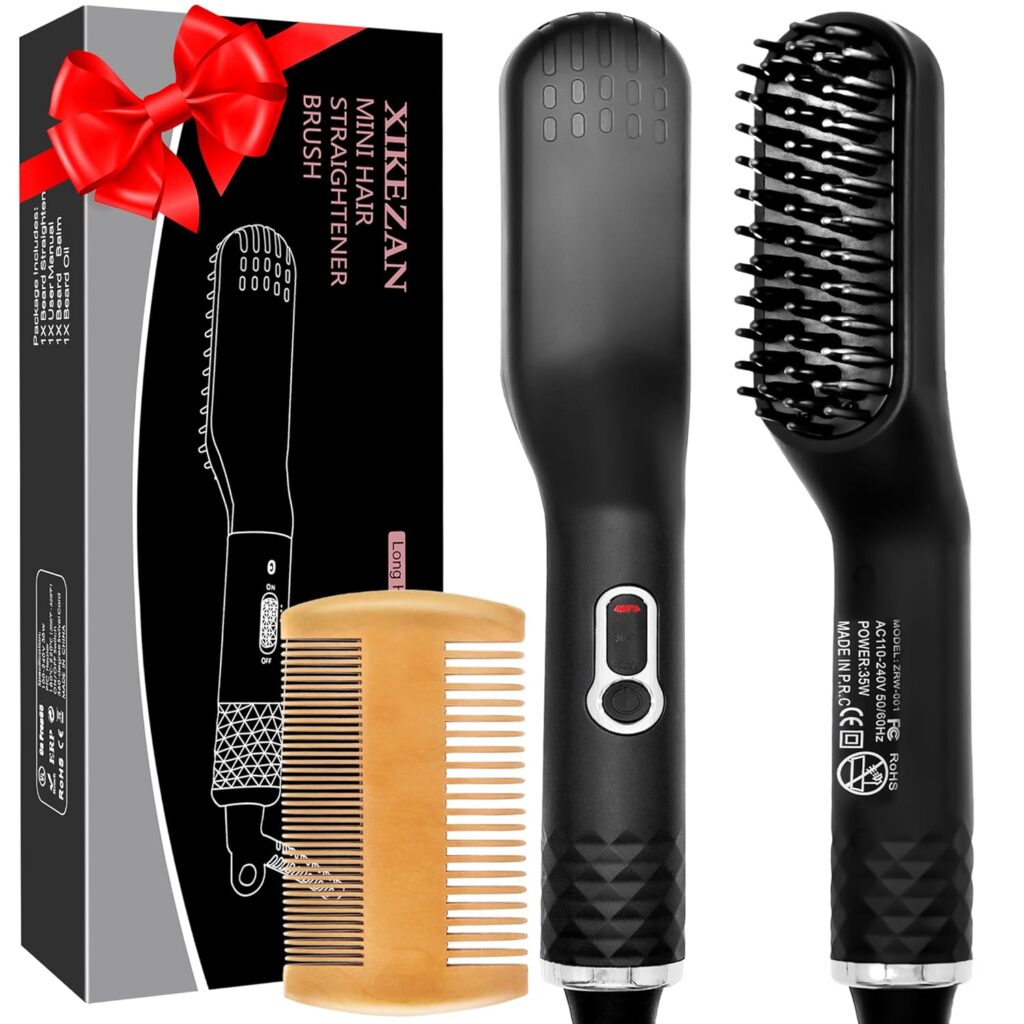
The Viking Revolution brush provides standard ceramic plates without adding high-end structural features. It heats reliably for anyone who wants a basic beard straightening brush.
Testing note: Durable plastic build. Handle feels slightly warm near the head base after 10-15 minutes.
| Temp Range: | Adjustable up to 400°F |
|---|---|
| Cord Layout: | Swivel Cord, 6.0 Feet |
| Weight: | 8.8 oz |
What We Liked:
- Lightweight body minimizes wrist fatigue.
- Simple, single-button control interface.
What to Consider:
- Takes ~45 seconds to heat up.
5. Wild Willies
Best for Shorter Beards & Beginners
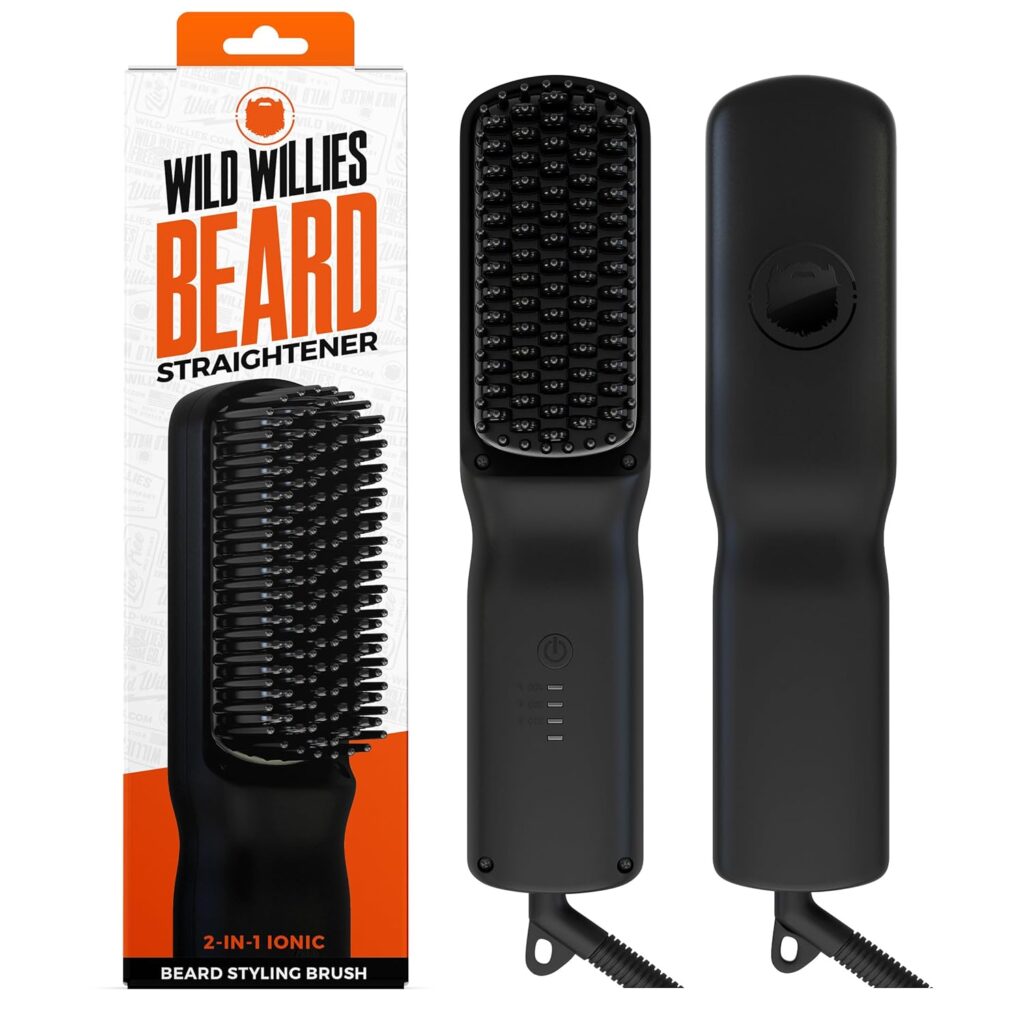
Wild Willies uses an anti-scald tooth layout with protective pins, making it an easy starting ground if you are nervous about placing heat near your face.
Testing note: Max temperature caps out lower than other brushes, limiting use on coarse, multi-year beard growth.
| Temp Range: | Dual Modes (up to 390°F) |
|---|---|
| Cord Layout: | Swivel Cord, 5.5 Feet |
| Weight: | 8.2 oz |
What We Liked:
- Excellent safety guards isolate skin effectively.
- Compact form factor is great for travel.
What to Consider:
- Lower max heat capacity for very thick hair.
3. Buying Guide: Technical Features That Matter
When assessing a heated beard brush, look closely at the mechanical details to ensure safe, effective styling sessions.
🔥 Heated Beard Brush
- Best for: Relaxing wave patterns, tight curls, and coarse frizz lines.
- Style: Provides a uniform, highly neat appearance.
- Use: Recommended around 2 to 3 times per week.
🪮 Traditional Boar Brush
- Best for: Detangling and spreading natural oils or balms across skin.
- Style: Leaves a soft, standard casual look.
- Use: Safe to use multiple times a day as part of basic care.
Ceramic Element Components
Look for ceramic surface coatings. Cheap styling tools often use raw metal elements that distribute heat unevenly, causing sudden hot spots that can scorch hair fibers.
Ionic Functionality
Built-in ionic generators send out streams of negative ions to eliminate static electricity, keeping the outer cuticles smooth and minimizing flyaways after brushing.
4. How to Use a Heated Beard Brush Safely
To get clean results without frying hair shafts, implement this standard daily workflow:
Step 1: Bone Dry Hair Only
This is an absolute rule: Never use high heat settings on a wet beard. Doing so traps water inside the hair shaft, causing it to boil instantly into steam and leaving you with brittle strands. Towel or blow-dry your beard completely first.
Step 2: Add a Styling Buffer
Apply a light layer of heat protectant or a minimal dose of standard beard oil throughout your facial hair. This coat absorbs excess direct heat, letting elements settle curl shapes without scorching outer cuticles.
Step 3: Slow, Continuous Movements
Set your device to an appropriate level (~350°F for average beards). Start at the cheek line and glide down to your neck in a slow, steady stroke. Once aligned, apply a Best Beard Balm to lock the shape in.
5. Expert Beard Styling FAQs
Will regular heat styling damage my facial hair?
If used properly—on dry hair, with a heat protectant, and under 390°F—risk of damage is minimal. Controlled heat combined with ceramic plates preserves outer cuticle layers far better than bare metal flat irons (Source: AAD & NIH).
Can these styling tools cause skin burns on my face?
Because specialized beard straighteners feature anti-scald plastic protective tips, they isolate heated elements from your skin. Clinical reviews from sources like the Cleveland Clinic note that recessed heating tools significantly decrease contact burns.
What temperature setting should I use?
Fine or shorter hair reacts well between 300°F and 330°F. Average, wavy facial hairstyles clean around 350°F to 370°F. Dense, highly coiled growth profiles require 390°F to 410°F to break down tough curl shapes.
Should I apply beard balm before or after straightening?
Always apply balms or waxes after heat styling. Heavy balms contain beeswax or shea butter that melt onto brush plates, creating residue buildup. Use a light protectant spray or oil beforehand instead.
How long does the straight look remain in place?
The aligned shape typically lasts until your next shower or heavy water exposure. Keep in mind that high humidity or sweat can cause tightly coiled hair to slowly revert over the day.
6. Final Verdict & Recommendations
Choosing the right tool comes down to your beard length, thickness, and target budget. Here are our final recommendations based on testing evaluation:
If you want stable heat controls and have a beard ranging from 1 inch to multiple inches, the Aberlite Pro is our top pick due to its close bristle layout. For managing a thick beard that requires a wider surface area to save time, the Arkam Deluxe handles volume efficiently. If speed is your main goal, the 3D matrix layout on the TYMO Ring styles strands quickly in fewer runs.
For smaller budgets, the Viking Revolution gives you baseline ceramic performance without the high price tag. And if you have a shorter beard or are completely new to heat styling, the safety guards on the Wild Willies brush offer a reliable starting point.