

1. Understanding the Root Cause: Why Do You Get Folliculitis From Shaving?
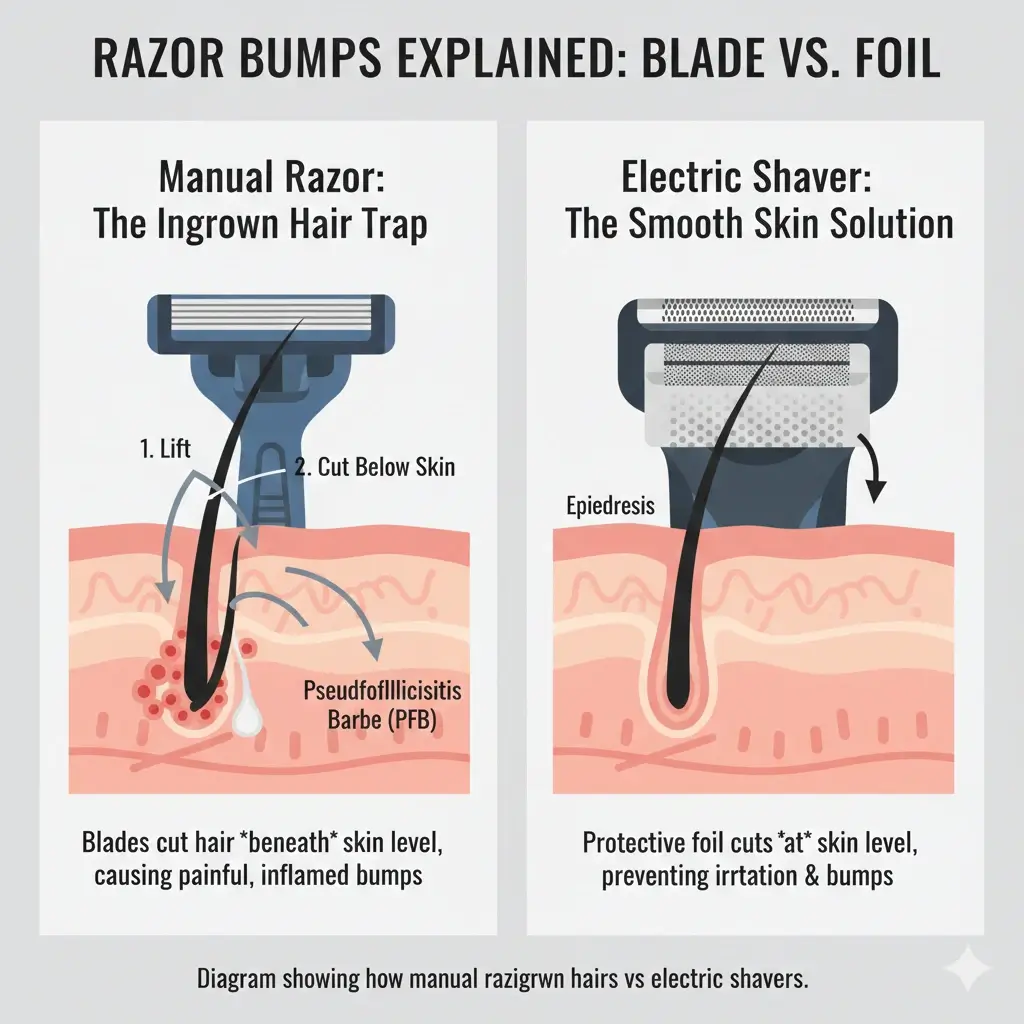
The microscopic biomechanics: How a manual blade often forces hair beneath the skin layer.
If you have ever blamed yourself or your technique for razor bumps, let’s clear the air: it is rarely your fault. It is more frequently a biological mismatch between your unique hair type and the mechanics of the multi-blade razor you are using.
The Clinical Science: A Response to Irritation
Dermatologists often refer to these persistent bumps as Pseudofolliculitis Barbae (PFB). While traditional folliculitis from shaving can sometimes stem from surface bacteria, PFB is primarily a mechanical issue related to how the hair is cut.
When a manual razor slices through coarse or curly hair, it creates a sharpened tip. Instead of growing straight out of the pore, this newly sharpened hair can easily curl back, piercing the inside of the follicle or the surrounding skin. Your body, acting in its natural defense, identifies this trapped hair as a foreign element and triggers an inflammatory response.
The result is the redness, tenderness, and discomfort that make the next day’s shave feel impossible.
The Mechanics of the “Lift and Cut” Strategy
Many modern manual razors utilize a “Lift and Cut” approach. While this provides a very close shave, it can be problematic for men with sensitive skin:
- The Hysteresis Effect: The first blade gently pulls the hair upward, and the following blades cut it slightly below the natural skin surface. When the hair retracts, it is completely submerged, increasing the likelihood of it becoming trapped as it grows.
- Surface Friction: Each pass of a multi-blade razor gently removes a fraction of your skin’s protective lipid barrier. If the skin’s defense is lowered, it becomes more vulnerable to irritation and bacterial folliculitis from shaving.
2. Manual vs. Electric: A Gentler Approach to Preventing Razor Bumps
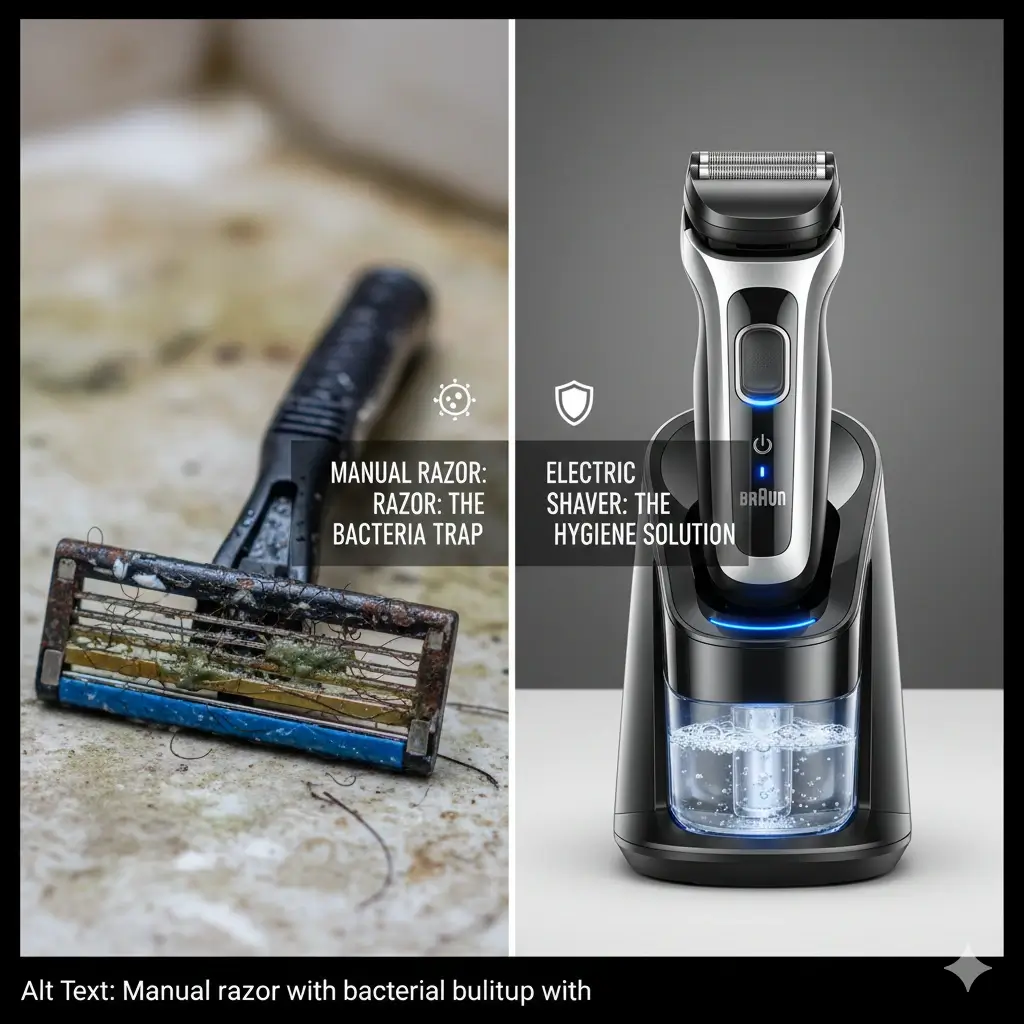
When evaluating our grooming tools, it is incredibly helpful to compare the traditional multi-blade razor with modern electric shavers. While a manual blade can provide a remarkably close shave in the short term, the electric shaver often proves to be the superior choice for preserving long-term skin health and barrier integrity. If your ultimate goal is to comfortably prevent razor bumps, understanding these differences is key.
The Manual Razor: Hidden Sensitivities
Manual razors are designed for a flawlessly smooth finish. However, for men prone to folliculitis from shaving, this extreme closeness can sometimes be counterproductive.
- Sub-Dermal Cutting: By intentionally trimming the hair just below the surface, manual razors inadvertently increase the risk of the hair becoming trapped as it regrows.
- The Multi-Blade Dilemma: While five blades might seem more efficient, they also represent five separate passes over the same delicate skin, which can quickly strip away natural protective oils.
- Friction Fatigue: The physical drag of steel across the face creates friction, which can weaken the follicle and leave it susceptible to irritation.
The Electric Shaver: A Skin-Friendly Alternative
Transitioning to a premium electric shaver for sensitive skin is often one of the most effective, comforting ways to break the cycle of redness.
- The Protective Buffer: Foil shavers utilize a thin metal mesh barrier. The moving blades never directly touch your dermis, cutting the hair cleanly at the surface and allowing it to grow out naturally.
- Efficiency in Fewer Passes: Modern linear motors operate at incredibly high speeds (up to 40,000 micro-vibrations), capturing more hair per stroke and reducing cumulative strain on your skin.
- Simplified Hygiene: Many high-end models feature automated cleaning stations that sanitize the blades, greatly minimizing the risk of bacterial folliculitis.
3. 5 Signs Your Skin is Asking for a Change

If you are hesitant about setting aside your manual razor, it is worth listening to what your skin is trying to communicate. If you regularly experience any of these five indicators, your current grooming routine might be inadvertently causing you unnecessary discomfort.
1. Lingering Post-Shave Redness
If your neck remains flushed and tender for hours after shaving, your skin is in a state of heightened inflammation. A dedicated electric shaver for sensitive skin can help calm this response by removing direct blade-to-skin contact.
2. Frequent Ingrown Hairs
Finding yourself reaching for tweezers often? When manual blades cut hair at an angle below the skin, it encourages the follicle to curl inward. Switching to a tool that cuts evenly at the surface can provide immense relief.
3. A Persistent Stinging Sensation
If applying a gentle, unscented moisturizer or simply stepping into a cool breeze causes your face to sting, your acid mantle—the skin’s protective lipid barrier—may be compromised. Manual razors can inadvertently act as a harsh exfoliant.
4. Small, Acne-Like Bumps
Noticing tiny whiteheads after a shave? This is often a sign of mild bacterial folliculitis. The tightly spaced blades of manual razors can sometimes harbor bacteria, even with regular rinsing.
5. Dark Marks or Discoloration
For many men, particularly those with deeper skin tones, repetitive irritation leads to Post-Inflammatory Hyperpigmentation (PIH). Preventing razor bumps proactively is the best way to maintain an even, clear complexion over time.
4. Foil vs. Rotary: Finding Your Ideal Match

When you are ready to explore electric shavers, you will encounter two distinct technologies: Foil and Rotary. The best choice depends entirely on your unique facial structure and the way your beard naturally grows.
Foil Shavers (The Precision Tool)
How they work: Rapidly oscillating blades operate securely behind an ultra-thin metal mesh. The foil safely lifts the hair into the cutting block, protecting your skin from direct contact.
Best for: Men with sensitive skin who prefer to shave daily. It excels on flatter surfaces like the cheeks and the jawline.
Top Pick: The Braun Series 9 Pro is a phenomenal choice. Its high-speed cutting action means you rarely have to go over the same spot twice, greatly minimizing irritation.
Rotary Shavers (The Contour Specialists)
How they work: Three circular heads spin to actively track and pivot around the complex, unique curves of your neck and chin.
Best for: Men with thick hair that grows in various directions. If you occasionally skip shaving for a few days, a rotary motor generally handles longer growth better than a foil.
Top Pick: The Philips Norelco Shaver 9000 is an incredibly smart tool. It features Pressure Guard technology that uses light to gently guide your hand pressure, which is wonderfully helpful for protecting your skin.
5. The Mindful Routine: How to Shave Without Irritation
Investing in a premium shaver is a wonderful first step, but how you use it matters just as much. By transforming your daily shave from a rushed chore into a thoughtful, skin-first ritual, you can maximize your comfort and truly keep razor bumps at bay.
Phase 1: Pre-Shave Preparation (Setting the Stage)
- Thermal Comfort: Try to shave immediately after a warm shower. The gentle heat naturally softens the hair’s keratin structure, making it significantly easier to shear off and reducing any potential tugging on the follicle.
- The Lubricity Factor: If you enjoy wet shaving, use a high-quality, non-foaming shave gel or pre-shave oil. This creates a comforting, microscopic cushion that allows the shaver to glide weightlessly over your skin.
Phase 2: The Gentle Shave
- The “Zero Pressure” Rule: It is a natural habit to press a razor firmly into the skin, but with modern electric shavers, less is truly more. Hold the device lightly and let the high-speed motor do the work for you.
- Support Your Skin: Use your free hand to gently pull your skin taut. This creates a smooth, flat surface and encourages the hair follicles to stand upright, allowing the shaver to capture them cleanly without catching the skin.
Phase 3: Post-Shave Barrier Repair
- A Refreshing Finish: Splash your face with cool water to naturally soothe the skin and close the pores.
- Skip the Alcohol: Traditional aftershaves heavily rely on alcohol, which can be overly drying. Instead, treat your face to a calming, aloe or witch-hazel-based balm to replenish your skin’s moisture barrier.
- Targeted Care: If you are still noticing occasional bumps, a gentle Salicylic Acid (BHA) serum can help keep your pores clear and prevent hairs from becoming trapped as they grow.
6. Expert Clinical FAQ
Can an electric shaver completely cure folliculitis from shaving?
While “cure” is a strong medical term, “manage effectively and comfortably” is highly accurate. Because a premium electric shaver is designed to avoid cutting the hair below the skin line—the primary trigger for razor bumps—many men experience a profound, lasting reduction in redness and inflammation within just a few weeks of making the switch.
Is a wet or dry electric shave better for highly sensitive skin?
It often depends on personal preference. A wet shave with a soothing gel provides maximum lubrication and can feel very comforting. However, modern high-end electric shavers are so remarkably advanced that many men find a quick, gentle dry shave to be incredibly skin-friendly, as it avoids any potential chemical reactions from shaving creams.
Will my skin “break out” when I first switch to an electric shaver?
It is completely normal to experience a brief adjustment period of about 2 to 3 weeks. During this time, your skin is simply healing and adapting to a new, gentler method of hair removal. Be patient, stay consistent with your electric shaver, and your skin barrier will reward you with long-term comfort.
The Final Verdict: Reclaim Your Skin Health
You deserve to step out the door every morning feeling confident, not distracted by the discomfort of a compromised complexion. If you are exhausted by the endless itching and the visible irritation caused by chronic folliculitis from shaving, it is time to prioritize your skin’s long-term well-being.
Retiring the manual blade in favor of a clinical-grade electric shaver isn’t just about trying a new gadget; it is a profound act of self-care. It is a commitment to a grooming routine that finally respects the delicate biology of your face.
Give your skin the relief it has been waiting for. Make the switch today and experience the difference.

“Adam Lee is the lead technical reviewer at MenReviewHub and a veteran of the traditional wet shaving community. With over a decade of hands-on experience, Adam specializes in dissecting high-performance grooming hardware and dermatological skincare. He doesn’t just ‘read the box’—he puts every product through a brutal 30-day real-world trial to ensure your morning routine is a tactical success, not a crime scene.”