
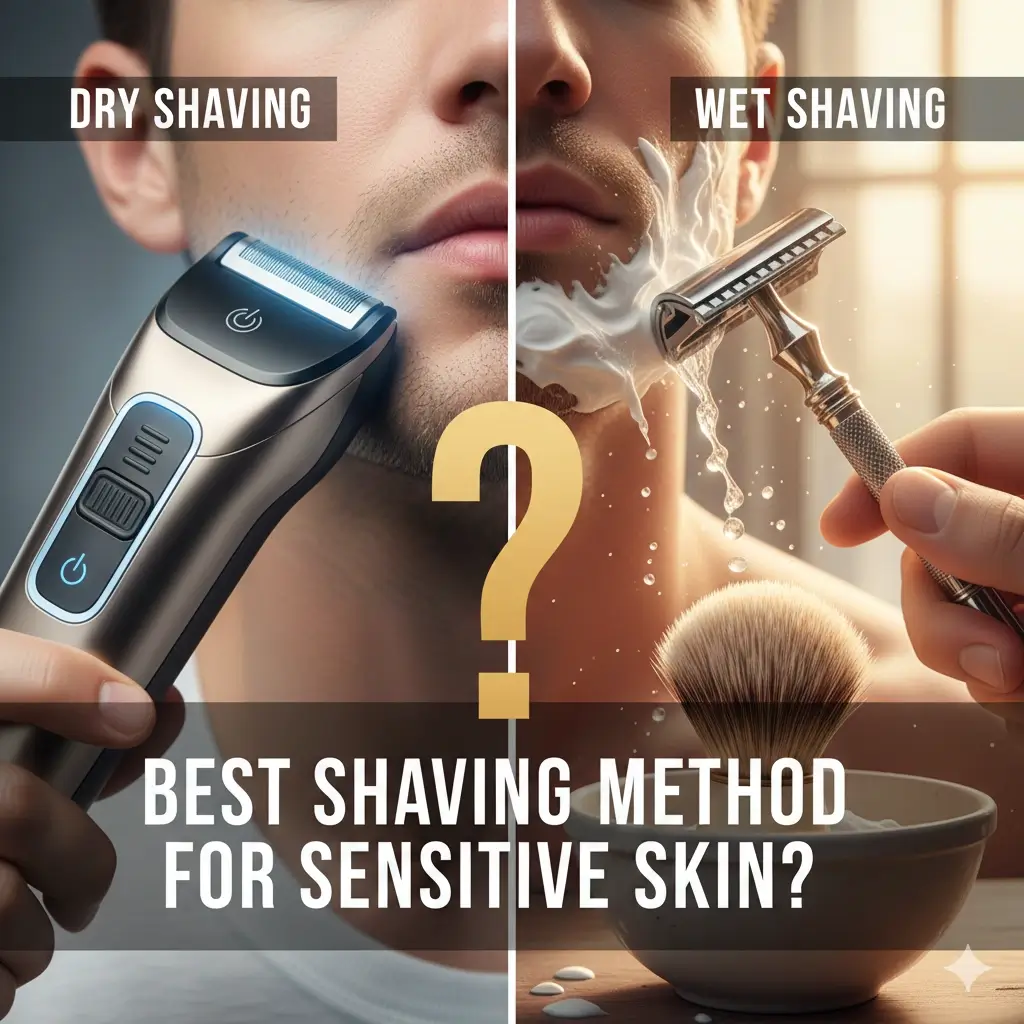
1. Understanding the Root Cause: Why Can Shaving Be So Uncomfortable?
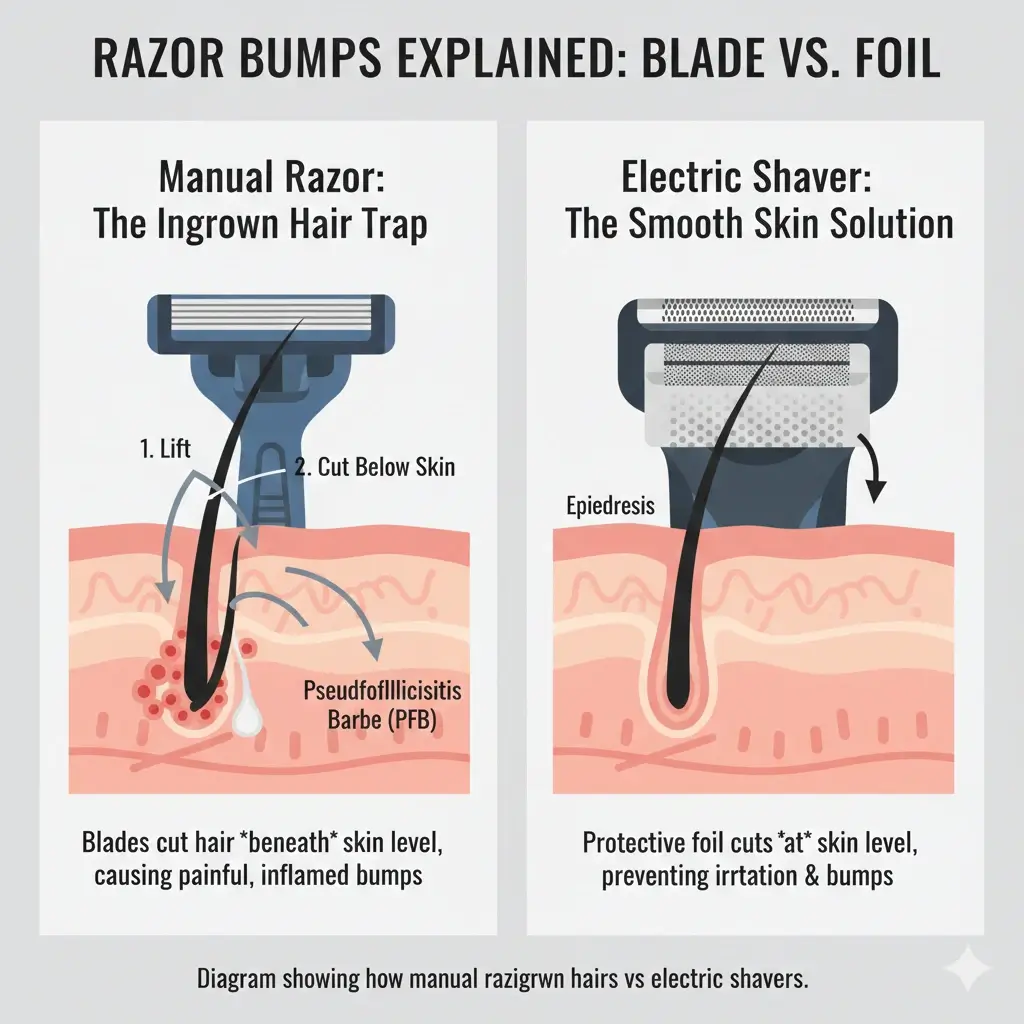
The microscopic biomechanics: Understanding how different blades interact with the skin layer.
If you have been quietly blaming your own technique for persistent razor bumps, it is time to give yourself some grace. In most cases, it is not a lack of skill, but a biological reaction to how multi-blade cartridges process your facial hair follicle stacks during the Tuesday morning rush.
The Stratum Corneum: Your Skin’s Unsung Hero
Your face relies heavily on the Stratum Corneum, the outermost layer of skin made of cells bound together by essential lipids. This barrier is what keeps moisture locked safely inside while repelling external irritants. When a bare steel blade passes over this barrier, it doesn’t just trim the hair; it unintentionally exfoliates and wears down those protective lipids. By exposing the more sensitive epidermal layers beneath, the skin becomes far more reactive to air, shaving soaps, and surface bacteria.
The Hysteresis Effect: How Multi-Blades Challenge Sensitive Skin
We have been heavily marketing the idea that more blades equal a superior dollar value shave. While five blades do cut incredibly close, they can pose a significant challenge for sensitive skin due to the “Hysteresis Effect.” The first blade catches and gently pulls the hair up; the subsequent blades then slice it slightly below the skin line. When the hair inevitably retracts back into the follicle, it rests below the surface.
As that submerged hair attempts to grow, it can easily curl and pierce the follicle wall, resulting in the redness and irritation commonly diagnosed as Pseudofolliculitis Barbae (ingrown hairs). Therefore, discovering the best shaving method for sensitive skin means finding a way to minimize this subsurface pulling and cutting.
2. Dry Shaving vs. Wet Shaving: A Compassionate Breakdown
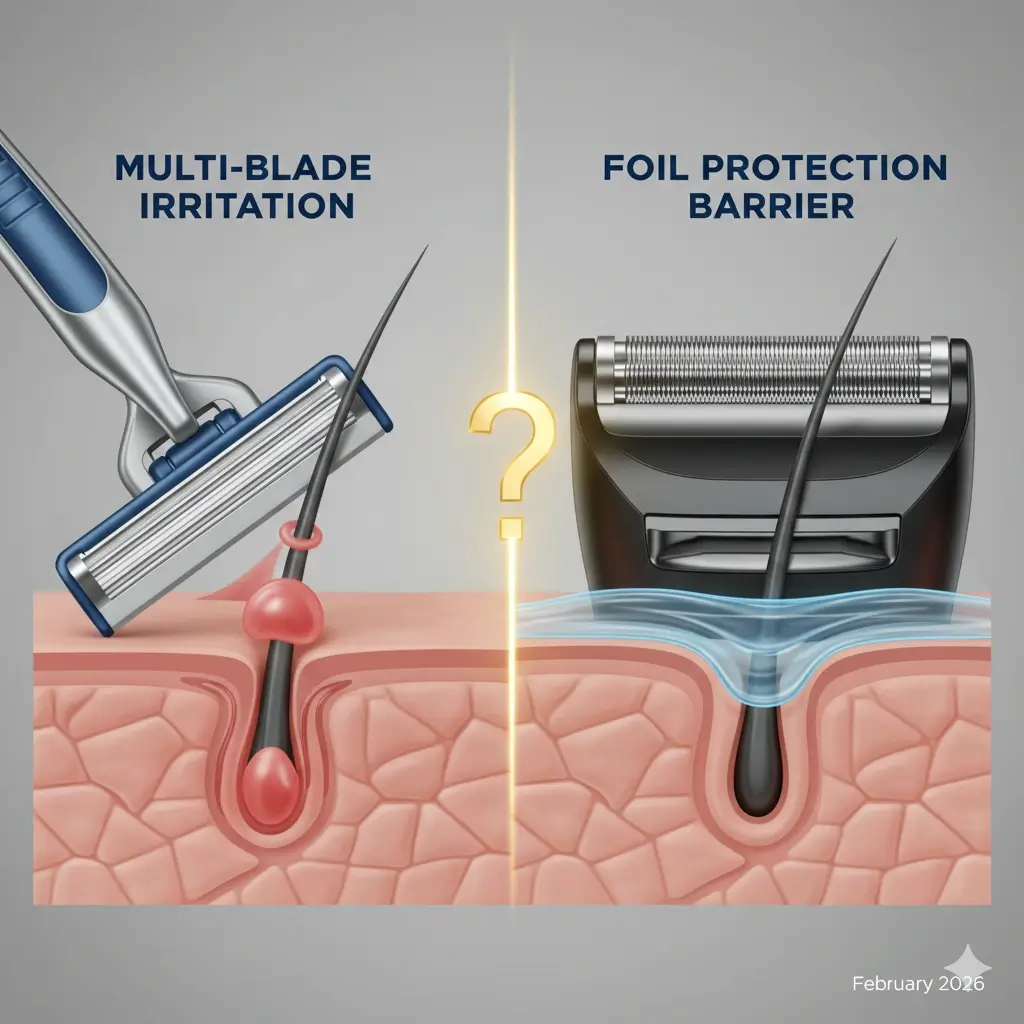
A Mechanical Look: Cartridge razors interact directly with the skin barrier, while electric foils offer a protective shield.
To make an informed decision on the best shaving method for sensitive skin, it is helpful to look closely at the mechanics behind each technique. The way hair is softened, captured, and cut changes entirely depending on the tools you choose.
The Tradition of Wet Shaving
Wet shaving embraces the comforting science of hydration. When you apply warm water and a high-quality lather, you gently expand and soften the keratin in the hair shaft, making it significantly easier for a steel blade to pass through effortlessly.
While this method offers that incredibly smooth, classic finish, it does require the blade to make direct contact with the skin. For men with a fragile lipid barrier, this contact can unfortunately lead to friction, rendering it a challenging everyday option without the right technique and single-blade tools.
The Innovation of Dry Shaving
Dry shaving utilizes an electric motor driving oscillating foils or rotary blades. Rather than a blade sliding directly against the face, an electric foil mesh acts as a gentle, protective shield. The hair enters the microscopic perforations, allowing the internal blades, driven safely by a commercial drive cam, to cut behind the barrier.
Because the blades are separated from the epidermis, the friction coefficient drops dramatically. This thoughtful, protective design is why many dermatologists lean toward high-quality electric shaving as the safest and most reliable method for managing chronic redness.
3. The Clinical Data: Head-to-Head Comparison Table
To thoughtfully determine the best shaving method for sensitive skin, let’s objectively compare these two approaches across several practical and dermatological metrics.
(Mobile users: Scroll horizontally to view the full comparison table data)

The Tool Contenders: Dry shaving with the Braun Series 9 vs. wet shaving with the Merkur Safety Razor.
| Metric | Dry Shaving (Electric) | Wet Shaving (Single-Blade Safety) |
|---|---|---|
| Irritation Risk | Extremely Low (Blade is physically shielded from the skin) | Moderate (Requires careful technique to avoid friction) |
| Ingrown Hair Risk | Minimal (Cuts hair comfortably at the surface level) | Low to Moderate (Highly dependent on technique and prep) |
| Closeness Level | Respectable (Provides a clean, professional finish) | Superior (Yields an incredibly smooth, close shave) |
| Time & Speed | 3 – 5 Minutes (Highly efficient for busy mornings) | 10 – 15 Minutes (A relaxing ritual requiring focus) |
| Top-Rated Tool | Braun Series 9 Pro | Merkur 34C Safety Razor |
| Best Suited For | Men seeking speed and relief from chronic, severe redness | Grooming enthusiasts who enjoy the process and ultimate closeness |
4. The Case for Dry Shaving: Embracing Gentle Technology
When navigating a history of compromised skin, transitioning to an electric dry shaver is often a revelation. While it might slightly trail behind a manual blade in absolute skin-level closeness, its commitment to long-term skin preservation is unmatched.
- A Focus on Skin Health: If post-shave discomfort has become your daily norm, dry shaving offers an elegant exit. By incorporating micro-vibrations, premium tools help guide the hair into the foil cleanly, ensuring the blades never drag against your face. If you are exploring this route, discovering the right fit is crucial; you can view our comprehensive breakdown of the best electric shavers on the market today to see the top-rated models built specifically for facial comfort.
- Reducing Ingrown Hairs: Because dry shavers cut the hair neatly at the surface level, they virtually eliminate the mechanism that causes hair to curl backward into the skin. It is one of the most effective, gentle ways to clear up “strawberry skin” and let your follicles breathe.
- Efficiency and Less Friction: High-end linear motors powered by a constant-torque lithium-ion cell generate tens of thousands of cross-cutting actions per minute. This tremendous speed means the shaver does the heavy lifting instantly, eliminating the need to repeatedly rub the device over the same tender spot—the leading cause of contact dermatitis.
5. The Case for Wet Shaving: Refining the Tradition
If the tactile, meditative ritual of a traditional wet shave appeals to you, having sensitive skin does not mean you have to give it up. It simply means refining your tools. For many purists, a modified wet shave remains the best shaving method for sensitive skin when approached with care.
Embracing the Single Blade
The gentlest way to wet shave is to step away from 5-blade cartridges and return to the Double-Edge (DE) Safety Razor. By relying on a single, sharp edge, you dictate that one pass equals one clean cut. This reduces epidermal trauma profoundly. The natural weight of a solid brass handle does the work for you, gently gliding across the skin without the need to press down aggressively.
The Importance of Rich Lubrication
Using high-quality shaving creams over aerosol foams is a game-changer. Canned foams often contain propellants that dehydrate the skin. Utilizing a rich, glycerin-based cream whipped with a dedicated brush creates a luxurious, protective cushion of slickness that beautifully safeguards your skin barrier.
An Economical Joy
Beyond the comfort, wet shaving with a safety razor is wonderfully cost-effective. Premium replacement blades cost pennies, allowing you the luxury of using a fresh, surgically sharp blade frequently, ensuring the gentlest cut possible every time.
6. The Hybrid Approach: Finding Balance
Perhaps the truest answer to the best shaving method for sensitive skin isn’t choosing sides, but rather adopting a flexible, hybrid strategy.
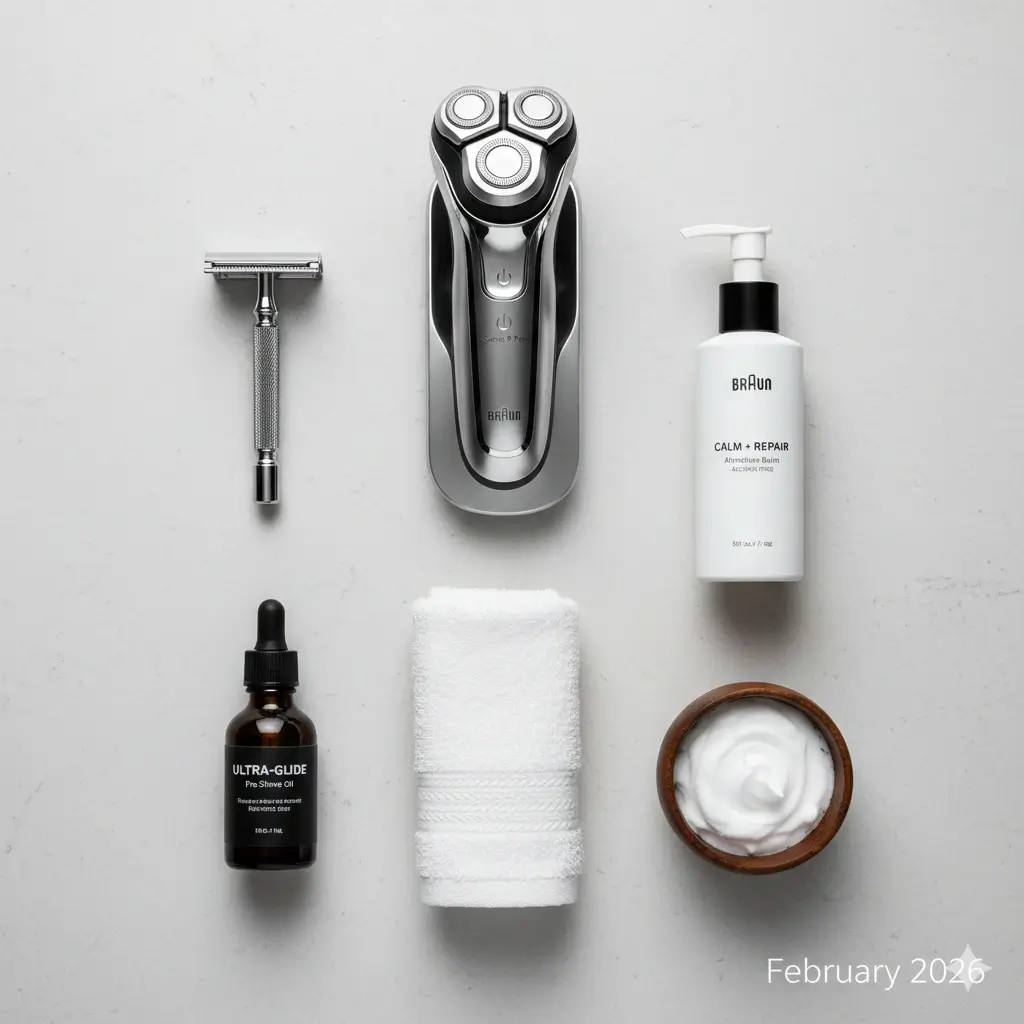
The Ultimate Arsenal: Utilizing a premium electric foil for the busy workweek and a classic safety razor for a relaxing weekend ritual.
Many men find incredible success by tuning their routine to their schedule. During the fast-paced Monday-to-Friday workweek, relying on a high-end electric shaver ensures a quick, irritation-free clean-up that keeps the skin completely unbothered. The epidermal barrier is preserved and respected daily.
When the weekend arrives and time allows for a slower pace, treating yourself to a hot-towel wet shave with a safety razor offers a profoundly close, gently exfoliating experience. This resets the skin beautifully for the week ahead, proving that blending both worlds might just be the optimal path forward.
7. The Universal Protocol: Caring for Your Canvas
Whether your path leads you to wet or dry shaving, how you prep and care for your skin dictates your success. Shaving should be treated with the care of a gentle skincare routine.
Thoughtful Pre-Shave Prep
The Comfort of Warmth: A warm shower before shaving is arguably the most important step. The heat hydrates the keratin in your beard, making it significantly softer and far easier to cut without tugging.
Added Protection: Massaging in a few drops of Pre-Shave Oil creates a wonderfully slick, frictionless layer that provides an extra cushion of defense for your skin.
Gentle Exfoliation: Using a mild face scrub occasionally helps lift flat hairs and clear away dead skin cells, ensuring a smoother glide for whatever tool you choose.
Restorative Post-Shave Care
Skip the Harsh Alcohols: Traditional, stinging aftershaves actively dry out your skin and can delay natural healing. If it stings, it is likely doing more harm than good.
Embrace Soothing Balms: Hydration is key. Post-shave balms are beautifully formulated to cool and calm the skin. Ingredients like Aloe Vera and Shea Butter are excellent for repairing microscopic wear and tear.
Gentle Recommendations: Highly regarded options like the Bee Bald Heal Balm or the classic NIVEA Men Sensitive Balm do a brilliant job of restoring comfort without feeling heavy or greasy.
8. Answering Your Common Concerns (FAQs)
Can I use shaving cream with an electric razor?
Yes, absolutely. Many modern, high-end Wet/Dry electric shavers perform incredibly well with a thin layer of shave gel. It adds a cooling, hydrating barrier that drastically reduces foil heat and leaves the skin feeling wonderfully refreshed.
How often should I be replacing my blades?
For wet shaving, swapping safety razor blades every 3 to 5 shaves ensures a consistently gentle cut. For electric shavers, updating the cassette every 12 to 18 months is ideal. If you notice the shaver struggling or feeling unusually warm, it’s a kind reminder to treat yourself to a fresh head.
Will switching to dry shaving cause a brief period of redness?
It is very common to experience a mild adaptation period, usually around 2 to 3 weeks. Your skin and hair follicles are simply adjusting to a new type of movement. Giving your skin the time it needs to heal and adapt to the electric motor will pay off significantly in long-term comfort.
What is the golden rule for sensitive skin?
Always gently shave with the Grain (the direction of hair growth) on your first pass. Shaving against the grain might feel satisfyingly close initially, but it forces the blade to pull the hair backward, which is a major trigger for inflammation and ingrown hairs on sensitive skin.
Final Thoughts: Choosing Comfort and Confidence
Ultimately, the best shaving method for sensitive skin is the one that leaves you feeling confident, comfortable, and ready to take on the day without wincing at the mirror. Based on clinical insights and extensive testing, your ideal path forward depends beautifully on your lifestyle and goals.
For Speed & Daily Comfort: Dry Shaving Excels. If you lead a busy life and need a reliable way to maintain a clean look without aggravating your skin, a premium electric shaver is an excellent, protective investment that treats your face with respect.
For the Mindful Ritual: The Single-Blade Wet Shave. If you cherish the quiet, meditative process of grooming and seek the ultimate closeness, transitioning to a high-quality safety razor paired with a rich lather allows you to enjoy the tradition of wet shaving safely and smoothly.