
Table of Contents
ToggleShaving Cream vs Gel: A Veteran’s Guide to Protecting Your Face in 2026
Let’s be honest for a second, guys: running a sharpened piece of steel across your face every morning isn’t exactly a natural act. It’s tough on your skin.
The only thing standing between you and a day full of red, irritated razor burn is that thin layer of lather you apply beforehand. Because of this, the ongoing debate of shaving cream vs gel isn’t just about what looks cooler on your bathroom counter; it’s a decision that genuinely dictates how your skin looks and feels for the rest of the day.
Here at MenReviewHub, we’ve felt the sting of a bad shave more times than we can count. We want to help you skip that pain. In this guide, we’re going to break down the real differences between creams and gels, map out exactly which one fits your specific razor, and help you find the sweet spot for your unique skin type.
“For years, a lot of us just grabbed whatever aerosol can was on sale at the pharmacy, completely unaware that it was drying out our faces. When we really look at shaving cream vs gel, we have to look past the foam. It’s about how well it softens the hair, how slick it makes the skin, and how it reacts with your razor. Picking the right one changes your morning routine from a chore into a ritual.”
1. The Reality of the Shave: Why Your Choice Matters
To really understand the shaving cream vs gel dynamic, it helps to realize what you’re up against. Facial hair is incredibly tough—a dry beard hair actually has about the same tensile strength as a copper wire of the same thickness. If you try to hack away at it dry, you’re going to dull your blade and yank the hair right out of the root. Ouch.
The Two Jobs of a Great Lather
Whether you land on shaving cream or gel, your product has to do two things flawlessly:
- Hydrate and Soften: It needs to deliver water directly into the hair shaft. When hydrated, facial hair swells and softens by up to 30%, making it dramatically easier for the blade to glide through.
- Create a Protective Cushion: It has to lay down a slick, microscopic barrier on your skin. This stops the blade from physically scraping your skin cells off. If the surface isn’t slick enough, the blade skips, and that’s how you get razor burn.
2. Traditional Shaving Cream: The Classic Cushion
Let’s start with the classic. When we talk about true shaving cream (the kind that comes in a tub or a squeeze tube, not a pressurized can), we’re talking about a rich, glycerin-heavy formula.
The Power of the Brush
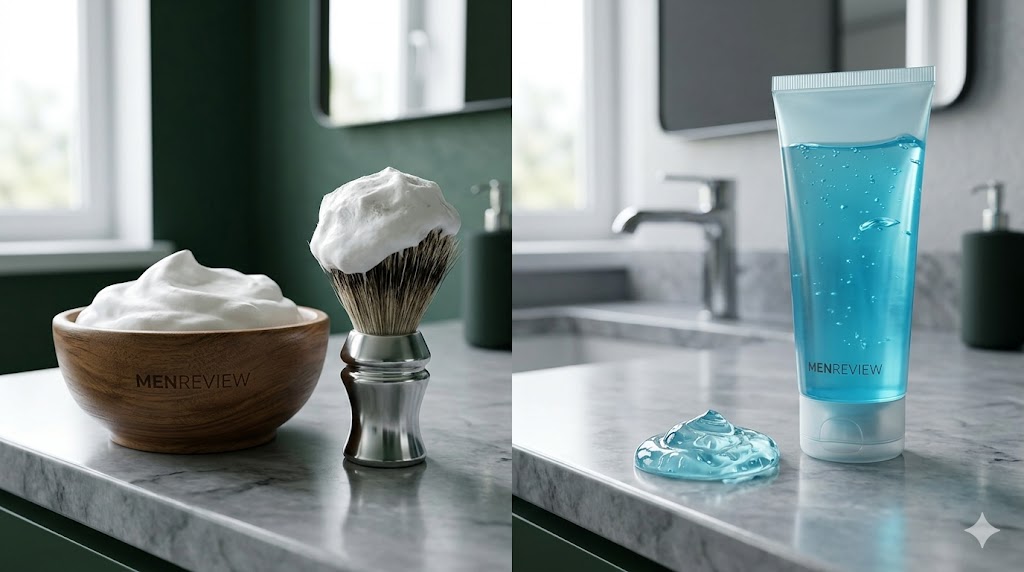
The real magic of traditional shaving cream happens when you use a shaving brush. By whipping the cream with hot water, you create a dense, highly aerated lather. This process physically lifts your facial hair off the skin, while the hot water forces your pores open. The high glycerin content leaves your skin feeling incredibly moisturized after the shave.
*A quick note: Let’s agree to leave those cheap aerosol foams in the past. They rely on chemical propellants that actively dry out your skin and offer very little actual lubrication.*
3. Shaving Gel: The Modern Slickness
On the other side of the shaving cream vs gel spectrum, we have modern shaving gels. Rather than relying on whipped fats and air, gels use slick synthetic polymers and highly concentrated lubricants to create a tight, viscous barrier. You just rub it right on with your hands—no brush required.
Unbeatable Glide and Visibility
Because gel doesn’t foam up into a massive cloud of bubbles, it creates an unbroken, ultra-slick film across your face. It’s incredibly fast to apply. Even better, many high-end tubed gels go on completely clear. If you’re a guy trying to perfectly edge a goatee, line up a mustache, or carve out sharp cheek lines, being able to actually see the hair you’re cutting is a game-changer.
4. Head-to-Head: Cream vs. Gel
To help you make the best call for your morning routine, let’s look at how they stack up against each other in the areas that actually matter.
| Performance Factor | Premium Shaving Cream | Premium Shaving Gel |
|---|---|---|
| Hydration (Softening Hair) | Excellent. The brush works hot water deep into the pores, giving you maximum hair softening. | Good. Gels sit closer to the surface, offering great slip but slightly less deep hydration. |
| Slickness & Glide | Great. Offers a thick, plush cushion between the blade and your face. | Unbeatable. Creates a tight, hyper-slick barrier that razors just glide over. |
| Rinsing the Razor | Effortless. The airy lather washes out of tight blades instantly under warm water. | Takes effort. Thick gels can occasionally gum up multi-blade razors, requiring a harder rinse. |
| Visibility (Detail Work) | Tough. A face full of white foam makes it hard to see your exact beard lines. | Perfect. Clear gels let you see every single hair you’re about to cut. |
| Time & Convenience | A bit of a ritual. Takes an extra 60 seconds to properly build a lather with a brush. | Super Fast. Slap it on with your hands and you’re ready to shave. |
5. Matching the Lather to Your Razor
Sometimes, the answer to shaving cream vs gel is simply decided by the tool you’re holding in your hand. Pairing the wrong lather with the wrong razor leads to a frustrating morning.
Multi-Blade Cartridges (Gillette, Harry’s)
Those 3 to 5-blade razors have tiny gaps between the steel. Shaving Cream is your best friend here. Because cream is light and aerated, it rinses out of those tight gaps effortlessly. Heavy gels tend to act like concrete between the blades, forcing you to bang the razor against the sink (which ruins the blades).
Classic Double-Edge Safety Razors
Safety razors have wide, open gaps that almost never clog. But because it’s a single, unforgiving blade, you need immense cushioning. Traditional Shaving Cream is practically mandatory. The thick, whipped lather lifts the hair and provides the plush protection that old-school wet shaving demands.
Electric Shavers (Wet/Dry Use)
If you love taking your waterproof electric shaver into the shower, listen closely: Use a very thin layer of Shaving Cream. Electric foils move at 10,000 RPM. Thick gels will immediately gum up the inner workings, choking the motor. As we always say in our maintenance guides, failing to rinse thick gel out of an electric shaver is a guaranteed way to ruin the internal gears.
6. Listening to Your Skin: Dry vs. Oily
If your neck is constantly on fire after you shave, your current product isn’t respecting your skin’s natural barrier. Here is how to choose based on what your face is telling you.
For Dry, Tight Skin: Lean Towards Cream
If your face feels tight, flaky, and itchy the moment you put the razor down, you’re craving moisture. High-end traditional creams are packed with glycerin, shea butter, and essential oils. These ingredients actively condition your skin while you shave, replacing lost moisture on the spot. Plus, the hot water from the brush keeps your pores happily hydrated.
For Oily or Acne-Prone Skin: Grab a Clear Gel
If you battle breakouts, heavy creams with fats like shea butter or tallow can sometimes clog your pores. A non-foaming, clear shaving gel is usually a much safer bet. Premium gels use botanicals like aloe vera and tea tree oil to give you a slick glide over existing blemishes without dumping heavy oils into your pores.
7. The Top Shelf: What Actually Works
We’ve tested a lot of bad products over the years. If you’re ready to upgrade, these are the two champions we constantly recommend to guys looking for a better shave.
The Cream Champion: Taylor of Old Bond Street
This is the gold standard for traditional wet shaving. Made in London, it only takes an almond-sized dab on a damp brush to explode into a massive, luxurious lather. It smells great, cushions perfectly, and lasts forever.
The Gel Champion: Brickell Men’s Smooth Glide
If you want modern slickness with zero junk ingredients, Brickell is the answer. It’s a completely clear, non-lathering gel packed with organic Aloe Vera. It gives you surgical precision for beard lines and won’t clog your pores.
8. Real World FAQs: Answering Your Doubts
1. Does that spray-can foam count as cream or gel?
Honestly, it shouldn’t count as either. Aerosol foams are mostly just air and propellants that actually dehydrate your skin. They look like they’re protecting your face, but they offer very little of the deep hydration a good shave actually requires. It’s time to upgrade.
2. Do I really need to buy a shaving brush?
If you choose a traditional shaving cream, yes. You can technically rub it on with wet hands, but you’re wasting its potential. The brush does the heavy lifting: it whips air and hot water into the cream to build the cushion, while gently exfoliating your skin. If you don’t want to mess with a brush, you are definitely better off buying a gel.
3. Which one is actually cheaper in the long run?
Traditional shaving cream is the undisputed winner for your wallet. Because you use a brush to whip a tiny, pea-sized drop into a massive amount of lather, one tub can easily last you 6 to 8 months. Gels go on dense and direct, so you’ll burn through a tube a lot faster.
4. What if I’m shaving my head?
Shaving your dome is a different beast. You want maximum visibility. For head shaving, we strongly recommend a transparent Shaving Gel. It lets you quickly feel and see exactly where you’ve missed a spot on the back of your neck, saving you from accidental nicks in the mirror’s blind spots.
The Bottom Line: Making the Right Call
At the end of the day, the “shaving cream vs gel” debate doesn’t have a single, universal winner. It’s about finding the right tool for your specific face and routine.
If you appreciate the ritual, use a classic safety razor, or struggle with tight, dry skin after you shave, Traditional Shaving Cream is your best friend. It offers an unbeatable, hydrating cushion.
On the flip side, if you’re a guy who needs to rush out the door, uses a multi-blade cartridge, maintains sharp beard lines, or battles oily breakouts, the quick, transparent slickness of a premium Shaving Gel will change your mornings for the better. Stop grabbing whatever is cheapest at the store—invest a little in your face, and it will reward you.

“Adam Lee is the lead technical reviewer at MenReviewHub and a veteran of the traditional wet shaving community. With over a decade of hands-on experience, Adam specializes in dissecting high-performance grooming hardware and dermatological skincare. He doesn’t just ‘read the box’—he puts every product through a brutal 30-day real-world trial to ensure your morning routine is a tactical success, not a crime scene.”