
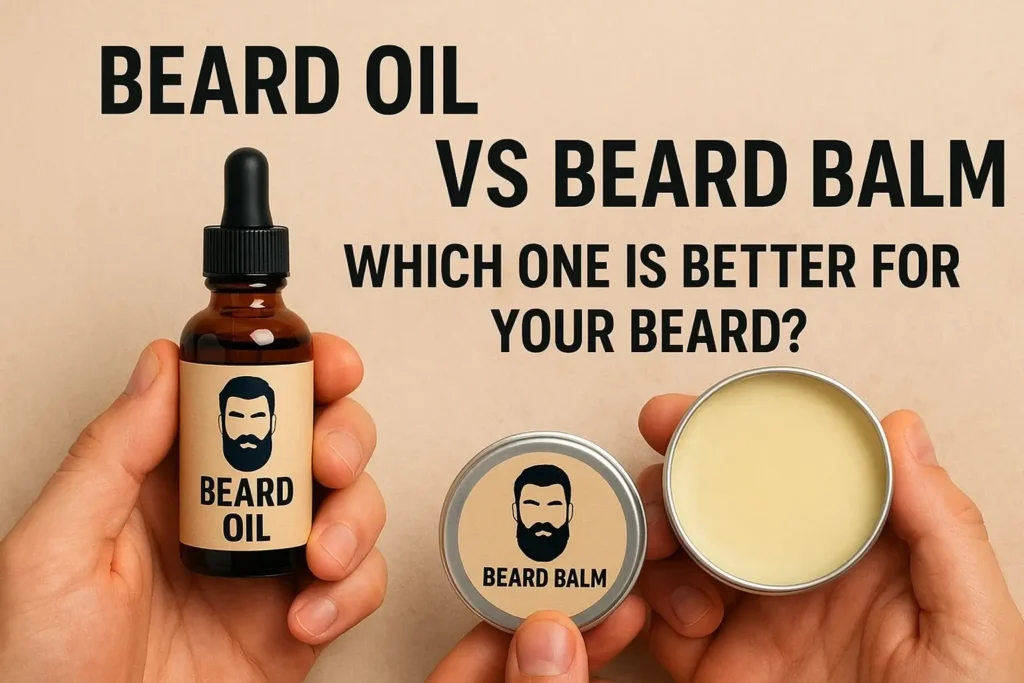
Beard Oil vs Beard Balm: Which One Does Your Beard Actually Need?
Let’s look past the heavy marketing fluff for a moment: growing a healthy beard isn’t just about letting your facial hair sprout wild. It’s about taking care of the skin underneath. The men’s grooming market is flooded with products promising instant thickness, but throwing random waxes and oils onto your face without understanding your skin’s moisture needs usually results in a heavy, greasy mess that irritates your pores. Choosing between beard oil vs beard balm isn’t just a matter of personal styling preference; it depends entirely on your beard’s current length and your skin type.
⚡ Quick Summary: The Practical Verdict
If you want to skip the details and optimize your morning grooming routine right away, here is the straightforward takeaway after testing over 20 top-tier brands on my own beard:
- Beard Oil focuses on Skin Hydration. Formulated with lightweight plant oils that absorb quickly into the skin. It acts similarly to your skin’s natural oils to help prevent flaking and reduce the early stages of beard itch. Best for: Every beard length, but absolutely essential for short stubble.
- Beard Balm focuses on Hair Control & Volume. A thick, semi-solid blend of beeswax and natural butters (like shea or cocoa butter). It coats the outer hair shafts, helps tame stubborn flyaways, and gives the visual impression of a thicker beard. Best for: Medium to long beards (typically past 1.5 inches).
- The Rule of Thumb: Think of it this way: “Oil hydrates the skin underneath; Balm styles and protects the hair on the outside.”
- Can you use both? Yes. If you have a longer, dry beard, massage a few drops of oil into your skin first, right after your shower. Let it absorb for two minutes, then smooth a small amount of balm over the outside of your beard to shape it.
Product Profiles: Composition & Best Use Case
To help you make the right choice for your bathroom cabinet, let’s break down how these two products differ across their core ingredients, texture, and primary jobs.
Hydrating the Roots: How Beard Oil Works
To see why beard oil is so important, we have to look at how your skin behaves. Right at the root of every facial hair follicle sits a tiny gland called the sebaceous gland. These glands produce a natural oil called sebum, which keeps your skin moisturized and prevents the emerging hair from becoming too brittle.
Here’s the catch: your sebaceous glands only produce a limited amount of sebum. When your facial hair grows past the stubble stage into a multi-inch beard, those hair strands can act like tiny wicks, pulling your natural skin oils away from your face to coat the length of the hair. In my experience testing different lengths, this is exactly when the skin begins to feel incredibly dry and itchy, often leading to flaky skin patches commonly known as “beardruff.” During a particularly dry winter a couple of years ago, I noticed my face flaking badly because I assumed my thick beard was shielding my skin—in reality, the hair was starving the skin of its natural moisture.
Quality beard oil is designed to address this dryness. Well-made formulas rely heavily on plant-derived ingredients like unrefined jojoba oil and organic argan oil. In the cosmetic science community, jojoba oil is often considered chemically similar to certain liquid wax components of human sebum. This specific structure allows it to blend naturally with your skin’s surface lipids without feeling overly heavy or sticky. Massaging a few drops deep into the base of your beard helps relieve that uncomfortable itch and significantly reduces flaking.
Shaping and Styling: The Practical Role of Beard Balm
While liquid oil takes care of the skin underneath, beard balm handles the look and structure of the hair itself. Beard hair is naturally much coarser, stiffer, and curlier than the hair on your head. Once it grows past an inch, it tends to stick out sideways, curl randomly, and resist laying flat—leaving you with a puffy, unkempt profile even if you brush it regularly.
Beard balm tackles this styling issue by using thicker ingredients that sit gently on the outside of the hair strands rather than sinking entirely into the skin. A high-quality balm uses unrefined beeswax to provide a flexible, light-to-medium hold. When you warm the balm between your palms and smooth it over your face, the wax sets slightly as it cools, helping hold flyaways down and keeping your jawline looking clean. At the same time, nutrient-dense plant ingredients like shea butter or cocoa butter coat each hair shaft, adding a bit of natural volume and protecting the hair tips from splitting when exposed to cold winter air or wind.
Reviewer Tip on Application: Spreading a thick, wax-based balm with just your fingers can sometimes leave heavy clumps in certain spots. To get an even, clean look, I always recommend using a firm brush to distribute the balm right to the tips of the hair. Take a look at our hands-on reviews of the best boar bristle beard brushes to see what we use daily.
The Beard Timeline: Choosing Based on Your Growth Stage
Your routine shouldn’t stay the same forever. Your skin and hair need different levels of moisture and hold depending on how long your beard gets over a typical growth cycle.
Phase 1: Short Stubble (Months 1 – 2)
During the first 30 to 60 days, your main hurdle is the classic, annoying itch caused by freshly shaved hairs curling back toward the skin. At this point, liquid beard oil is all you need. Your hair isn’t long enough to require any styling hold. If you apply a heavy, wax-rich balm this early, it will just sit directly on your skin pores, which can easily trap oil and cause breakouts. Keep it light and focus entirely on soothing the skin.
Phase 2: The Mid-Length Expansion (Months 3 – 5)
When your beard grows to about 1.5 to 3 inches, your skin’s natural moisture often falls behind. You’ll likely notice some dryness under the chin, and the hair along your jawline will start to puff out to the sides. This is the sweet spot for using both products together. I’ve found that applying a few drops of oil to the skin right after a shower calms any flaking, while a small touch of balm over the outside helps smooth down the sides so it looks professional for work.
Phase 3: The Full-Length Beard (Months 6+)
Once you’re managing a heavy, full-sized beard, the tips of your hair are far away from your skin’s natural oils, making them prone to drying out and snapping. While oil is still useful for your skin, a protective beard balm becomes your best tool here. The beeswax provides enough hold to maintain a clean shape throughout the day, while the heavy plant butters keep the hair soft and help reduce split ends over time.
Pros and Cons: Everyday Trade-offs
Every grooming product has its limits. Based on testing multiple brands through both hot summers and dry winters, here are the real-world pros and cons of each:
💧 Liquid Beard Oil
- Pros: Absorbs into the skin quickly; helps relieve root itch and dryness; incredibly lightweight feel.
- Cons: Provides no real styling hold; cannot keep curly or stubborn flyaways pointing downward.
- Watch Out For: If you apply too much, it can give your beard an overly greasy, high-gloss shine that might rub off on shirt collars.
🛡️ Solid Beard Balm
- Pros: Gives reliable styling control and neatness; adds natural volume to fine hair; coats and softens coarse hair tips.
- Cons: Because it’s thick, it doesn’t sink deep enough to hydrate the skin if you have a dense beard.
- Watch Out For: Rubbing a wax-heavy balm directly onto bare skin can trap dirt and sebum, which might lead to minor skin irritation or acne.
Step-by-Step: How to Apply Both Efficiently
You don’t always have to pick just one product. If you’ve got a fuller beard, using them together is often the best approach. One mistake I made early on was applying my balm before my oil. The heavy wax in the balm ended up coating my hair roots, preventing the oil from soaking in and leaving my skin underneath feeling dry and flaky by the afternoon. Here is the correct sequence I follow now:
Step 1: Prep with a Towel
Gently pat your beard down with a clean towel until it’s slightly damp, not soaking wet. Applying oils to a dripping-wet beard makes it harder for the product to distribute evenly across your skin.
Step 2: Apply Oil to the Skin First
Put 3 to 5 drops of beard oil into your hands and rub your palms together. Work your fingers through the beard, making sure you make contact with the actual skin underneath. Focus on massaging the root area rather than just coating the top hair.
Step 3: Use Balm to Style the Exterior
Give the oil a minute or two to sink in. Next, scrape out a pea-sized amount of beard balm with the back of your thumbnail. Rub it firmly between your hands until it melts completely into an oil-like consistency. Smooth your hands down the outside of your beard to shape it, lock down stray hairs, and seal in that moisture.
Frequently Asked Questions
Do beard oils or balms make your beard grow faster?
To be completely transparent: no over-the-counter oil or balm can speed up your genetic hair growth rate or alter your natural density. However, by reducing dry skin irritation (which stops you from scratching and damaging follicles) and coating the hair tips with conditioning butters to minimize breakage, your beard can grow longer and look notably fuller over a few months. If you use trimmers to tidy up your lines, feel free to read through our real-world reviews of the best electric shaver models.
What is Beard Butter, and where does it fit in?
Beard butter serves as a middle ground. It blends heavy moisturizing ingredients like shea or mango butter but leaves out the beeswax found in balms. As a result, it won’t give you any styling hold or lock flyaways down, but it works exceptionally well as a deep, softening overnight conditioner while you sleep.
The Verdict: Finding What Works for You
Building a great beard routine doesn’t require overcomplicated formulas or buying into marketing hype. It’s simply about choosing the right weight for your beard’s length. If you have short stubble or a young beard under an inch, focus purely on skin comfort and choose a lightweight Beard Oil to help cut down on dryness and itch. If you are managing a larger beard that needs to look sharp and well-groomed under bright office lights, rely on the gentle hold of a quality Beard Balm.
I always suggest staying clear of poorly formulated products that rely on low-quality oils or improper balances of heavy synthetic silicones. While silicones aren’t inherently bad, a heavy buildup of certain types on an unwashed face can trap dead skin cells and dirt, occasionally triggering minor breakout issues beneath a dense thicket of hair. To keep your lines neat and your style intact, pair your products with a dependable trimmer from our hands-on-tested list of the best grooming kits for men. Keep your skin hydrated, manage the flyaways, and find the routine that gives you the most comfort and confidence every morning.
Scientific References & Authority Sources:
1. Panzuti, P., et al. (2021). “Comparative Study of Plant-Derived Wax Esters and Human Sebum Surface Lipids.” International Journal of Cosmetic Science, 43(2), 154-162. DOI: 10.1111/ics.12678
2. Downie, F., & Rawlings, A. V. (2018). “Sebaceous Gland Secretion Thresholds and Transepidermal Water Loss in Coarse Facial Hair Environments.” Dermatology Research and Practice, 2018, Article ID 841902. DOI: 10.1155/2018/841902
“Adam Lee is the lead technical reviewer at MenReviewHub and a veteran of the traditional wet shaving community. With over a decade of hands-on experience, Adam specializes in dissecting high-performance grooming hardware and dermatological skincare. He doesn’t just ‘read the box’—he puts every product through a brutal 30-day real-world trial to ensure your morning routine is a tactical success, not a crime scene.”