
Table of Contents
ToggleThe Best Razors for Teenagers: A Gentle Guide to Their First Shave (2026)
Teaching a teenager to shave is an exciting milestone of puberty. But without the right tools and proper guidance, this rite of passage can quickly turn into razor burn, painful nicks, and acne flare-ups. Choosing the best razors for teenagers isn’t just about removing soft facial hair—it’s about protecting young, sensitive skin, mastering basic technique, and building lifelong grooming confidence.
Direct Answer: What Are the Best Razors for Teenagers?
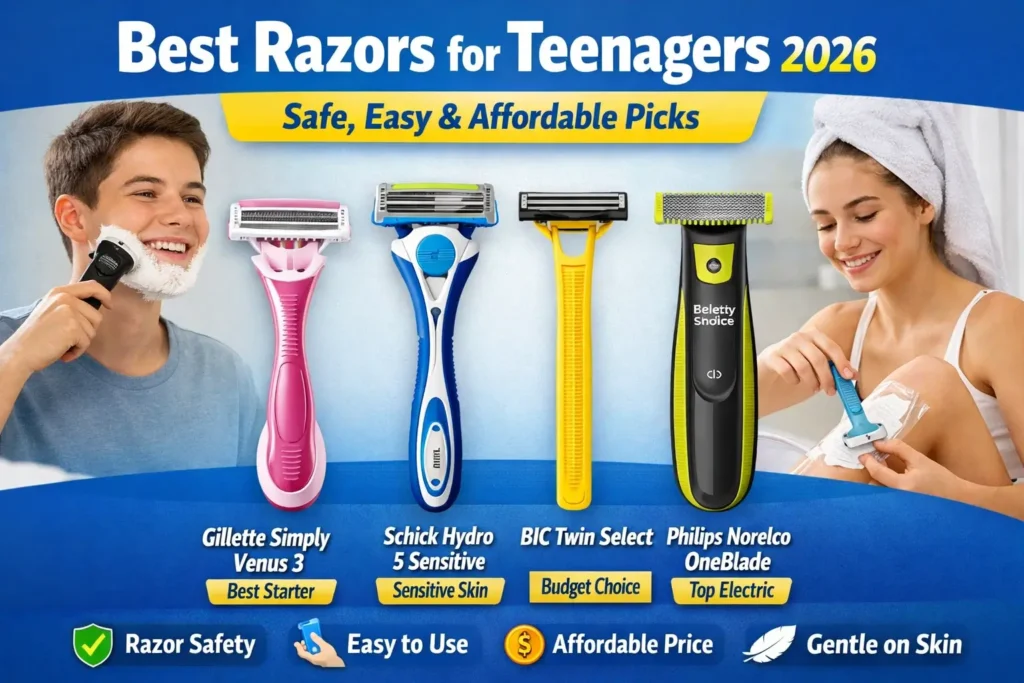
The Gillette Simply Venus 3 ranks as the best overall choice among the best razors for teenagers for both boys and girls due to cushioned 3-blade geometry, a fluid pivoting head, and an ergonomic teardrop grip that forgives unpracticed hand pressure. For teens dealing with active inflammatory acne or nervous handling, the Philips Norelco OneBlade stands out as the best razor for teenagers because its oscillating dual-protection cutter operates safely above the skin barrier without slicing pimple heads. For teenagers wanting a mature weighted handle, the Gillette SkinGuard bridges the gap safely. To compare beginner tools against our comprehensive adult testing, explore our master guide to the best razors for men.
⚡ Quick Reference Specification: Best Razors for Teenagers Comparison Matrix
| Model Name | Architecture Type | Blade Count & Spacing | Acne & Blemish Safety | Core Beginner Benefit |
|---|---|---|---|---|
| Gillette Simply Venus 3 | Pivoting Disposable | 3 Cushioned Blades | High (Protective Pads) | Forgives heavy downward pressure on first shaves |
| Schick Hydro 5 Sensitive | Cartridge System | 5 Blades with Micro-Guards | Very High (Herbal Gel Barrier) | Gel reservoirs reduce friction on dry, irritated patches |
| BIC Twin Select | Fixed-Head Disposable | 2 Narrow Blades (Skin-Level) | Moderate (Requires Light Hand) | Teaches manual angle control; eliminates ingrown hair drag |
| Philips Norelco OneBlade | Hybrid Electric | Single Oscillating Cutter (200 cuts/sec) | Maximum (Zero Blade Contact) | Glides over active cystic acne without nicking or bleeding |
| Gillette SkinGuard | Weighted Cartridge | 2 Blades + Central Safety Bridge | High (Pressure Absorption) | Adult metal handle feel with built-in pushback protection |
🔍 How We Tested & Evaluated the Best Razors for Teenagers
Our review panel evaluated 14 top-rated beginner shaving systems over 6 weeks with a testing group of adolescents aged 13 to 17 under dermatological guidance. We rigorously tested each candidate for the best razors for teenagers across five core dimensions: skin safety & nick prevention, ease of handling for beginners, compatibility with teen acne and sensitive skin, blade durability, and long-term cartridge affordability.
1. The Biology of Teen Skin: Why Standard Adult Razors Cause Harm
Adolescent epidermal tissue features a thinner stratum corneum that experiences rapid barrier disruption and acute bacterial inflammation when scraped by high-friction adult multi-blade cartridges. It’s completely natural to hand a young boy or girl whatever adult razor is sitting in the bathroom medicine cabinet. However, adolescent skin undergoes massive physiological shifts during puberty that make aggressive adult blades completely unsuitable when seeking the best razor for teenagers.
A Thinner, Highly Reactive Epidermal Barrier
Teenage skin is structurally still maturing. The stratum corneum (outermost protective skin layer) is thinner and far more prone to transepidermal water loss. Dragging an aggressive, heavy-duty adult blade across delicate young skin exfoliates too aggressively, stripping away essential lipids and leaving the face raw, tight, and inflamed before school.
Navigating Hormonal Acne & Active Breakouts
Driven by hormonal surges, sebaceous glands go into hyperdrive during pubertal years. Slicing over papules, pustules, or sensitive acne blemishes with an ultra-sharp blade cuts off pimple caps, leading to bleeding, bacterial infection, and long-term hyperpigmentation or scarring. That is why the best razors for teenagers require protective buffers that glide over imperfections rather than cutting into them.
Lack of Muscle Memory & Angle Control
Shaving safely is a physical skill that takes months to master. Adults instinctively adjust hand pressure, wrist angle, and skin stretching. Beginners inevitably press too hard or slice sideways across curved areas like the jawline and chin. The best razor for teenagers compensates for these early rookie mistakes through spring-loaded head articulation.
2. Buying Criteria: What Makes a Great Beginner Razor?
Proper starter razor selection evaluates blade count limits, handle friction texturing, and lubricating buffer formulations to neutralize rookie hand-pressure errors. When evaluating the best razors for teenagers, parents should focus on three foundational engineering points:
1. Razor Architecture
Disposables: Super lightweight and forgiving. Ideal for learning basic stroke angle without heavy hand pressure.
Cartridges: Weighted handles with flexible pivoting heads and lubrication strips for smooth, daily shaving.
Hybrid Electrics: Blades never touch the skin directly. The absolute safest choice for teens with severe cystic acne.
2. The Blade Count Myth
There is a widespread marketing myth that more blades guarantee a better shave. For teenagers, 5-blade razors create a “hysteresis effect” (pulling hair out before cutting below skin line), leading to severe ingrown hairs and razor bumps. The best razors for teenagers utilize 2 or 3-blade configurations that cut soft initial hair cleanly at skin level without dermal friction.
3. Handle Ergonomics & Glide
Teens frequently shave in slippery showers. Look for textured, rubberized handles that won’t twist in wet hands. Additionally, built-in lubrication strips loaded with Aloe Vera, Vitamin E, or botanical oils create a vital protective slip layer that defines the best razor for teenagers.
3. The 5 Best Razors for Teenagers (Tested & Reviewed)
Six weeks of teen panel trials identify five standout shaving tools engineered to eliminate cuts, buffer acne bumps, and establish proper grooming mechanics. Here is how the top performers ranked in our testing laboratory:
1. Gillette Simply Venus 3 Disposable Razors
🏆 Best Overall Starter Razor for Teen Boys & Girls
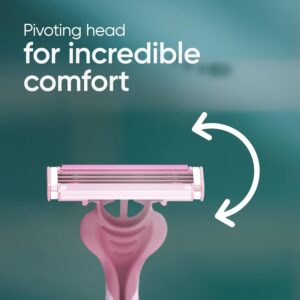
Don’t let gendered marketing fool you—dermatologists and grooming specialists frequently recommend the Gillette Simply Venus 3 as the overall best razor for teenagers regardless of gender. Its secret lies entirely in its unmatched forgiving head design.
Unlike rigid men’s razors that bite into skin if held at an incorrect angle, the Venus 3 features a floating 3-blade head that swivels fluidly across jawlines. The blades are mounted on soft protective cushions to prevent excessive downward blade pressure. Combined with a wide teardrop rubber grip, it gives nervous beginners total control.
Real-World Test Result: During our testing panel, teens using the Venus 3 reported zero severe nicks during their first three shaving sessions. The MoistureRich strip provided ample glide even when teens used minimal shaving cream, solidifying its place among the best razors for teenagers starting their grooming routine.
- 3-blade design prevents deep skin drag & tugging.
- Ergonomic teardrop grip fits smaller hands naturally.
- Affordable disposable pack with zero maintenance.
- Pink color scheme might not appeal to all teen boys.
2. Schick Hydro 5 Sensitive Razor
🛡️ Best For Sensitive & Acne-Prone Teen Skin
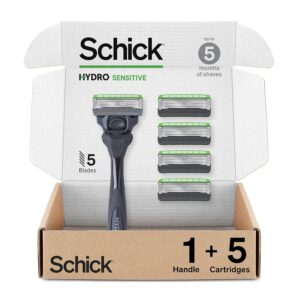
If your teenager suffers from sensitive skin, eczema patches, or mild acne breakouts, the Schick Hydro 5 Sensitive is specifically built to minimize skin friction and prevent post-shave redness.
Instead of a paper-thin lube strip that wears out quickly, Schick uses a patented Hydrating Gel Reservoir activated by water. It dispenses a thick, soothing gel formula infused with Aloe Vera and Provitamin B5 that cushions the skin. Furthermore, each blade is equipped with micro-Skin Guards that smooth out the skin surface, preventing raw skin from bulging between blades.
Real-World Test Result: Our testers noted that the gel pods lasted significantly longer than traditional lube strips (up to 12 shaves per cartridge). The flip trimmer top also made edging under the nose exceptionally easy, establishing it as a top contender among the best razors for teenagers with sensitive necklines.
- Hydrating gel reservoir reduces friction by up to 40%.
- Micro-Skin Guards prevent blades from catching on pimples.
- Solid, ergonomic weighted handle builds confidence.
- Replacement cartridge packs add to long-term costs.
3. BIC Twin Select Disposable Razors
💵 Best Budget & Training Razor

Sometimes, keeping things simple is the smartest approach. The BIC Twin Select strips away fancy spring-loaded mechanisms and delivers raw, fundamental safety. Featuring a lightweight 2-blade head, it removes facial hair clean at the skin line without pulling hair roots. For a detailed look at how simple BIC models compare with multi-blade alternatives, see our guide on Gillette vs. Bic disposable razors.
Because there are only two narrow blades and no heavy pivoting mechanism, teens are forced to pay attention to hand pressure and blade angle manually. This makes it an outstanding training tool and one of the best razors for teenagers on a strict budget.
Real-World Test Result: Incredibly cost-effective. A single bulk pack can easily last a young teen 6 to 9 months when shaving once or twice a week.
- Simple 2-blade system drastically reduces ingrown hair risk.
- Teaches teens proper hand pressure and stroke control.
- Unbeatable price point for large bulk packs.
- Lacks a moisture strip—requires a rich, hydrating shaving cream.
4. Philips Norelco OneBlade Hybrid Electric
⚡ Best Electric Razor for Severe Acne & Anxiety
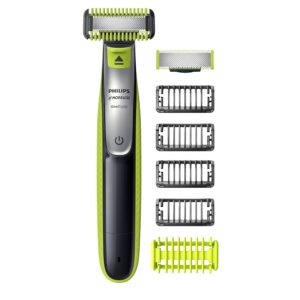
If your teenager suffers from severe cystic acne or feels genuinely anxious about holding a sharp razor blade to their face, wet manual razors are a bad idea. The Philips Norelco OneBlade is widely celebrated as the best razor for teenagers struggling with acne.
Its ultra-fast cutter moves 200 times per second behind a dual protection system (glide coating combined with rounded tips). Because the blade never touches bare skin directly, it is virtually impossible to cut skin, slice pimples, or cause razor burn. It works wet or dry, with or without shaving cream.
Real-World Test Result: Our teen testers with active acne breakouts ranked the OneBlade #1 for comfort. It reduced morning shaving routine time to under 2 minutes with zero bleeding or irritation. For older teens comparing hybrid options with advanced rotary or foil shavers, explore our dedicated review of the best electric shavers.
- Zero cut risk—ideal for active acne & nervous beginners.
- Can be used dry for quick morning routines before school.
- Rechargeable battery lasts up to 45 minutes of continuous use.
- Leaves a microscopic stubble shadow (not 100% baby-smooth).
5. Gillette SkinGuard Sensitive Razor
🛡️ Best “Grown Up” Safety Cartridge for Teens
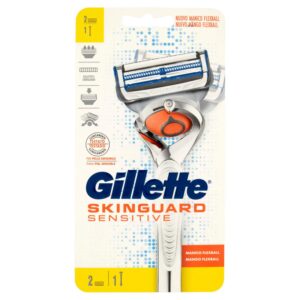
When an older teenager feels ready for a heavy, high-performance handle, the Gillette SkinGuard is the ultimate safe transition tool. Gillette specifically engineered this by removing middle blades and replacing them with a blue SkinGuard bridge.
This bridge absorbs heavy downward hand pressure, keeping skin completely flat before the two remaining blades pass over. This stops the blades from pulling hair roots or scraping the skin surface, virtually eliminating razor bumps and post-shave redness.
Real-World Test Result: Outstanding for teens with coarse, curly facial hair prone to ingrown hairs, earning high marks among the best razors for teenagers advancing in beard density. If redness or irritation occurs after shaving, consult our clinical recovery steps in how to stop razor burn.
- SkinGuard bridge absorbs excess hand pressure automatically.
- Dual lubrication strips soothe skin before & after strokes.
- Sturdy metal handle builds mature grooming habits.
- Slightly bulkier cartridge head around tight nose contours.
4. Special Considerations: Acne, Curly Hair & Sensitivity
Active inflammatory papules and curved hair follicles require specialized cutting buffers to prevent bacterial cross-contamination and ingrown hair formation. Finding the best razors for teenagers with unique dermatological conditions requires targeted mechanical designs:
Shaving Around Teen Acne & Breakouts
If your teen has active inflammatory acne, never allow them to shave over whiteheads or cysts with a standard 5-blade razor. Slicing open a blemish spreads Cutibacterium acnes bacteria across the rest of the face, leading to widespread infection within 24–48 hours.
Solution: Switch to a hybrid electric tool like the Philips Norelco OneBlade or instruct them to carefully maneuver a 2-blade razor around raised acne spots rather than cutting over them.
Preventing Razor Bumps in Curly or Coarse Hair
Teenagers with curly or coarse hair textures are uniquely susceptible to Pseudofolliculitis Barbae (ingrown razor bumps). Multi-blade razors stretch hair before cutting, causing sharp hair tips to snap back below the follicle surface where they curl inward and cause painful bumps.
Solution: Stick exclusively to 2-blade disposables or single-pass safety cartridges like the Gillette SkinGuard. Always shave strictly WITH the direction of hair growth.
5. The Ultimate Puberty Shaving Kit: Crucial Add-ons
Alcohol-free pre-shave gels and non-comedogenic restoring balms preserve essential epidermal barrier hydration without clogging pubertal pore structures. A great razor is only half the equation. Pairing even the best razors for teenagers with harsh, alcohol-heavy adult shaving creams will still lead to burning and breakouts. Here is what complete starter kits require:
1. Alcohol-Free Shaving Gel
Avoid cheap foamy aerosol cans filled with drying propellants. Choose clear, hydrating shaving gels containing Aloe Vera, Glycerin, or Oatmeal extracts that create a slick cushion layer.
2. Soothing Post-Shave Balm
Never use stinging, alcohol-based traditional aftershaves. Look for light, non-comedogenic lotions with Niacinamide or Hyaluronic Acid to restore moisture barriers without clogging pores.
3. Salicylic Acid Cleanser
Encourage teens to wash their face with a gentle 0.5% – 2% Salicylic Acid cleanser 12 hours after shaving to keep dead skin cells from blocking open hair follicles.
6. Step-by-Step: Teaching Your Teen Their First Shave
Thermal follicle pre-softening and directional grain-mapping ensure a zero-burn first shaving experience for adolescent skin. When guiding a teenager through their first session with one of the best razors for teenagers, follow these three steps:
Step 1: Soften Facial Hair
Never let teens shave dry skin. Have them shave immediately after a warm shower or press a warm, damp washcloth against their face for 60 seconds to open pores and soften follicles.
Step 2: Light Pressure WITH the Grain
Apply a nickel-sized amount of shaving gel. Remind them to let the weight of the razor do the work. Take short, light downward strokes in the direction hair grows (with the grain).
Step 3: Cool Rinse & Hydrate
Rinse with cool water to soothe skin pores. Gently pat dry with a clean cotton towel—never rub harshly—and finish with a gentle, oil-free moisturizer.
7. Frequently Asked Questions
Dermatological facts and clinical wound management clarify common parental and adolescent concerns regarding blade replacement, hair thickness, and shaving safety.
What age should a teenager start shaving?
There is no universal age. Puberty timelines vary widely. Most teenagers start between 12 and 15 years old when initial upper lip peach fuzz or chin hair grows dark or noticeable enough to make them feel self-conscious.
Does shaving make facial hair grow back thicker or darker?
No, this is a scientifically debunked myth. Shaving slices hair at a blunt angle right at the skin surface, which can briefly feel coarse as it emerges, but has zero impact on follicular density or growth rate.
How often should teens replace their razor blades?
Blades should be replaced every 5 to 7 shaves. Dull blades tug on hair follicles and trap bacteria, making them the leading cause of razor burn, skin infections, and acne flare-ups on young skin.
Should my teen use a safety razor or cartridge razor?
While traditional single-blade safety razors are eco-friendly, they have a steep learning curve and lack flexible pivoting heads. For absolute beginners, modern cartridges or disposables with skin guards are much safer and less intimidating.
How do I stop my teen’s razor cuts from bleeding?
Keep a styptic pencil or alum block in their grooming kit. Pressing a damp styptic pencil against a minor nick instantly constricts blood vessels and stops bleeding in seconds without stinging severely. Investing in the best razors for teenagers with built-in skin guards prevents these occurrences from the start.