
Table of Contents
ToggleSkull Shaver Blade Guide: Forte PRO vs. Carver vs. Baron (2026 Real-World Test)
A hands-on, empirical comparison of foil geometry, ring structures, and shaving comfort. This guide breaks down the practical differences based on actual multi-week product tracking to help you match the right replacement blade to your hair texture and scalp sensitivity.
Our Testing Methodology & Review Standards
To deliver authentic insights, our team tracked the performance of current Skull Shaver PRO replacement blades over a multi-week trial. Here is how we gathered our observations:
⚡ Quick Handle Compatibility Matrix
All PRO series replacement heads (Forte PRO, Carver, Baron) utilize the universal twist-to-lock connection interface and are 100% compatible with the following handles:
- Pitbull Series: Gold PRO, Platinum PRO, Silver PRO, Diamond PRO
- Compact & Specialty Lines: Skull Shaver Palm, Butterfly Kiss PRO
- Note: PRO blades are NOT compatible with legacy 1st-generation Bald Eagle handles.
1. The Practical Reality of Head Shaving
Shaving your head is a highly specific task that bears little resemblance to facial grooming. The skin across your scalp is stretched tightly over a firm bone baseline, lacking soft subcutaneous tissue and presenting tight contour angles along the occipital ridge and temples. Using an ill-fitted blade type over these zones often results in missed patches, skin discomfort, or localized hair pulling.
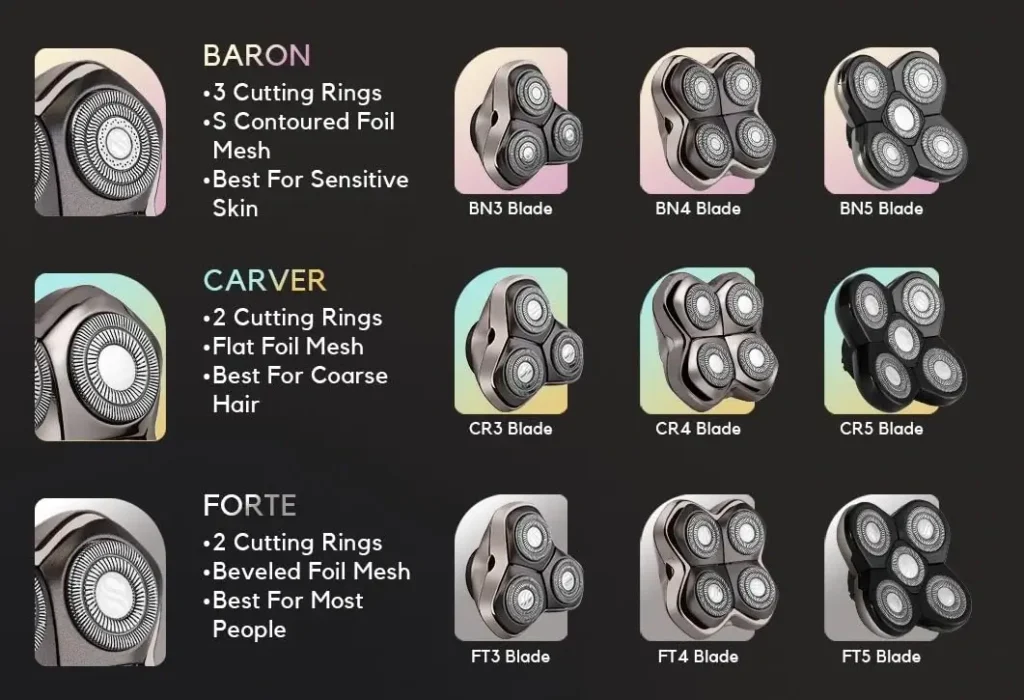
To address these variances, Skull Shaver builds three distinct replacement heads for their spring-loaded rotary housing: the Forte PRO, Carver, and Baron. Each model features a specific foil geometry and slot opening profile designed to match different hair densities while keeping your scalp’s moisture barrier intact.
2. Forte PRO Blade: The Versatile Benchmark

The Forte PRO serves as the standard factory head included out of the box with Pitbull Gold and Platinum shavers. It is the manufacturer’s most popular configuration, designed to provide a reliable baseline balance of speed and comfort for a broad range of hair types without requiring a separate aftermarket upgrade.
Key Attributes & Performance Profile:
- Beveled Foil Mesh: The outer foil profile slopes gently inward along the edges. During testing, this curved shape followed the natural roundness of the skull smoothly, requiring minimal manual pressure behind the ears.
- Dual Cutting Rings: Each rotary head houses two concentric tracks of Japanese stainless steel blades, allowing it to capture multi-directional hair growth efficiently.
- Balanced Skin Closeness: Delivers a smooth shave without skin irritation or excessive friction heat for normal or slightly sensitive scalps.
3. Carver Blade: Built for Coarse & Curly Textures
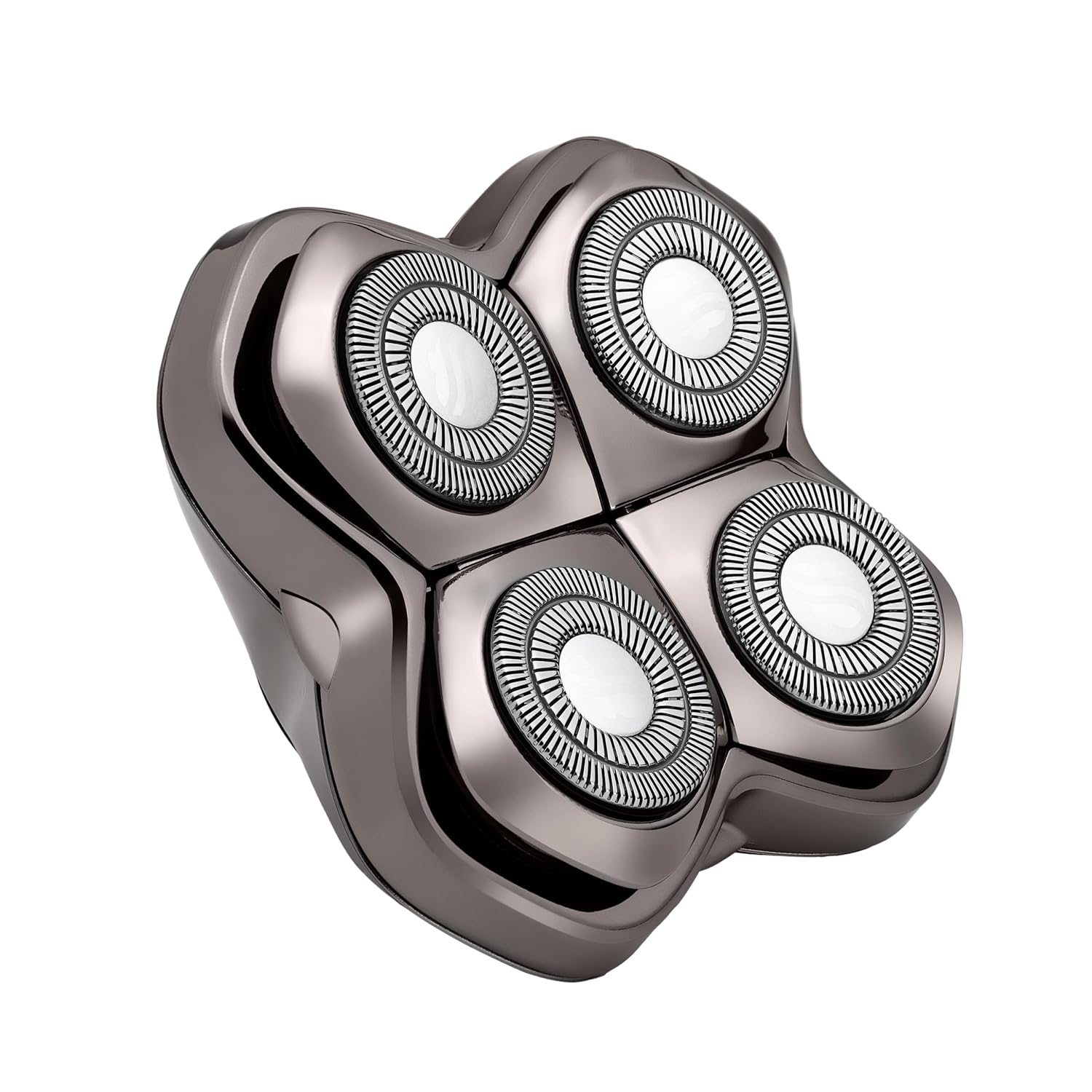
The Carver Blade shifts focus from smooth contour gliding to heavy-duty shearing performance. It is designed for men with dense, coarse, or tightly coiled hair structures who find that intermediate foils occasionally snag or struggle to feed stubborn stubble fields.
Key Attributes & Performance Profile:
- Flat Foil Geometry: In contrast to the beveled Forte, the Carver utilizes a flat foil mesh. This positions the cutting rings flush against the skin line for a direct, highly efficient bite.
- Wider Entry Slots: Mesh openings across the foil face are visibly larger, allowing coarse stubble and spiral strands to feed smoothly into the cutters. It is a top recommendation in our guide for the best head shaver for African American men.
- Multi-Day Stubble Tolerance: Capable of handling 2 to 3 days of dense growth without motor lag or clogging.
4. Baron Blade: Engineered for Skin Comfort
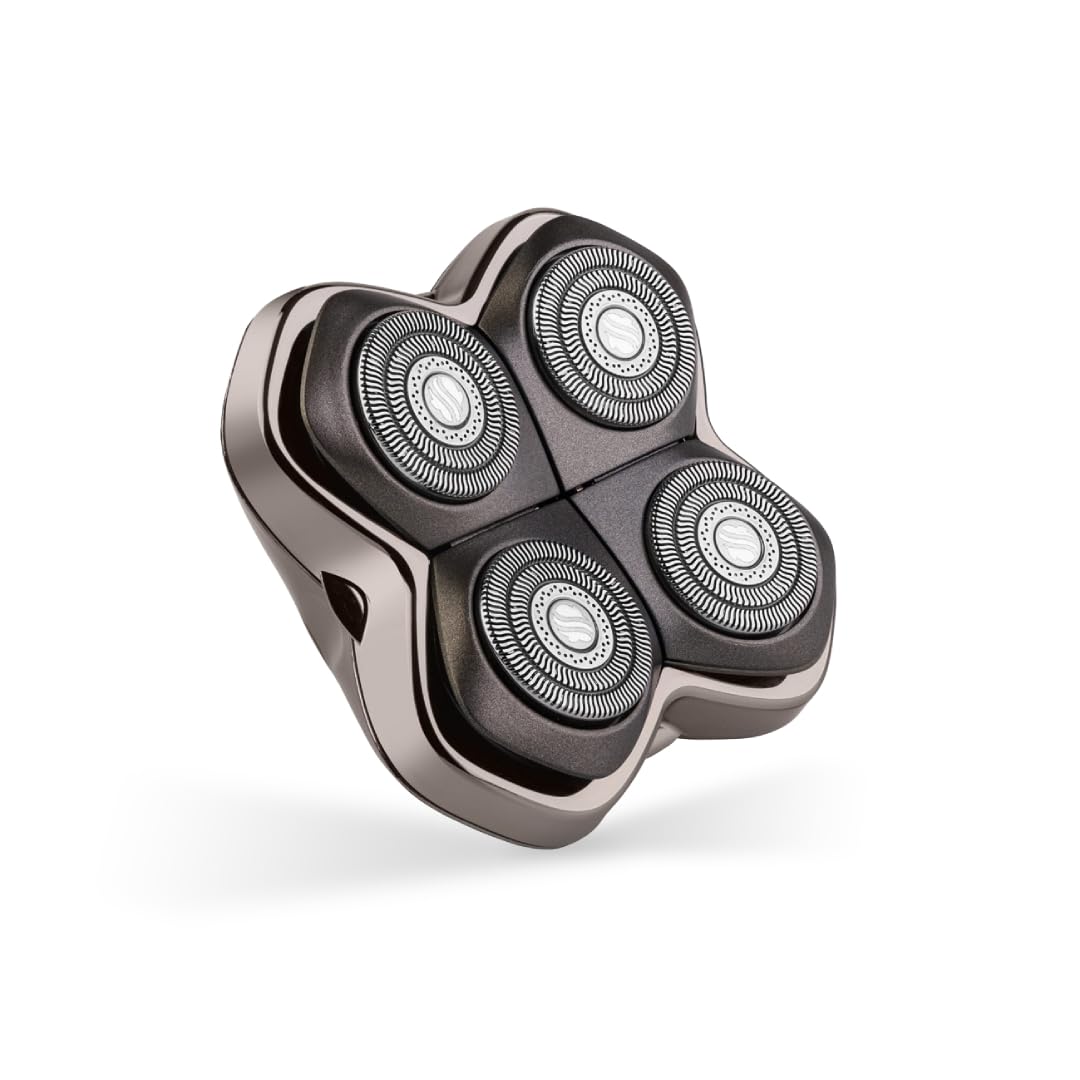
The Baron Blade is built specifically for users prone to razor bumps, fine hair textures, or post-shave scalp redness. It trades raw cutting speed for a cushioned, low-friction experience over delicate skin profiles.
Key Attributes & Performance Profile:
- Triple Cutting Tracks Per Head: While standard heads feature two tracks, each rotary disc on the Baron incorporates three concentric cutting rings (two S-slot tracks + one micro-dot track). This spreads manual pressure evenly over a broader surface area.
- S-Shaped & Dot Matrix Mesh: Micro-mesh openings isolate scalp bumps while feeding fine hair into the cutters, preventing direct blade-to-skin pinches.
- Low Friction Glide: Generates minimal heat during extended multi-pass dry shaves, keeping sensitive scalps calm.
5. Empirical Performance & Comparison Metrics
To assist in your decision, we summarized our testing observations and internal grading scores accumulated during multi-week product trials.
Table 1: Design & Mesh Characteristics
| Blade Profile | Foil Track Shape | Mesh Pattern Type | Observed Skin Feel | Optimal Stubble Window |
|---|---|---|---|---|
| Forte PRO | Dual Track (Beveled/Curved) | Standard Linear Slots | Balanced / Forgiving | Daily to every other day |
| Carver | Dual Track (Flat Profile) | Widened Slots | Direct / Firm Contact | Up to 3 days of growth |
| Baron | Triple Track (Flat Profile) | Alternating S-Slots + Dots | Soft / Highly Cushioned | Daily fine hair tracking |
Table 2: Observed Team Evaluation Ratings
*Ratings reflect testing consensus on an internal 1 to 10 scale across identical maintenance routines.
| Tested Category | Forte PRO Baseline | Carver Performance | Baron Performance |
|---|---|---|---|
| Shave Closeness Score | 9.3 / 10 | 9.7 / 10 | 8.8 / 10 |
| Post-Shave Skin Comfort | 9.2 / 10 | 8.5 / 10 | 9.8 / 10 |
| Coarse / Curly Hair Speed | 8.7 / 10 | 9.9 / 10 | 7.9 / 10 |
| Redness Prevention Index | 8.8 / 10 | 7.8 / 10 | 9.8 / 10 |
| Mean Routine Shave Time | ~3.5 minutes | ~2.5 minutes | ~4.0 minutes |
| Observed Longevity Range | 4 to 5 months | 5+ months | 3 to 4 months |
Negative Matching: Who Should NOT Buy Each Model
To save you money, here are real-world scenarios where a specific blade configuration may deliver sub-optimal results:
- Skip the Forte PRO if: You have exceptionally dense or tightly coiled hair fields. It can produce minor tugging on coarse textures, requiring additional passes.
- Skip the Carver if: You have sensitive skin, active razor bumps, or severe dryness. Its flush profile brings the cutters directly against the scalp, increasing the risk of friction burn.
- Skip the Baron if: You leave 3 to 4 days of stubble between sessions. Longer hairs struggle to feed into the micro-mesh openings, slowing down your shave.
Replacement Selection Flowchart
Is your skin prone to severe redness or razor bumps?
├─→ YES ─→ [Select BARON BLADE for protection] ↓
NO
↓
Is your hair texture coarse, thick, or tightly coiled?
├─→ YES ─→ [Select CARVER BLADE for cutting speed] ↓
NO (Standard hair thickness / Normal skin profile)
↓
[Maintain FORTE PRO standard factory setup]
Amortized Cost Per Individual Shave
Assuming a base replacement price of $34.99 and a typical routine of 3 head shaves per week, here is how long-term operating costs break down per session:
~$0.60 / Shave
Calculated over a 4.5-month lifespan
~$0.53 / Shave
Calculated over a 5.5-month lifespan
~$0.72 / Shave
Calculated over a 3.5-month lifespan*
*Note: The Baron’s micro-mesh pattern exhibits edge wear slightly earlier if used for dry shaves without lubricating gels.
6. Common Maintenance Mistakes That Shorten Foil Lifespan
Avoiding these frequent care mistakes prevents premature blade dulling and helps you maximize the life of your replacement assembly:
Want to verify if your current shaver model matches your grooming goals? Read our full evaluation: Pitbull Gold PRO Review: Is It Still Worth the Hype?
7. Advanced Practical FAQ
Does the Carver head shave closer than the Baron?
Yes. The flat mesh profile of the Carver brings the moving cutters closer to the epidermal line compared to the triple-track layout of the Baron. However, because it contacts skin directly, it demands a light hand to avoid skin warmth on sensitive areas.
What is the practical difference between PRO 3-Head and 4-Head variants?
Both 3-Head and 4-Head assemblies use identical foil geometry technology (Forte, Carver, or Baron). The 4-Head configuration covers a wider surface area for faster full-scalp shaves, while the 3-Head profile is narrower, making it easier to maneuver around tight contours, jawlines, or face/beard edges.
Can I mix individual blade tracks inside the same housing chassis?
No. The internal rotary drive drivetrain distributes torque evenly across all gear nodes from a central transmission. Mixing different foil shapes (such as pairing a flat Carver track with a curved Forte track) creates an uneven load balance, leading to irregular cutting or motor wear.
Will heavy shaving lubricants clog PRO series replacement tracks?
Thick, non-foaming shaving gels or dense pre-shave oils can bind hair trimmings into a thick paste inside the inner chambers. If using dense creams, perform a quick warm-water flush every 60 to 90 seconds during your session to keep the cutting tracks clear.
What type of steel material is used in these replacement cutters?
Skull Shaver manufactures PRO series replacement heads using hypoallergenic Japanese stainless steel. This alloy offers edge retention and corrosion resistance, though regular lubrication remains essential to minimize friction during dry shaves.
Conclusion: Selecting Your Perfect Match
Choosing the ideal replacement head comes down to identifying your hair texture and balancing cutting speed with skin tolerance. To recap our testing observations:
- Choose the Forte PRO if you want the most versatile benchmark option for standard daily routines on normal skin.
- Choose the Carver if you manage thick, coarse, or curly stubble and prioritize rapid shearing speed.
- Choose the Baron if your scalp flares easily with redness and you require a gentle, low-friction glide.