
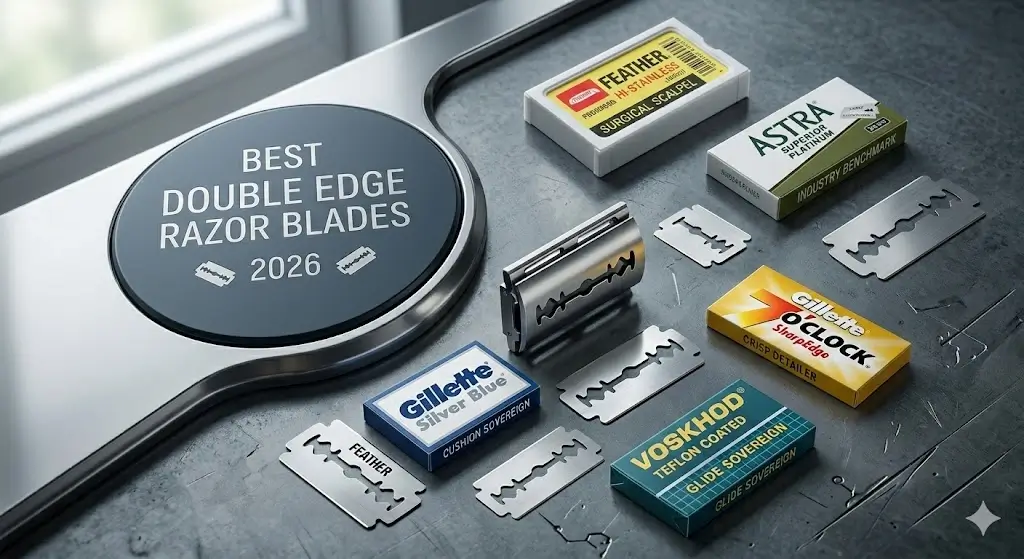
Best Double Edge Razor Blades: 2026 Wet Shaving Guide
Let’s look at the mechanical reality of your morning routine: dragging a multi-blade plastic cartridge over your neck often compromises your skin barrier. While commercial grooming campaigns suggest that razor burn and ingrown hairs are unavoidable side effects of being clean-shaven, dermatological guidelines from the American Academy of Dermatology show the issue is typically down to friction and blade design.
Mass-market cartridges often rely on a pull-and-cut system that can trap hair beneath the skin surface. Sourcing the best double edge razor blades for your specific skin type—and pairing them with one of the best razors for men—is one of the most effective ways to reduce daily irritation and improve shave closeness.
⚡ Quick Recommendations: Best Double Edge Razor Blades
If you need a quick overview based on our field tests, here is how the top-rated safety razor blades stack up by hair type and skin profile:
- For Heavy, Coarse Bristles: Feather Hi-Stainless (High initial sharpness; cuts through dense growth with minimal tugging).
- The Balanced All-Rounder: Astra Superior Platinum (A forgiving daily blade showing excellent manufacturing consistency).
- For Sensitive Skin: Voskhod Teflon Coated (Features a noticeable PTFE layer to help minimize surface friction).
- The Smooth Sweet Spot: Gillette Silver Blue (Combines reliable sharpness with a smooth, comfortable glide).
- Lifespan Expectation: Most users report optimal comfort when replacing double edge razor blades every 3 to 6 shaves, depending on hair thickness.
💡 Pro Hardware Pairing: Matching Razor Handles with Double Edge Razor Blades
To maximize performance, make sure your blade matches your handle profile (see our full roundup of the best razors for men):
- Mild Closed-Comb Razors (e.g., Merkur 34C, Edwin Jagger DE89): Pair best with sharper double edge razor blades like Feather or Gillette 7 O’Clock Yellow to compensate for smaller blade gaps.
- Aggressive or Open-Comb Razors (e.g., Mühle R41, Adjustable Setting 5+): Pair best with smooth, forgiving double edge razor blades like Voskhod or Astra SP to avoid razor burn.
🔬 Real-World Testing Data for the Best Double Edge Razor Blades
To look past marketing claims, the MenReviewHub team ran a structured 60-day trial tracking 5 top double edge razor blades across a total of 120 individual shaves. We utilized 4 testers with varying hair densities (fine, medium, and coarse wire growth). To maintain hardware baselines, all double edge razor blades were tested using a standard Merkur 34C closed-comb safety razor and Taylor of Old Bond Street cream to eliminate external lubrication variables.
| Metric Tracked | Feather | Astra SP | Gillette SB | 7 O’Clock | Voskhod |
|---|---|---|---|---|---|
| Total Shaves Logged | 24 shaves | 28 shaves | 26 shaves | 22 shaves | 20 shaves |
| Avg. Shaves Per Blade | 2.8 shaves | 4.5 shaves | 4.0 shaves | 3.8 shaves | 5.2 shaves |
| Tugging Rate (Coarse Hair) | 0% (None) | 12% (Mild) | 5% (Minimal) | 3% (Minimal) | 25% (Noticeable) |
| Irritation Score (Out of 10) | 4.2 (High Risk) | 1.8 (Very Low) | 1.5 (Excellent) | 2.5 (Low) | 1.0 (Flawless) |
1. Cartridge Multi-Blade Friction vs. Double Edge Razor Blades
Many men believe their skin is naturally unsuited to daily shaving due to persistent redness. However, under close evaluation, much of this discomfort stems from a mechanical process known as hysteresis, commonly referred to as the “lift and cut” routine.
In a standard five-blade cartridge, the leading blade is designed to catch the hair shaft, pulling it forward from the follicle. Before the hair snaps back, the trailing progressive blades cut the shaft below the skin line. When the hair retreats below the surface layer of the skin, it can lose its natural growth path, occasionally curling into the follicle wall and creating painful ingrown hairs. Single-edge slicing using the best double edge razor blades cuts the hair cleanly at the skin level without trapping it underneath.
2. Edge Coatings in Double Edge Razor Blades
While most double edge razor blades look visually identical, manufacturers apply various edge coatings to change how the steel interacts with your skin. Finding the best double edge razor blades involves matching these treatments with your beard density:
- Fluoropolymer (PTFE / Teflon): This slick layer helps reduce friction as the blade moves across the skin surface. It offers an added layer of comfort, making it helpful for those prone to irritation on the lower neck.
- Platinum & Iridium Sputtering: Modern double edge razor blades are incredibly thin and can warp or go dull when striking coarse hair. Adding these tough elements helps the blade stay sharp and retain its edge over multiple shaves.
- Chromium Bonding: Provides enhanced rust resistance. This treatment helps prevent micro-rust from forming along the cutting edge between shaves, which could otherwise lead to rough, uncomfortable tugging.
3. In-Depth Evaluation: The Best Double Edge Razor Blades of 2026
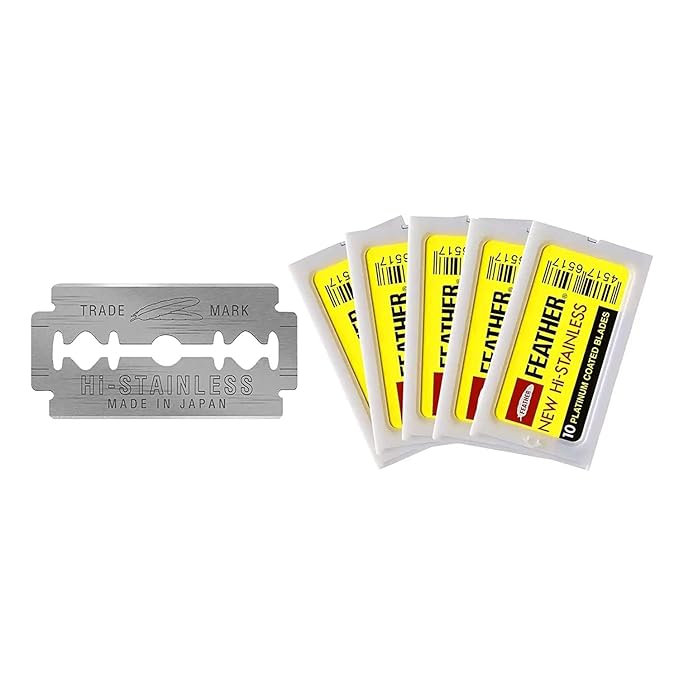
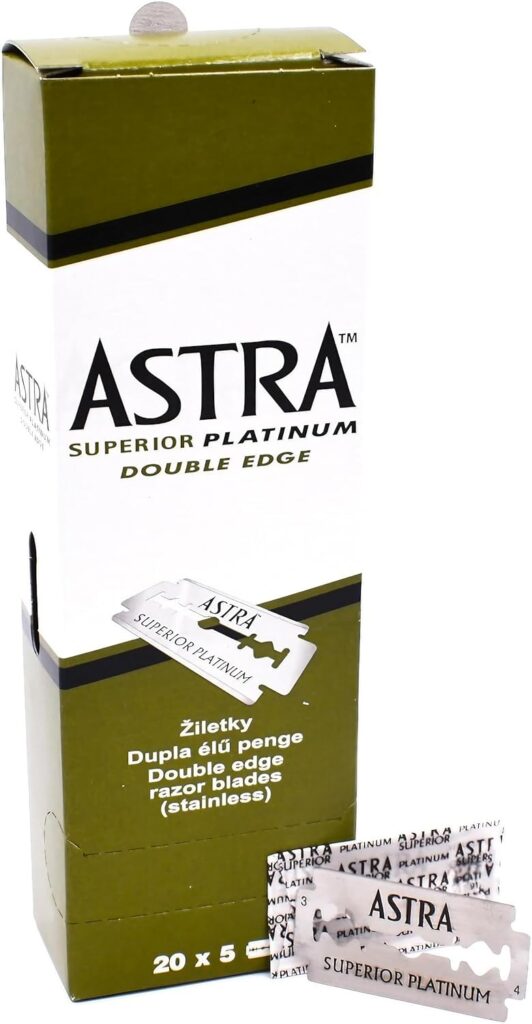
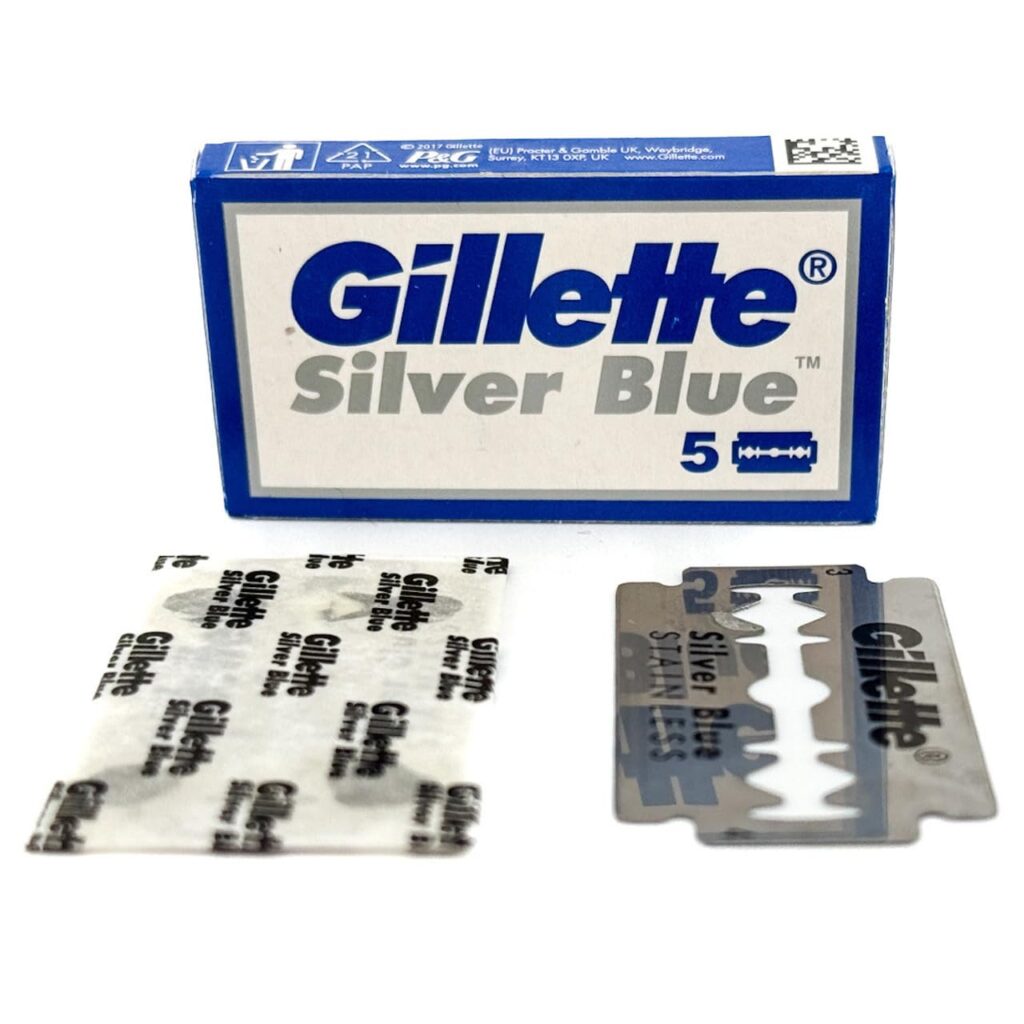
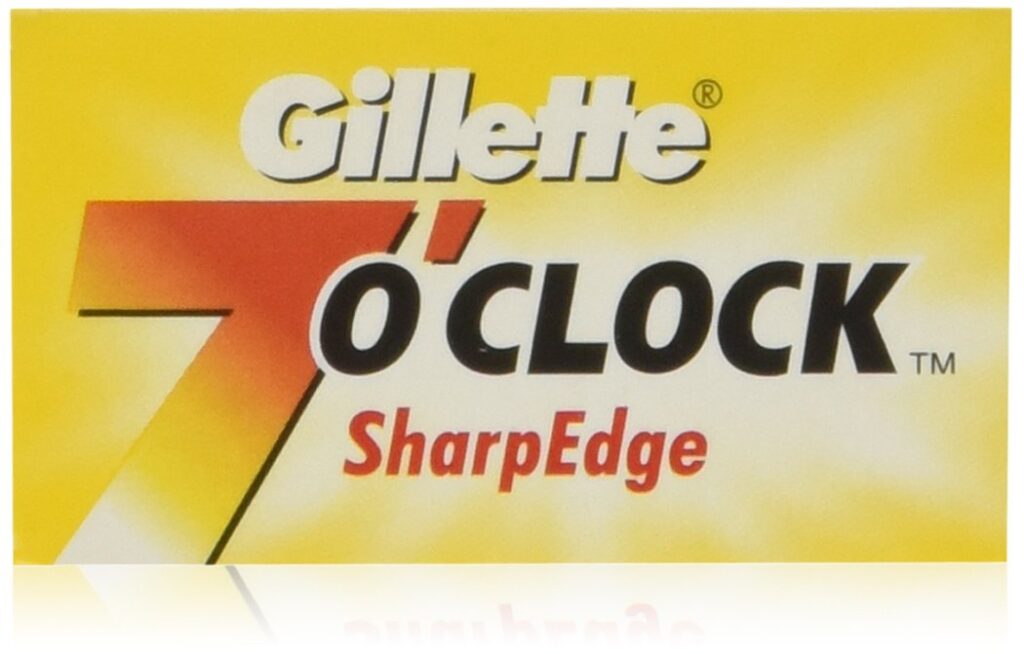
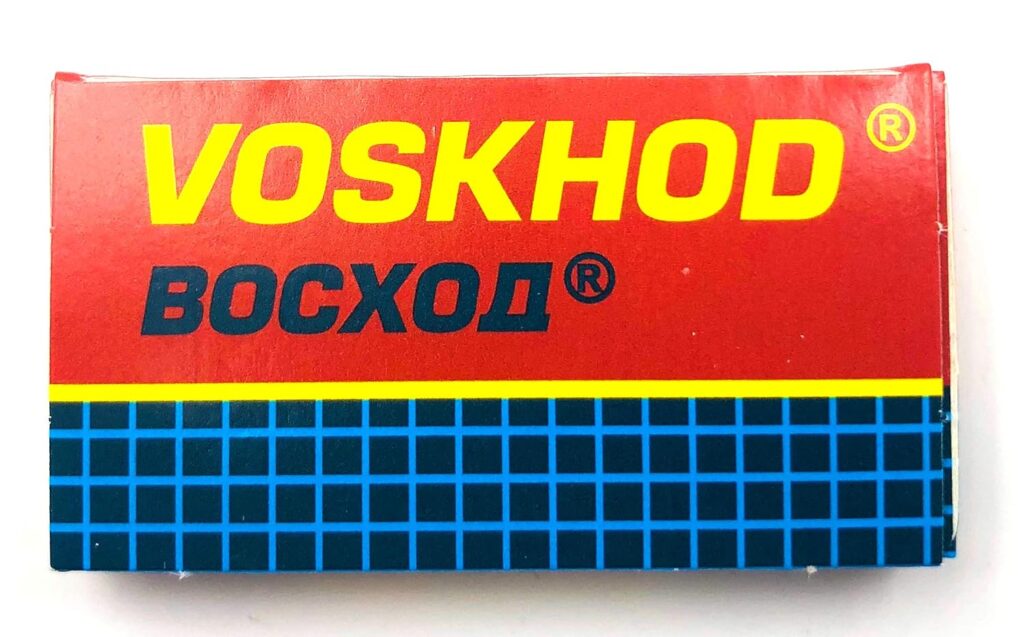
Comparison Specifications for the Best Double Edge Razor Blades
| Blade Profile | Sharpness Profile | Edge Coating | Observed Lifespan | Recommended Hair Type |
|---|---|---|---|---|
| Feather Hi-Stainless | High / Aggressive | Platinum Layered | 2 – 3 Shaves avg. | Coarse Wire / High Density |
| Astra Superior Platinum | Medium-High / Forgiving | Platinum Sputtered | 4 – 5 Shaves avg. | Daily Stubble / General Use |
| Gillette Silver Blue | High / Smooth Slide | PTFE Treated | 3 – 4 Shaves avg. | Sensitive Skin / Rash Prone |
| Gillette 7 O’Clock Yellow | High / Audible Feedback | Hardened Stainless | 3 – 4 Shaves avg. | Thick Growth / Clean Lines |
| Voskhod Teflon Coated | Moderate / Very Mild | Heavy PTFE Layered | 5+ Shaves typical | Hyper-Sensitive / Beginners |
4. How to Maintain Your Double Edge Razor Blades
A frequent maintenance mistake involves how a blade is dried after use. Many beginners invest in the best double edge razor blades, apply excellent shaving cream, and then wipe the blade edge directly down a bathroom towel to dry it.
The micro-thin protective coating on modern double edge razor blades is highly delicate. When you rub coarse towel fabric loops across that exposed cutting edge, you risk stripping that thin protective coat away from the steel core.
This can leave you with a rough, prematurely degraded edge that causes discomfort during your next shave. To preserve your hardware, avoid touching the cutting edge with solid surfaces. Simply loosen the razor head slightly, rinse out any trapped stubble under warm tap water, give the handle a firm shake, and allow it to air-dry naturally.
5. Proper Shave Prep: Optimizing Double Edge Razor Blades
Even the best double edge razor blades can pull or drag if your pre-shave preparation is insufficient. Traditional wet shaving requires softening the hair structure before steel makes contact. Consider these practical steps:
- Hydration and Heat: Dry facial hair has significant tensile strength. Flooding your stubble with warm water helps soften the hair structure. It is often best to shave immediately after a warm shower or apply a warm, damp towel to your face for roughly two minutes.
- Understand Growth Direction: Hair growth patterns are rarely completely uniform. On the lower neck, grain often slopes sideways or in modern circular patterns. Checking your stubble direction after 48 hours of growth helps ensure your initial pass glides With the Grain (WTG), minimizing early irritation.
- Opt for Quality Lathers: Pressurized canned shaving creams sometimes contain drying agents that can dehydrate skin cells. Using a dedicated shaving brush along with quality shave soaps typically provides a thicker protective cushion over your skin pores.
Frequently Asked Questions About Double Edge Razor Blades
How many shaves can you expect from the best double edge razor blades?
On average, even the best double edge razor blades offer between 3 and 5 comfortable three-pass shaves before micro-abrasion affects performance. This timeline varies based on your beard density. If you notice a minor pulling or scraping sensation, it is time to swap blades. Given that individual double edge razor blades cost minimal amounts, replacing them regularly avoids unnecessary skin irritation.
Are traditional double edge razor blades allowed in carry-on airline luggage?
No. According to current TSA Transport Regulations, individual double edge razor blades are strictly prohibited inside aircraft cabin carry-on luggage due to safety concerns. You can travel with your weighted safety razor handle through security checkpoints, but all blade refills must be securely packed within your checked baggage.
The Verdict: Choosing the Best Double Edge Razor Blades
Moving away from high-priced cartridge subscription models means learning to choose blade metallurgy that matches your specific skin type and beard style. For a complete kit overhaul, pair your blade choice with our definitive guide to the best razors for men to achieve the ultimate irritation-free shave.
Which Double Edge Razor Blade Should You Buy?
- Buy the Feather Hi-Stainless if: You have an experienced hand, very heavy or coarse wire beard growth, and want a blade that slices cleanly on pass one without forcing you to press down.
- Buy the Astra Superior Platinum if: You are looking for the absolute best price-to-performance value. It is the perfect daily benchmark for normal stubble, modern skin types, and beginners alike.
- Buy the Gillette Silver Blue if: You have highly sensitive skin, shave every single day, and are prone to recurring razor burn or lower neck irritation.
- Buy the Voskhod Teflon if: You prioritize maximum blade forgiveness over ultra-sharpness, or you want a heavy coat to handle hyper-reactive pores.