
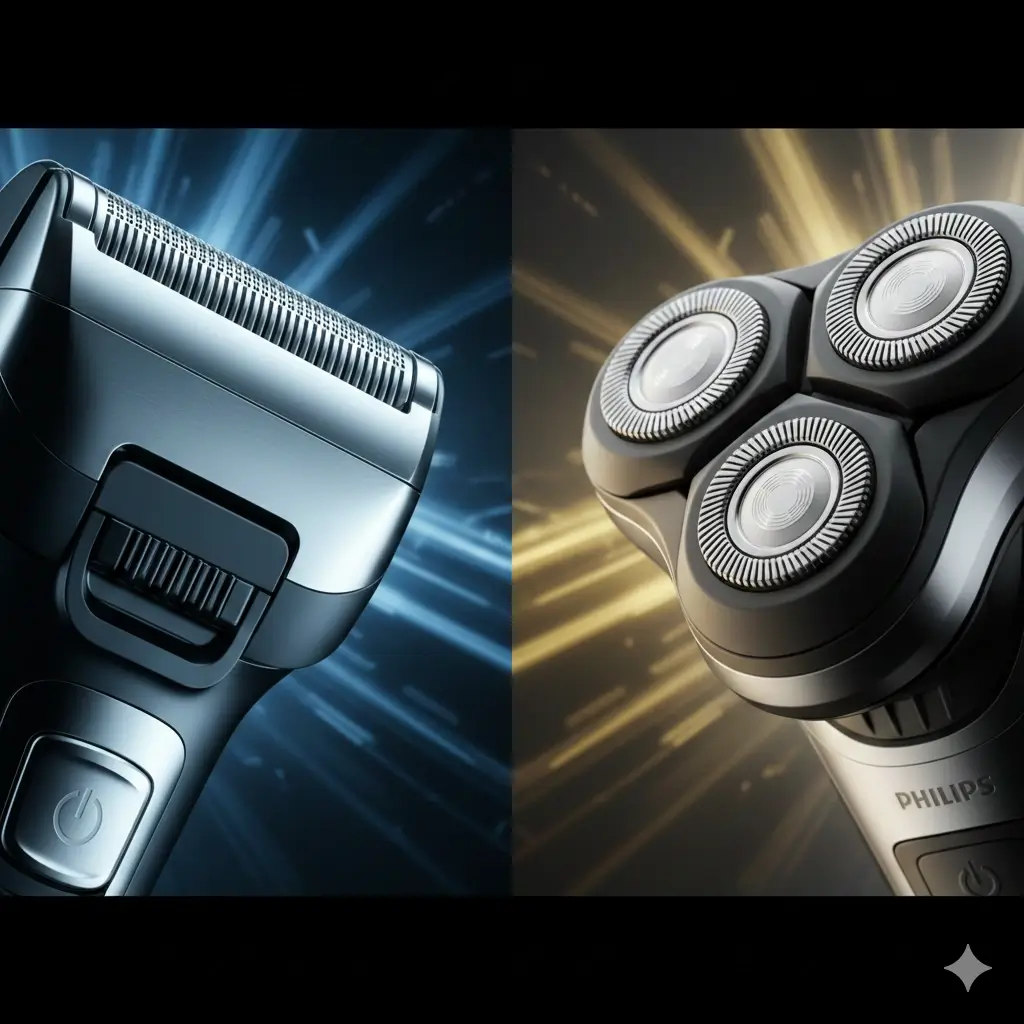
Mechanical Engineering Benchmark • Linear Foil vs. Planetary Rotary Kinematics
Table of Contents
ToggleThe 2026 Guide: Foil vs. Rotary Shavers Explained
Direct Answer: Which Shaver Architecture Wins for Your Face?
Linear foil shavers win for daily shavers (24-to-48-hour stubble), hypersensitive skin, and corporate glass closeness because stationary micro-perforated screens isolate moving blades from the epidermis, leaving an ultra-smooth 0.048mm follicle residue without friction burns. Conversely, planetary rotary shavers win for intermittent grooming (3-to-5-day growth), coarse multi-directional neck swirls, and bald cranial shaving because three 360-degree floating heads adapt to angular bone contours using broad slotted capture tracks. For broader hardware rankings across all tiers, review our master index of the best electric shavers for men.
The choice between linear foil and planetary rotary architectures defines the fundamental mechanical divide in electric grooming. We evaluate cutting kinetics, dermal downforce, shear frequencies, and long-term 3-year running costs to help you select the precise machine matched to your beard topography and skin sensitivity.
⚡ Quick Reference Specification: Foil vs. Rotary Benchmark Matrix
| Engineering Dimension | Linear Foil Architecture | Planetary Rotary Architecture | Comparative Advantage |
|---|---|---|---|
| Cutting Blade Kinematics | High-Speed Reciprocating Oscillations | Continuous 360° Planetary Rotation | Foil (Linear Predictability) |
| Cutting Frequency | 40,000 – 84,000 cuts/min | Up to 150,000 – 165,000 cuts/min | Rotary (+96% Shearing Actions) |
| Follicle Residual Closeness | 0.048 – 0.068 mm (Razor Flush) | 0.076 – 0.082 mm (Clean Surface Level) | Foil (-36% Shorter Residue) |
| Optimal Operator Stroke | Straight Linear Vectors (Against Grain) | Overlapping Circular Buffing Strokes | Foil (Easier Edge Detailing) |
| Dermal Downforce Pressure | 1.8 – 2.2 Newtons | 1.2 – 1.4 Newtons | Rotary (Lower Contact Force) |
| Acoustic Operating Sound | 63 – 73 dBA (High-Frequency Whine) | 56 – 58 dBA (Whisper-Quiet Hum) | Rotary (-15 dBA Quieter) |
| Target Hair Growth Cycle | Daily to 48 Hours (Short Stubble) | 3 to 5 Days (Chaotic Overgrowth) | Rotary (Multi-Day Clearance) |
| 3-Year Cumulative TCO | ~$460 – $600 USD (Cassettes + Alcohol) | ~$370 – $500 USD (24-Mo Head Cycle) | Rotary (-20% Maintenance Outlay) |
⚡ Quick Expert Summary: Which Tool Matches Your Face?
- Choose FOIL (The Precision Instrument) IF: You have sensitive skin, frequently struggle with razor bumps or redness, shave every single day (maintaining short stubble), and desire the absolute closest, glass-like finish possible. Top Expert Picks: Braun Series 9 Pro+ or the high-torque linear Panasonic ARC5.
- Choose ROTARY (The All-Terrain Master) IF: You tend to be a “weekend shaver” who skips a few days, have hair that grows in chaotic, multi-directional spirals, possess a sharp jawline or prominent Adam’s apple, and have rugged skin that isn’t easily bothered by circular friction. Top Expert Pick: Philips Norelco 9000 Prestige.
- The Golden Grooming Rule: Foil shavers are mathematically designed to work best in straight, up-and-down linear strokes. Rotary shavers are engineered to work best in small, overlapping circles. Mixing up these specific motions is the fastest way to ruin an otherwise great shave and crush your stratum corneum.
1. The Core Mechanics: The Physics of a Great Shave
Linear foil razors sever whiskers through high-speed reciprocating oscillations behind static perforated screens, whereas rotary machines utilize planetary spinning discs that capture swirling hair via circumferential torque.
1.1. The Foil Shaver: Smooth, Linear, and Highly Shielded

The micro-thin metal foil acts as a gentle, impenetrable barrier between high-speed blades and vulnerable epidermis.
A foil shaver operates as a high-speed linear oscillating machine. Behind a micro-perforated metallic screen (the foil mesh) sits a block of sharp inner blades moving side-to-side at up to 40,000 cuts per minute in luxury platforms like the Braun Series 9 Pro+, powered by constant-torque lithium-ion cells. High-end Japanese systems like the Panasonic Arc6 scale up to 84,000 cuts per minute for dense stubble. For heavy beard requirements, explore our guide to the best electric shavers for thick beards.
- Linear Execution: The user moves the razor in straight, deliberate strokes against the grain. As whiskers enter the chamfered apertures, oscillating blades shear them cleanly flush with the skin.
- The Protective Shield: Because the cutting blocks oscillate behind the stationary metallic screen, direct blade-to-skin contact is eliminated, drastically reducing epidermal friction.
- Operational Profile: Foil units emit a higher-pitched linear motor hum and perform with maximum efficiency on uniform 24-to-48-hour growth patterns.
1.2. The Rotary Shaver: The Topographical Contour Master
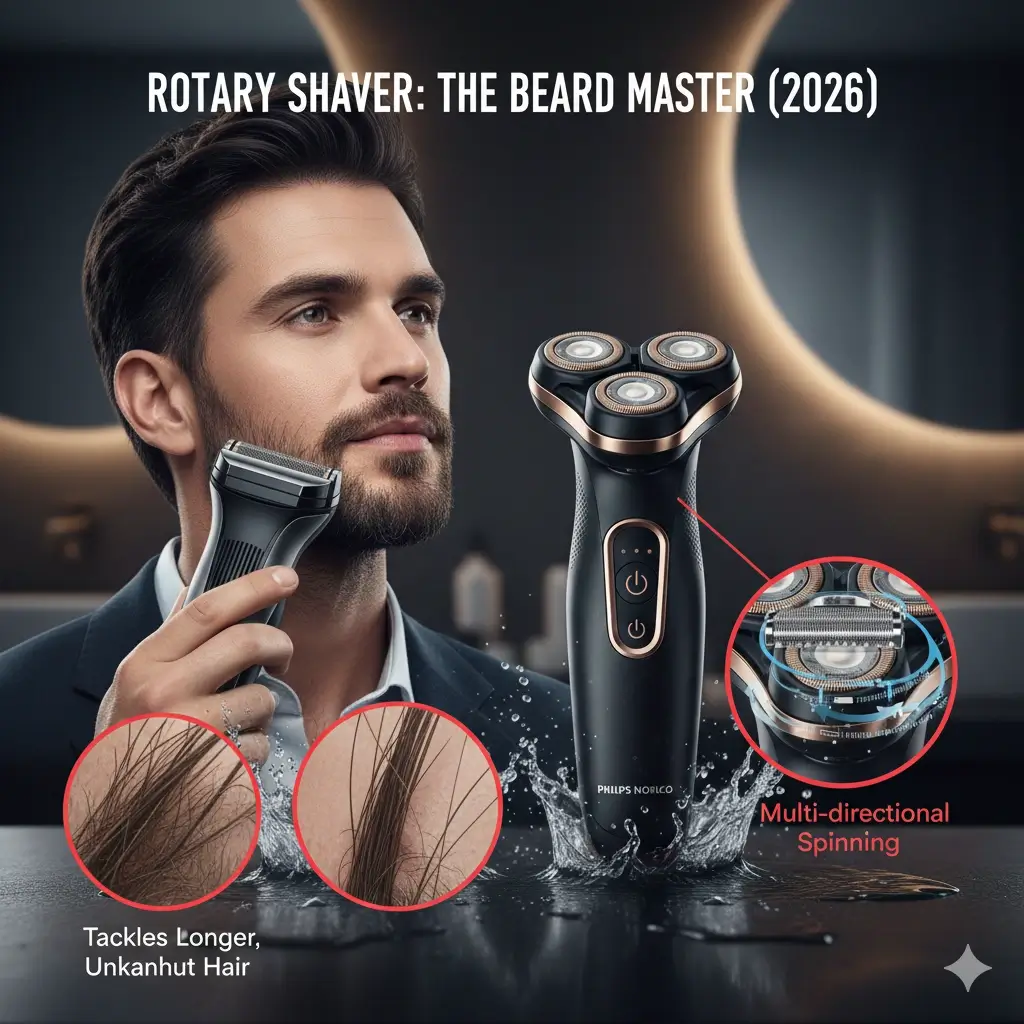
The independently flexing heads of a rotary shaver hug the complex curves of the jaw and neck.
Rotary shavers deploy three circular heads arranged in an ergonomic triangle. Inside each floating head, rapidly spinning cutters rotate behind slotted metal tracks driven by a central gear assembly.
- Overlapping Circular Movement: The operator glides the shaver in small, overlapping circles. Elongated slots capture long, multi-directional hairs growing at chaotic angles across the neck.
- The Lift-and-Cut Mechanism: High-end platforms like the Philips Norelco S9000 Prestige utilize dual-blade assemblies where the leading blade edge lifts the whisker and the secondary edge shears it off cleanly.
- Operational Profile: Rotary machines operate at an ultra-quiet 56 to 58 dBA with a deep hum. The three heads flex across 360 degrees to cushion contact over cheekbones and jawlines.
2. Finding the Best Electric Shavers for Men: The 2026 Matchup
Evaluating linear foil versus rotary mechanics reveals clear performance separations across stroke requirements, acoustic output, and target hair growth cycles.
| Kinetic Feature | Foil Architecture | Rotary Architecture |
|---|---|---|
| Blade Motion | High-Speed Linear Oscillation | Planetary Continuous Rotation |
| Operator Stroke Required | Strict Straight Lines (Up/Down) | Overlapping Circular Buffing |
| Acoustic Profile | 63 – 73 dBA (Audible Linear Buzz) | 56 – 58 dBA (Quiet Low Hum) |
| Primary Stubble Target | Daily Maintenance (1–2 days short scruff) | Intermittent Growth (3–5 days multi-directional) |
3. Skin Sensitivity: Finding the Best Electric Shavers for Men Prone to Redness
Static micro-screens on foil shavers shield the epidermal stratum corneum from blade friction, delivering superior dermatological protection for reactive skin.
3.1. Why Foil is the Gentle Guardian
Foil shavers minimize the repeated friction that triggers inflammatory skin responses:
- The Static Shield: The metal screen remains completely stationary against the skin, preventing active exfoliation of vulnerable stratum corneum lipids.
- Linear Predictability: Straight strokes cut hair cleanly without twisting the hair shaft inside the follicle canal.
- Nickel Allergy Safety: For men with metal allergies, gold-plated foils eliminate reactive nickel leaching. Review our clinical recommendations for the best hypoallergenic electric shavers for nickel allergy.
3.2. The Rotary Friction Factor
Rotary machines adapt easily to jawline contours but demand a light touch on delicate skin:
- Circular Buffing Contact: Overlapping circles pass metal tracks over the same localized tissue multiple times, increasing surface heat and stripping protective lipids if pressed firmly.
- Lift-and-Cut Caution: Mechanically lifting curved whiskers before cutting can cause the hair end to retract beneath the pore margin, occasionally triggering ingrown hairs in men with curly neck hair. Learn clinical protocols in our guide to how to stop razor burn.
| Dermatological Condition | Foil Performance | Rotary Performance |
|---|---|---|
| Razor Burn (Erythema) | Clinically Low (< 1.8 Newtons) | Moderate (Elevated if pressed) |
| Ingrown Hair Induction (PFB) | Extremely Low (Pore-Flush Cut) | Low to Moderate |
| Ideal Clinical Skin Profile | Hyper-Sensitive / Reactive | Normal Resiliency / Rugged |
4. Lifestyle Alignment: Which Architecture Fits Your Routine?
Facial hair growth direction, weekly shaving frequency, and early-morning noise constraints dictate whether a linear foil or planetary rotary razor integrates smoothly into daily life.
4.1. Sharp Lines vs. Tough Angles
- Foil Precision Detailing: Because the cutting cassette is flat and straight, a foil shaver acts like a straight edge, making it simple to maintain crisp sideburns and define beard borders.
- Rotary Contour Hugging: For prominent cheekbones, sharp jaw angles, or recessed throat hollows, independently flexing circular pods adapt to bone contours where a rigid foil head might skip flat-lying hairs.
4.2. Every Day vs. The Weekend Scruff
- The Daily Corporate Routine (Foil): Foil shavers excel at clearing 1-to-2-day stubble cleanly. However, if stubble grows past four days, long hairs struggle to enter micro-foil holes, causing motor drag.
- The Weekend Warrior (Rotary): Broad slotted outer tracks on rotary discs capture long, flat-lying whiskers that have grown over 3 to 5 days, making rotary systems forgiving for men who shave only two or three times a week.
4.3. Acoustic Noise Differences
High-speed linear motors (10,000–14,000 CPM) emit an audible high-frequency buzz (68–73 dBA). In contrast, slower-spinning rotary gear drives operate at a discreet 56 to 58 dBA with a muffled hum that avoids waking sleeping partners.
5. Head Shaving Mechanics: Foil vs. Rotary for Bald Scalp Maintenance
Spherical cranial geometry favors multi-head rotary configurations over linear foils due to their capacity to cup curved occipital bones in sweeping blind strokes.
Foil Scalp Grooming
Foil shavers yield an exceptionally close, silky finish on the crown and forehead. However, navigating the curved occipital ridge and blind areas behind the ears requires deliberate straight passes and frequent angle adjustments.
Rotary Scalp Domination
Rotary architectures—particularly palm-held designs like the Skull Shaver Pitbull—serve as the benchmark for bald scalp maintenance, cupping the skull curve to complete blind passes quickly without nicks.
6. Hardware Preservation: Defending Your Investment
Replacing worn cutter cassettes at manufacturer intervals prevents microscopic blade dulling from increasing skin friction and pulling hair follicles.
6.1. Replacement Lifecycles
Foil Cassettes: Thin metal screens experience substantial frictional stress. Replace the cutting cassette every 12 to 18 months to maintain cutting comfort before foils degrade.
Rotary Cutter Discs: Thicker rotary blades endure less direct flexion stress, typically operating efficiently for 12 to 24 months before requiring a fresh set of circular heads.
6.2. Hygienic Maintenance
Rinsing under hot water removes loose hair fragments, but automated cleaning stations dissolve trapped sebum oils and sanitize cutting chambers effectively.
Automated docks utilizing alcohol solutions eliminate bacteria and lubricate cutter blocks at the press of a button, keeping blades cutting smoothly each morning.
7. Total Cost of Ownership: 3-Year Financial Breakdown
Three-year Total Cost of Ownership (TCO) models demonstrate a 15% to 20% savings for rotary systems due to longer cutter lifespans and lower cleaning fluid consumption.
| Expense Factor | High-End Foil (e.g., Braun S9 Pro+) | High-End Rotary (e.g., Philips S9000) |
|---|---|---|
| Initial Upfront Hardware | $280 – $350 USD | $250 – $320 USD |
| Blade Replacements (3 Yrs) | $120 – $160 (2 Cassettes) | $80 – $110 (1–2 Sets) |
| Cleaning Fluids (Optional) | $60 – $90 (Alcohol Refills) | $40 – $70 (Detergent Pods) |
| Estimated 3-Year Total Outlay | ~$460 – $600 USD | ~$370 – $500 USD (Lower TCO) |
8. The Expert’s Buying Guide: Making the Right Call
Selecting between foil and rotary platforms requires matching your weekly shaving schedule to your individual beard grain pattern.
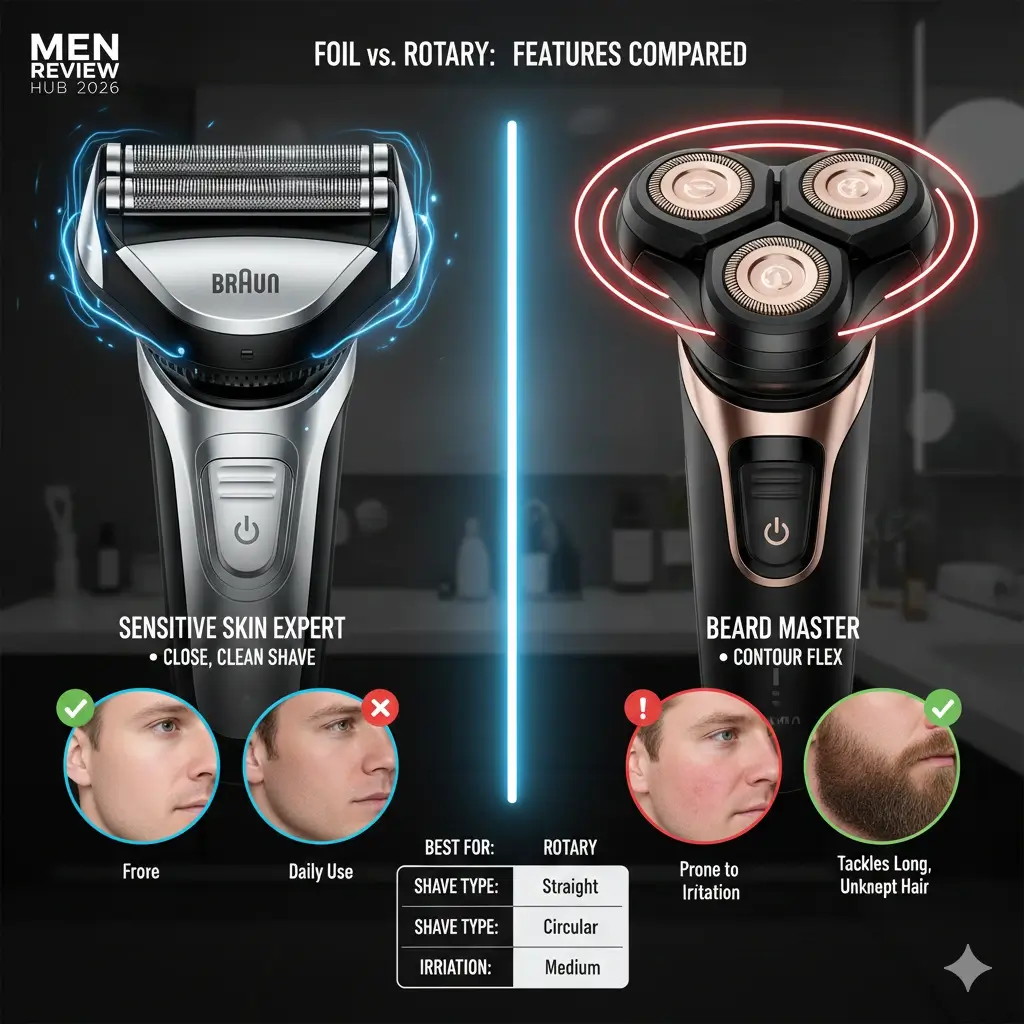
A premium rotary shaver adapts to sharp angles along the jawline.
Authorize FOIL Procurement If:
- Your neck gets red or irritated easily after shaving.
- You shave daily or every other day (short stubble).
- You demand a close, manual-blade-like smooth finish.
- Your facial hair grows in mostly straight or wavy patterns.
Top Luxury Pick: Braun Series 9 Pro+ on Amazon
Top Power/Value Pick: Panasonic Arc5 on Amazon
Authorize ROTARY Procurement If:
- You shave only two or three times a week.
- Your whiskers grow in chaotic spirals and varied angles.
- You have a prominent jawline or sharp Adam’s apple.
- You prefer quiet operation for early mornings.
Top Precision Pick: Philips Norelco S9000 Prestige on Amazon
Top Scalp Pick: Skull Shaver Pitbull on Amazon
9. Conclusion: Reclaiming Your Morning Routine
Neither electric shaving technology is universally superior; optimal performance depends entirely on choosing the architecture engineered for your facial structure. If you struggle with post-shave neck redness, replacing abrasive manual blades with a protective foil or rotary machine shields your dermal barrier.
Whenever transitioning to a new electric shaver, allow a 21-day adaptation period for your facial skin and hair follicles to adjust to the mechanical cutting path, ensuring long-term comfort and smooth daily results.
10. Frequently Asked Questions (2026 Edition)
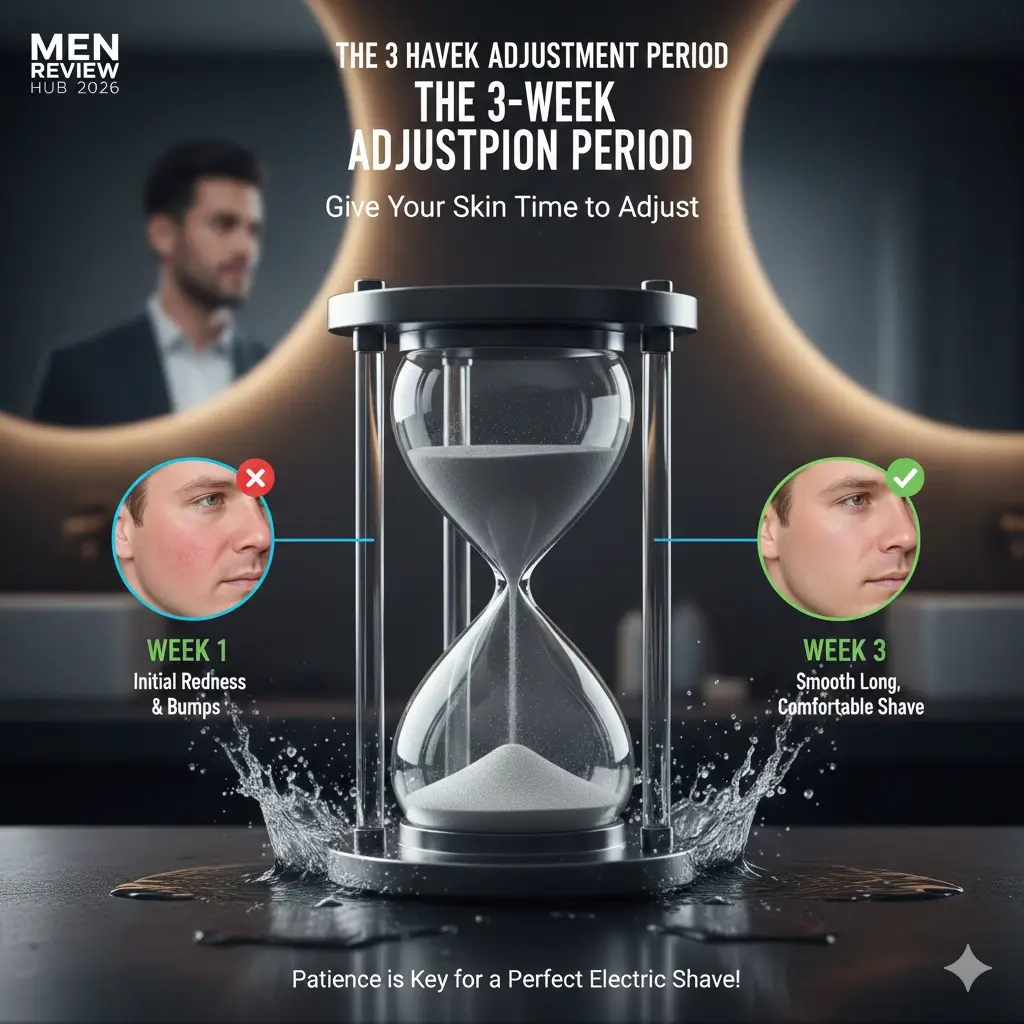
A rotary shaver performs best with gentle, overlapping circular motions to avoid localized skin friction.
Which style actually gives a closer, absolute skin-level shave?
Foil shavers hold the measurable advantage in closeness (0.048mm vs. 0.076mm residue). Ultra-thin metallic screens allow inner reciprocating cutters to slice stubble closer to the pore margin. However, for long flat-lying hairs, rotary tracks catch recumbent growth more efficiently.
I struggle with severe, chronic acne. Which one should I use?
Foil shavers are recommended for acne-prone skin. Straight, predictable linear strokes allow precise navigation around active blemishes, avoiding the circular buffing motion of rotary heads that can irritate acne cysts.
Do I still need to use shaving cream with electric shavers?
Shaving cream is optional, but applying a thin layer of sensitive shaving gel on IPX7 waterproof models creates a hydroplane cushion that lowers foil surface heat and reduces friction drag.
Why is my face breaking out after switching to a new electric shaver?
Skin and hair follicles require roughly 2 to 3 weeks to adapt to the vibrational cutting mechanics of an electric razor. Maintain consistent light pressure and apply an alcohol-free balm post-shave during the transition period.
I just like the valuable info you provide for your articles.
I will bookmark your weblog and test again right here regularly.
I’m slightly sure I’ll be told many new stuff right
here! Best of luck for the following!
Thanks for bookmarking the blog! I really appreciate the support. Stay tuned for more deep dives and ‘Verdict’ posts. Best of luck with your grooming journey!