
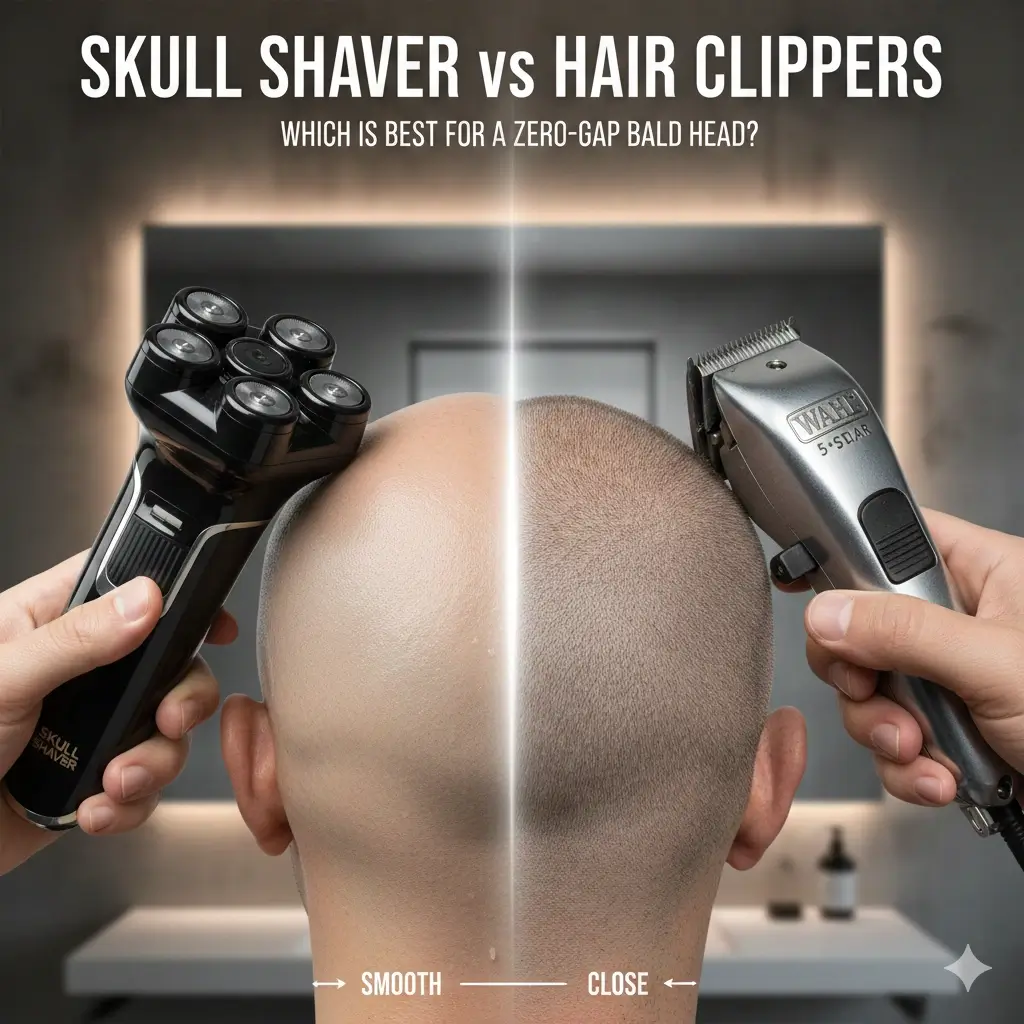
1. The Biomechanics of the “Zero-Gap” Illusion
Before deciding which hardware option fits your lifestyle in the Skull Shaver vs Hair Clippers matchup, it helps to understand how each tool interacts with your hair. There is a distinct mechanical difference between getting a very short buzz cut and achieving a completely skin-level smooth finish.
The Clipper’s Structural Shield
When we look at traditional hair clippers—even high-end models that have been adjusted for a very tight, zero-gapped alignment—we have to consider the built-in thickness of the metal guards. Clippers rely on two flat blades sliding side-to-side across each other, driven by a high-torque mechanical motor. The bottom stationary blade acts as a permanent physical spacer. No matter how closely you tune the screws, that micro-layer of steel remains safely positioned between your skin and the moving blade.
Because of this design, a clipper will naturally leave behind a very clean, attractive macroscopic shadow look. It looks incredibly sharp, but it does leave a tiny amount of stubble just above the skin line. Trying to forcefully press clippers down onto your scalp to replicate a true razor closeness can, unfortunately, scratch your stratum corneum skin layers and cause painful razor burn.
The Head Shaver’s Micro-Foil Advantage
This is exactly where a dedicated electric head shaver for bald heads introduces a different kind of advantage to the Skull Shaver vs Hair Clippers equation. These specialized tools utilize a remarkably thin, flexible metal foil mesh. This protective foil is remarkably thin—thinner than a strand of hair. It allows your hair to comfortably enter the microscopic perforations, where the spinning internal rotary cutters cleanly trim the hair down right at the skin line. This clever design is what allows you to achieve that beautifully polished, smooth finish safely and comfortably without needing a traditional blade.
2. The Case for Skull Shavers: Efficient, Daily Cranial Care
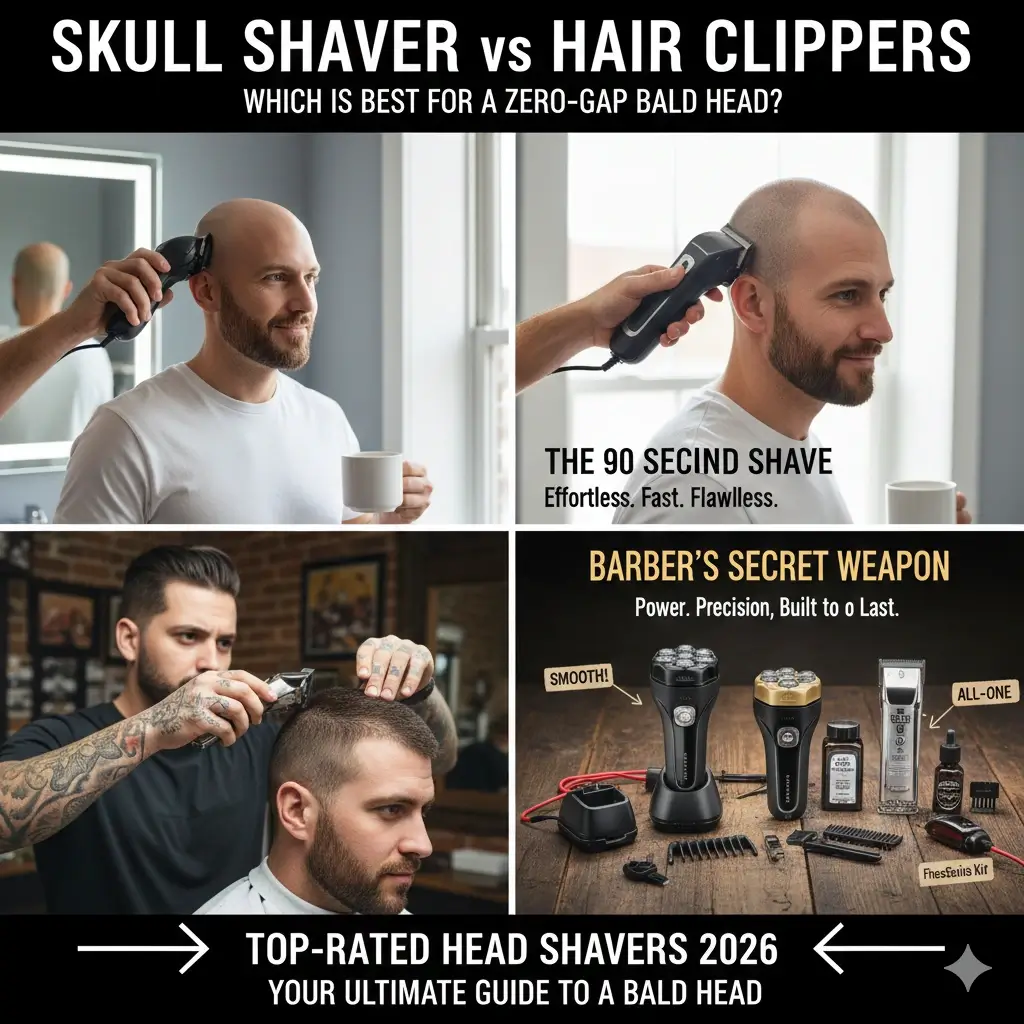
If you lead a fast-paced life, you likely do not have the luxury of spending twenty minutes meticulously managing a heavy, corded clipper around the back of your head. When weighing a Skull Shaver vs Hair Clippers, the dedicated rotary tool stands out for its exceptional time efficiency and ease of use.
- Adapting to Natural Contours: The human scalp features unique geometry, including sharp occipital ridges and subtle curves around the temples. Unlike the rigid, straight block of a traditional clipper, premium tools like the Skull Shaver Pitbull Gold PRO utilize an ergonomic palm-grip handle. The flexing, multi-directional heads trace these convex curves perfectly, keeping the protective mesh flush against your skin.
- The 90-Second Routine: Because of the intuitive design, you can easily guide this device purely by feel. There’s no need to constantly adjust a multi-mirror setup. It offers a clean, smooth finish in less time than it takes to brew your morning coffee, maximizing your time equity during the week.
- Wet/Dry Versatility: Whether you prefer applying a soothing shaving gel in the shower to minimize friction or simply need a quick dry touch-up, the IPX7 waterproof sealing handles both scenarios gracefully.
A Practical Limitation to Consider
To be completely fair in this Skull Shaver vs Hair Clippers comparison, rotary head shavers are built primarily for ongoing maintenance rather than for clearing heavy growth. If you let your hair grow out for more than four or five days, the longer strands can tangle within the rotary tracks, leading to an uncomfortable tugging sensation. It is engineered to manage short stubble, not to tackle a full buzz cut.
3. The Case for Hair Clippers: Heavy-Duty Dependability
If a palm-sized head shaver is a light precision tool, then a pair of professional balding clippers is a robust workhorse. It is a solid, often corded device that is heavily engineered to plow through thick hair without breaking a sweat. For the man who prefers to groom less frequently, this represents the heavy artillery in the Skull Shaver vs Hair Clippers debate.
- Reliable Motor Torque: Snagging or pulling is never an issue with professional clippers. A tool like the classic Wahl 5-Star Balding Clipper utilizes a powerful electromagnetic motor built to glide through a week’s worth of thick, dense growth effortlessly.
- Long-Term Durability: Unlike the lightweight plastic builds of small rotary shavers, high-end barber clippers are constructed from high-impact polymers and resilient steel. They are designed to withstand years of steady use without a hitch, giving you great long-term dollar value.
- The Custom Zero-Gap Potential: By carefully adjusting the structural screws on the drive cam, you can manually align the cutting edge closer to the stationary blade. When set up thoughtfully, it delivers an incredibly close buzz cut that sits right on the edge of a completely bald look.
The Practical Trade-offs
Operating clippers on your own head does require a bit of practice and physical dexterity. Safely guiding a heavy, vibrating tool over the blind spots at the back of your neck while balancing a hand mirror takes time to master. Additionally, if the blades are aligned a bit too aggressively without a protective gap, they can pinch or bite the skin, which can lead to localized irritation and razor bumps.
4. Head-to-Head Comparison Master
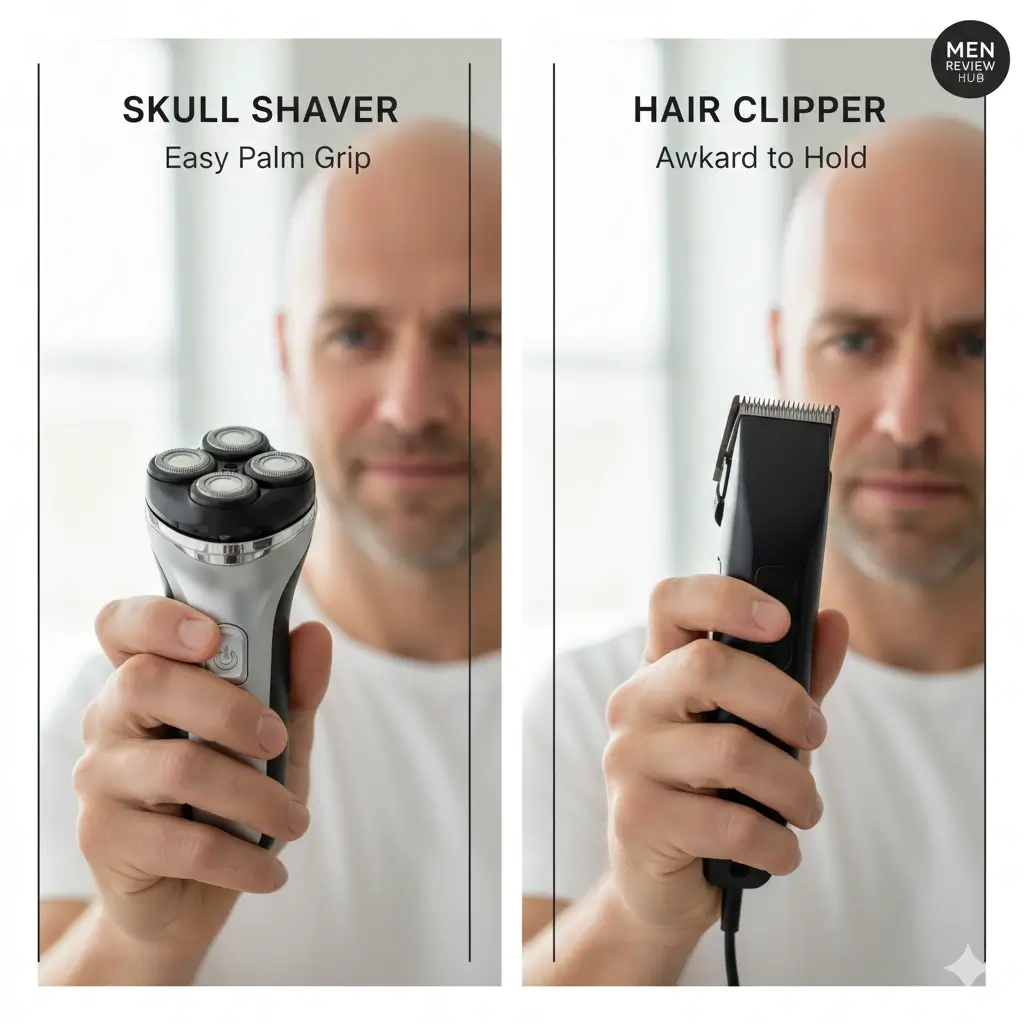
When standing before the bathroom mirror, it helps to know exactly which tool lines up with your personal style goals. This comparison matrix balances the practical metrics of both grooming systems.
| Grooming Metric | Skull Shaver (Rotary Foil Tech) | Hair Clippers (Zero-Gapped Style) |
|---|---|---|
| Post-Shave Scalp Texture | Completely smooth, glass-like finish | Clean micro-stubble, distinctive shadow |
| Ideal Grooming Frequency | Daily to every other day (24-48 hours) | Weekly maintenance (5-7 days growth) |
| Bathroom Cleanup Needed | Minimal (Trimmings are caught internally) | Moderate to high (Hair drops freely) |
| Irritation Risk Profile | Low (Further protected by wet shaving) | Moderate (Slight risk if blades are set tightly) |
| Long-Term Upkeep | Higher cost (Requires fresh blade cassettes over time) | Very low cost (Periodic lubrication oil only) |
| Top-Rated Recommendations | Pitbull Gold PRO | Wahl 5-Star Balding |
5. The “Grooming Hybrid” Protocol: Having the Best of Both Worlds
If you want to truly maximize your routine and keep your skin feeling incredible, you no longer have to look at the Skull Shaver vs Hair Clippers choice as an either/or decision. In fact, many men find that using these two tools together in a smart, weekly rhythm offers the absolute optimal experience.
The Balanced Weekly Routine
- The Weekend Reset (Clippers): If you’ve let your hair grow out for 5 to 7 days, start with your reliable hair clippers. Use them to cleanly trim away the bulk of the growth down to a manageable, uniform short shadow. This prepares the canvas perfectly for follow-up foil tools.
- The Mid-Week Polish (Skull Shaver): On Tuesday, Thursday, and Saturday mornings, bring out your dedicated head shaver in the shower. Because it is only managing a day or two of light stubble, the rotary heads will glide across your scalp effortlessly, maintaining that wonderfully smooth finish without overworking your skin.
This dual-tool strategy is a brilliant way to extend the lifespan of your rotary blades, prevent skin irritation entirely, and keep your bald style looking impeccably sharp and professional all week long.
6. Top Recommendations for Your Arsenal
Navigating the heavily saturated marketplace can be confusing with so many options available. Below, we have highlighted the most trusted, reliable tools in each category based on long-term performance.
The Smoothness Champion: Skull Shaver Pitbull Gold PRO
This tool is widely considered a staple if achieving an effortless, comfortable skin closeness is your main goal. The patented handle sits perfectly between your fingers, allowing you to easily guide the device over the back of your head entirely by feel. The multi-directional floating heads follow every contour of your scalp smoothly, gathering hair cleanly while beautifully keeping your skin safe from the moving blades.
The Indestructible Workhorse: Wahl 5-Star Balding Clipper
This heavy-duty corded clipper is a true legend, trusted by professional barbers everywhere. Driven by a powerful electromagnetic motor, it is built to glide through thick, coarse hair effortlessly without a single skip or drag. It arrives factory-set for a remarkably close cut, making it a spectacular choice for men who prefer a solid, commercial-grade tool that will comfortably endure for years to come.
The Comprehensive Kit: Freebird FlexSeries Kit
For those looking for exceptional versatility and value, the Freebird kit is an excellent choice. Beyond providing a highly capable, flexible 5-head rotary shaver, it includes a helpful ecosystem of attachments. The inclusion of soft exfoliation brushes is particularly wonderful for gently lifting flat hairs and preparing your skin for an incredibly smooth shave.
7. Frequently Asked Questions (FAQ)
Can I use a Skull Shaver to comfortably clear a full month of hair growth?
It is best not to. In the mechanics of head shaving, trying to use a rotary foil mesh on long hair can cause the strands to twist in the blades, which leads to an uncomfortable pulling sensation. If you have taken an extended break from grooming, always rely on your hair clippers first to comfortably trim away the bulk before finishing with the head shaver.
Will adjusting my clippers for an extreme zero-gap cause skin irritation?
It can if it isn’t done with careful precision. If the moving blades are set even a fraction of a millimeter too far forward, they can scratch or pinch the skin as they vibrate. If your scalp is highly sensitive or prone to redness, a rotary head shaver provides a much friendlier, built-in metal shield that keeps you safe from irritation.
What does it take to maintain these tools properly?
To ensure your tools perform comfortably for years, a small amount of regular care is vital. For rotary shavers, a quick rinse under hot water after your shave dissolves skin oils and keeps the gears running smoothly; you’ll also want to update the blade cassette every 4 to 6 months. For clippers, a couple of drops of basic clipper oil before your haircut keeps the blades moving frictionlessly and prevents them from heating up.
The Final Verdict: Choosing Your Grooming Partner
When we weigh the overall Skull Shaver vs Hair Clippers comparison, the right choice ultimately lines up with how often you like to groom and the texture you prefer.
If you are a practical man who prefers a low-maintenance routine, values long-term durability, and simply wants to trim a week’s worth of growth down to a clean, masculine shadow, the robust power of a Hair Clipper is a fantastic match. However, if you demand absolute skin-level smoothness, value speed above all else, and want to achieve a flawless finish comfortably in under two minutes, a dedicated Skull Shaver is the undisputed champion for your routine. Listen to your skin, select the tool that matches your lifestyle, and step out with confidence every single day.